




Vitaly
Administrators
-
Joined
-
Last visited
Everything posted by Vitaly
-
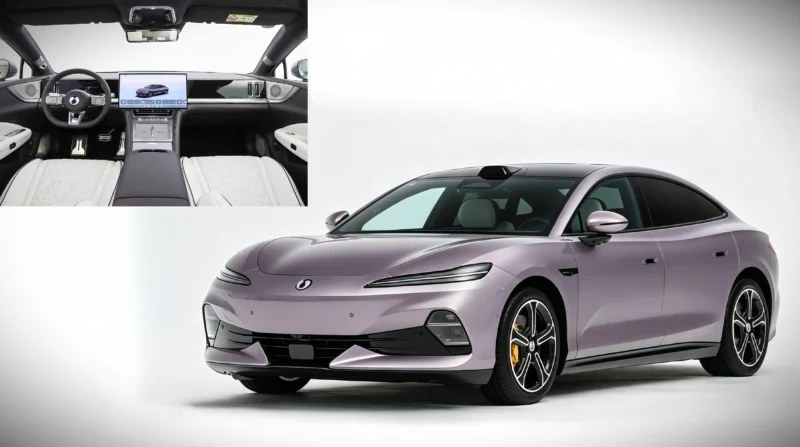 BYD’s Denza Z9S sedan has been revealed in production form, showing a new interior, revised exterior styling, and shorter dimensions than the Denza Z9 ahead of its market launch. The model is a separate sedan variant from the Denza Z9 GT shooting brake and joins the Z family with two powertrain configurations offering different output levels. The Z9S follows earlier regulatory and specification disclosures. China’s Ministry of Industry and Information Technology (MIIT) filing previously showed the model’s dimensions and single-motor configuration, while later information from Denza detailed a tri-motor four-wheel-drive version. Z9S cabin gets a new layout According to Autohome’s report on the Z9S real-vehicle reveal, the sedan receives a redesigned interior layout compared with the existing Z9. It uses a new three-spoke steering wheel, while the instrument display is integrated into the centre console area with a straight-line piano-black lacquer finish. The dashboard features a large floating central touchscreen display. The source does not disclose the display size, resolution, or processor specifications. The centre console retains physical controls beneath the central touchscreen for functions including Auto Parking, e³ (tri-motor independent drive platform), and DiSus (intelligent body control system). Other visible changes include redesigned side air vents and revised decorative trim for the door speakers. The seats feature updated headrest styling and diamond-pattern quilting. The rear centre armrest incorporates an integrated control display. Additional seat functions, adjustment details, and material specifications have not been disclosed. Z9S gets a shorter body, two powertrains The Denza Z9S measures 5,090 mm in length, 1,980 mm in width, and 1,490 mm in height, with a 3,025 mm wheelbase. Compared with the Denza Z9 sedan, it is 145 mm shorter, 10 mm narrower, 28 mm lower, and has a 100 mm shorter wheelbase. Outside, the Z9S features roof-mounted LiDAR, split headlights with upper LED strips and lower main light units, updated door handles, black window trim, large wheels with yellow brake callipers, revised rear lights, and a redesigned rear bumper. The vehicle is equipped with BYD’s God’s Eye B LiDAR-assisted driving system. Detailed software functions, sensor specifications, and the LiDAR system’s operating parameters were not disclosed. A “Flash Charging” badge on the rear also indicates compatibility with BYD’s second-generation Blade Battery flash-charging system. The Z9S is listed with two powertrain versions. The single-motor variant produces 370 kW (496 hp) and uses a 102.326 kWh battery pack, with a Denza-listed CLTC range of 920 km. The tri-motor four-wheel-drive variant uses Denza’s e³ platform and produces a combined output of 890 kW (1,194 hp). It also uses the same 102.326 kWh battery pack, with a listed CLTC range of 780 km. The Z9S joins the Denza lineup after the brand’s existing models recorded 18,631 sales in June 2026, led by the D9 with 6,952 units and the Z9 GT with 6,025 units, according to China EV DataTracker. The cabin adopts a new three-spoke steering wheel, integrated instrument display and retained physical controls beneath the touchscreen. Most important news in your inbox. Recaps · scheduled All you need, in one email. Weekly Best of the week Recommended Daily Today's most-read Instant alerts · real-time Ping me when an article goes live. 0 of 27 topics selected BYD Nio Tesla Xiaomi Xpeng Li Auto Zeekr HIMA CATL GWM Nissan Autonomous driving Chery Changan Lynk & Co Geely Leapmotor Mazda Volkswagen MG SAIC German Auto Spy shots Sales data China EVs in Europe Battery News Haval Show all 27 topics Bundle into one email per day — instead of one email per article Subscribe No spam · Unsubscribe with one click · Change settings anytime
 -
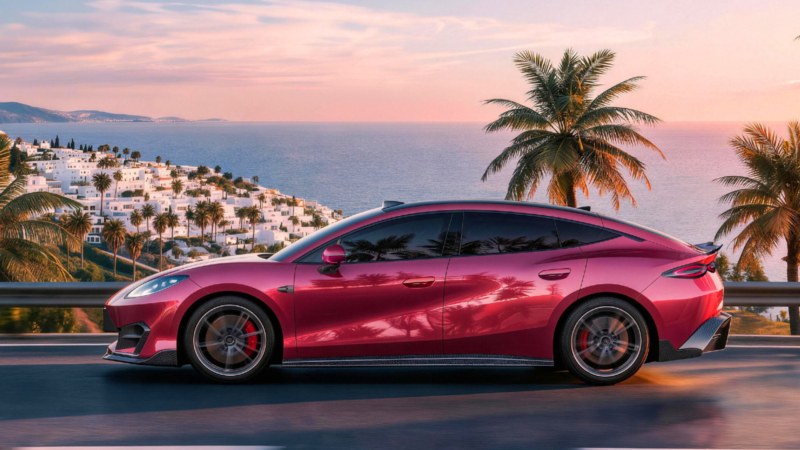 The BYD Fang Cheng Bao Formula S sporty liftback’s range was exposed by the governmental regulator. This car will run up to 900 km under CLTC conditions. The Formula S GT station wagon variant of this car will boast 850 km of range. Fang Cheng Bao (FCB) was initially launched in China in 2023 as a hardcore off-road brand. Its current model line comprises four models: the Bao 5 (Denza B5), the Bao 8 (Denza B8), the Ti3, and the Ti7 (BYD Ti7). According to China EV DataTracker, FCB delivered 27,907 units domestically in June, up 47.6% Year-Over-Year. In 2024, Fang Cheng Bao revealed plans to launch electric sports cars to reach a wider market audience. There is no FCB brand in the foreign markets. Instead, its model line is distributed between Denza and BYD brands. It is highly likely that the Formula S liftback and the Formula S GT wagon will reach overseas markets as a part of the Denza brand, as their exterior styling aligns with the Denza Z sports car that was previously introduced to the UK market at Goodwood. Formula S & Formula S GT range According to the purchase tax reduction list released by the Chinese Ministry of Industry and Information Technology (MIIT), the entry-level Formula S liftback will be available with a 76.744 kWh LFP battery manufactured by BYD subsidiary FinDreams. This pack weighs 539 kg and provides 720 km of CLTC range. It will support the flash charging technology. This pack powers the RWD variant of the Formula S sedan with a single e-motor for 245 kW (329 hp). The FCB Formula S. Credit: MIIT The long-range variant of the FCB Formula S adopts a 92.093 kWh LFP battery from FinDreams. Its weight reaches 633 kg, mostly due to the mentioned chemistry. It also supports flash charging. The long-range model will also feature a more powerful e-motor in the rear axle with a peak power of 300 kW (402 hp). Its range lies between 830 and 900 km, depending on the equipment. The Formula S will also be available with a dual-motor AWD for 490 kW (657 hp). However, this version wasn’t listed by MIIT. The FCB Formula S GT The FCB Formula S GT comes standard with a 92.093 kWh LFP battery. The RWD variant with an e-motor for 300 kW has a range of 800 – 850 km (CLTC conditions). The all-wheel-drive variant with 490 kW can run up to 730 km on a charge. We will remind you that the Fang Cheng Bao Formula S is a sleek four-door liftback. It boasts hefty dimensions of 5060/1967/1483 mm with a wheelbase of 2,960 mm. The new car rides on 19- or 20-inch wheels. It has a LiDAR sensor on the roof, hinting at the adoption of the DiPilot 5.0 assisted-driving system. The car’s curb weight lies between 1,999 and 2,250 kg. The Formula S GT station wagon (estate or shooting brake) is a more practical variant of the liftback. Dimensions of the Formula S GT are 5025/1967/1483 mm with the same wheelbase. This station wagon can tow up to 500 kg. With a tow hook installed, its body length increases to 5,095 mm. The car’s curb weight lies between 2,170 and 2,280 kg.
 -
 A BYD Qin Plus DM-i plug-in hybrid sedan was heavily damaged by fire after a three-vehicle chain-reaction collision on Chengdu’s Third Ring Road on July 17, although everyone inside the car escaped before the vehicle was fully engulfed. According to Chinese media reports citing the Jinniu District Traffic Police Department, the crash occurred on the main carriageway of Chengdu’s Third Ring Road in Jinniu District. Three vehicles were involved, with the Qin Plus DM-i catching fire shortly after the collision and eventually burning down to its frame. Traffic was temporarily affected before returning to normal. Videos of the incident quickly spread online, but authorities have not yet determined the cause of the fire. The investigation into both the collision and the vehicle fire remains ongoing. Driver and passenger escaped before vehicle was engulfed The Paper, citing an interview with the vehicle owner identified as Mr He, reported that both he and his front-seat passenger briefly lost consciousness after the crash. Mr He said the front and side airbags deployed, but the doors could not be opened after the collision. The pair then climbed out through the windows moments before flames spread throughout the cabin. No fatalities have been reported in connection with the Qin Plus DM-i. Public reports have not provided details on the condition of occupants in the other two vehicles involved. According to Mr He, the fire started shortly after the vehicle was rear-ended, with flames emanating from the rear of the sedan. His description reflects what he experienced at the scene and does not represent an official technical finding. Traffic authorities have not released information on the ignition source, and it remains unclear whether the fire involved the fuel system, electrical components, or another vehicle system. The vehicle involved has been identified as a white BYD Qin Plus DM-i plug-in hybrid through the owner’s interview and visual details from the scene. Unlike the battery-electric Qin Plus EV, the DM-i version uses a larger open dot-matrix front grille to provide airflow for its combustion engine. The vehicle also carried a green New Energy licence plate, confirming it was an electrified model. The exact model year and trim level have not been disclosed. Three-car Chengdu crash leaves BYD Qin Plus DM-i destroyed by fire. Latest BYD fire incidents draw attention The Chengdu crash is another widely reported vehicle fire involving a BYD model, though the circumstances differ from those in previous cases covered by CarNewsChina. In June, we reported on a collision involving a BYD Qin L plug-in hybrid and a Mazda 3. While the Mazda caught fire after the crash, Qin L’s battery remained intact, with the two vehicles experiencing different post-crash outcomes. Earlier in March, we also covered a BYD Seal that caught fire after a crash in Hong Kong. The driver escaped shortly before the cabin was engulfed, while local authorities later launched an investigation into the cause. In the Chengdu incident, investigators have not yet released any conclusion on the source of the fire. Qin Plus remains a key BYD sales model Despite BYD’s expanding lineup of newer vehicles, the Qin Plus remains among the company’s higher-volume models. According to China EV DataTracker’s June 2026 sales breakdown, the Qin Plus EV recorded 13,726 deliveries, making it the brand’s fourth-best-selling model during the month, with a 7.7% share of total BYD sales. It ranked behind the Yuan UP (17,945 units), Song Pro DM-i (17,439 units), and Sealion 06 (16,843 units), while remaining ahead of the Dolphin, which recorded 13,005 units. At this stage, the confirmed sequence is that the sedan was involved in a chain-reaction collision, its occupants escaped through the windows after the airbags deployed, and the vehicle was later consumed by fire. The cause of ignition will depend on the findings of the official investigation. Sources: Zaker, The Paper, Weibo
 -
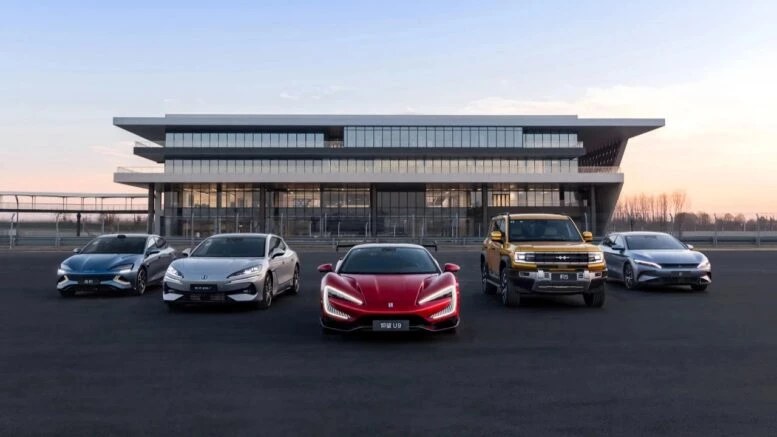 Еще несколько лет назад название BYD у многих ассоциировалось исключительно с китайским рынком, и на фоне десятков новых брендов компания воспринималась как один из многочисленных производителей EV, пытающихся воспользоваться мировым трендом на электрификацию транспорта. Сегодня ситуация значительно изменилась, и теперь BYD задает высокую планку на глобальном рынке, разрабатывая и применяя высокие технологии в производстве автомобилей и аккумуляторов. Ставка на полный контроль над технологиямиКомпания фактически выстроила вокруг себя собственную экосистему технологий, производства и инфраструктуры, что сегодня удается очень немногим игрокам рынка. Для BYD автомобильный бизнес сегодня — часть огромной системы, которая самостоятельно производит батареи, электромоторы, силовую электронику, полупроводники, программное обеспечение и зарядную инфраструктуру. Причем речь идет не о сторонних поставщиках или партнерствах, а о собственных разработках и производственных мощностях, что позволяет компании контролировать почти всю технологическую цепочку внутри современного электромобиля — от аккумулятора до программной архитектуры. Помимо легковых автомобилей, BYD производит специализированную технику, коммерческий и рельсовый транспорт, у компании для перевозки автомобилей по миру даже есть собственный флот суден BYD. Собственное судно BYD, которое вмещает в себя 7000–9000 автомобилей Для мирового автопрома это крайне необычная история, так как большинство традиционных производителей десятилетиями строили работу через огромную сеть подрядчиков и поставщиков. BYD же, наоборот, делает ставку на максимальную независимость и вертикальную интеграцию. И это сегодня становится одним из главных преимуществ компании. Именно поэтому BYD сейчас все чаще сравнивают не с традиционными китайскими автопроизводителями, а с крупнейшими мировыми технологическими корпорациями. От массовых EV до технологического гигантаНе нужно быть аналитиком, чтобы заметить, что за последние несколько лет мировой рынок электромобилей изменился радикально. Если раньше главным символом EV-революции считалась Tesla, то теперь конкуренция стала гораздо жестче. BYD уже является крупнейшим производителем автомобилей сегмента NEV (New Energy Vehicles – автомобили на новых источниках энергии) в мире, а по темпам роста компания опережает многих глобальных игроков. Причем важнее даже не сами цифры продаж, а скорость, с которой компания масштабирует свои технологии и внедряет их в массовые проекты. BYD Di-Space, г. Чжэнчжоу, КНР Сегодня BYD выпускает практически все типы автомобилей — от компактных городских электромобилей и гибридов до премиальных моделей, больших внедорожников и ультратехнологичных флагманов. Именно поэтому сейчас бренд максимально серьезно строит бизнес не только в Китае, но и в Европе, США и на развивающихся рынках, постепенно превращаясь в одного из глобальных игроков, который напрямую влияет на развитие всей индустрии. Auto China 2026: видение будущегоОсобенно хорошо этот масштаб был заметен на Auto China 2026 в Пекине. Стенд BYD выглядел не как привычная автомобильная экспозиция, а скорее как презентация того, каким вообще станет транспорт в ближайшие годы. Стенд BYD, Пекинский автосалон 2026 Причем главный акцент был даже не на конкретные модели. Да, компания показала автомобильные новинки во всех суббрендах BYD – самый большой кроссовер в линейке BYD DaTang, Sealion 08, премиум седан Seal 08, новое поколение Yuan Plus, первый электрический кабриолет Denza Z, серию первых седанов Formula S от FangChengBao. Однако гораздо важнее была сама логика презентации. Одни автомобили демонстрировали развитие массового EV-сегмента. Другие показывали, насколько быстро BYD заходит в премиальный и luxury-класс. Третьи — становились площадкой для демонстрации новых технологий. Презентация первого электрического кабриолета Denza Z Вольфгангом Эггером, главным дизайнером BYD Именно здесь стало окончательно понятно: BYD сегодня уже не пытается просто «догнать» мировых лидеров, а старается задавать правила игры самостоятельно. Flash Charge — технология, которая изменит рынок EVГлавной темой стенда BYD на Auto China 2026 стали новые аккумуляторы Blade Battery 2.0 и технология сверхбыстрой зарядки Flash Charging. Именно эти разработки компания рассматривает как ответ на одну из главных проблем электромобилей — длительное время зарядки и снижение эффективности батарей в холодную погоду. Стенд Flash Charging, Пекинский автосалон 2026 Если говорить простым языком, компания сейчас решает вопрос, который остается психологическим барьером в части электромобилей — время на зарядку. По данным BYD, новая батарея сочетает увеличенную энергоемкость, высокий уровень безопасности и возможность работы со сверхбыстрой зарядкой. Энергетическая плотность аккумулятора выросла более чем на 5 процентов, что позволяет увеличить запас хода электромобилей. Одним из первых автомобилей с новой батареей стала Denza Z9GT, способная проехать до 1036 километров (CLTC) на одной зарядке. Демонстрация процесса зарядки Denza Z9GT на станции Flash Charging Для реализации потенциала новой батареи компания разработала технологию Flash Charging и зарядные станции мощностью до 1500 кВт на один коннектор. По данным производителя, такая система позволяет зарядить аккумулятор с 10 до 70 процентов всего за пять минут, а до 97 процентов — примерно за девять минут. Даже при температуре минус 30 градусов время зарядки увеличивается лишь на несколько минут. Процесс зарядки Denza Z9GT на станции Flash Charging с 5% до 94% заняло девять с половиной минут На этом фоне хорошо заметен и общий тренд рынка электромобилей. Если раньше производители в первую очередь соревновались в запасе хода, то сегодня акцент постепенно смещается в сторону скорости и удобства зарядки. По сути, автопроизводители стремятся сделать процесс пополнения энергии максимально близким по времени к обычной заправке автомобиля топливом. Зарядная станция Flash Charging от BYD Для развития новой технологии BYD планирует построить до 20 тысяч станций Flash Charging в Китае к концу 2026 года, расширяя покрытие станций в том числе и на экспортных рынках. По замыслу компании, именно сочетание новых батарей и сверхбыстрой зарядной инфраструктуры должно стать одним из ключевых факторов дальнейшего роста рынка электромобилей. Поездка в Чжэнчжоу: настоящий масштабПосле Auto China 2026 группа казахстанских журналистов и автоблогеров по приглашению казахстанского дистрибьютора BYD (в составе Astana Motors) посетила завод BYD и технологический центр компании в Чжэнчжоу — один из ключевых производственных хабов бренда. Именно там становится заметен реальный масштаб компании за пределами выставочных стендов и презентаций. Завод BYD в г. Чжэнчжоу, КНР На территории завода расположены огромные производственные цеха, автоматизированные линии и отдельные подразделения, которые занимаются разработкой и тестированием новых технологий. Завод BYD в г. Чжэнчжоу, КНР Масштаб предприятия заметен сразу — это уже не просто сборка автомобилей, а большой производственный комплекс с собственными инженерными процессами. Группа казахстанских журналистов и блогеров на заводе BYD в г. Чжэнчжоу, КНР — Поездка с BYD превзошла все ожидания: от экскурсии по заводу и знакомства с технологиями производства до невероятного тест-драйва, где мне удалось подрифтовать и проехать по крупнейшему гоночному треку Центрального Китая. Отдельно впечатлил технологический центр BYD Di Space, высокий уровень сервиса и команда, которая сделала эту поездку по-настоящему незабываемой, — говорит участник тура, блогер, предприниматель Ермахан Нурланулы. Демонстративные стенды в BYD Di-Space Участникам тура показали технологический центр Di Space, работу системы сверхбыстрой зарядки Flash Charging, а также новые модели BYD и Denza, включая BYD Atto 8, Denza B5, B9 и N9. Отдельное внимание уделялось гибридным платформам нового поколения и тому, как компания развивает собственные архитектуры для разных типов автомобилей — от городских EV до больших внедорожников. Спорткары Yangwang U9 на треке — Поездка в Китай, на завод, возможность познакомиться с брендом — очень важна для понимания бренда. Одно дело видеть это на картинках, в дилерских центрах, другое дело, когда ты лично впитываешь и видишь их масштабы. Я знал, что BYD #1 по продажам в Китае, в мире, но именно в поездке я увидел, что именно за этим стоит — патенты, технологии, вау шоурумы. В этой поездке я еще больше полюбил этот бренд, сам подход бренда, энергетика от людей, вовлеченных в этот бренд. BYD это масштабы, технологии, безопасность. BYD не «штампует» очередные автомобили, а создает их, разрабатывает, используя свою философию и свои подходы, — делится впечатлениями участник медиатура, блогер и предприниматель Талгат Итаев. Испытания внедорожника Yangawang U8 в воде Основной акцент во время презентаций организаторы тура делали на технической части: батареях, зарядной инфраструктуре, программных системах и собственных производственных решениях компании. Это показывает, насколько серьезно современные автопроизводители начинают зависеть не только от дизайна или мощности автомобилей, но и от технологий, которые стоят за ними. Полигон BYD Zhenzhou Circuit общей площадью 198 000 м² Платформы BYD: отдельная инженерная экосистемаЕще одна причина, почему BYD сегодня воспринимается уже не только как автопроизводитель, а как полноценный технологический игрок, — собственные платформы и архитектуры. Если говорить простым языком, платформа — это техническая база автомобиля: от батареи и электромоторов до логики работы гибридной системы и электроники. Технология Super Hybrid Dual Mode Сегодня BYD одновременно развивает сразу несколько направлений. Платформа DM-i создавалась для экономичных гибридов и ориентирована прежде всего на городской режим эксплуатации. Такие автомобили по ощущениям максимально близки к электромобилям: они тихо едут, плавно разгоняются и расходуют минимум топлива. DM-p — уже более мощная версия гибридной системы с акцентом на динамику и полный привод. Здесь компания пытается совместить преимущества электрической тяги с возможностями более производительных автомобилей. BYD Seal в разборе Отдельная архитектура DMO используется для больших электрифицированных внедорожников вроде Denza B5 и B8. В этом случае основной упор сделан на высокий крутящий момент, внедорожные возможности и управление тягой на сложных покрытиях. Демонстративный стенд Yangwang U8 Для полностью электрических моделей BYD использует e-Platform 3.0 — именно на ней построено большинство современных EV бренда. Такая архитектура позволяет эффективнее интегрировать батарею в конструкцию автомобиля, улучшать охлаждение, снижать центр тяжести и поддерживать сверхбыструю зарядку. BYD e-platform 3.0 Но, пожалуй, самой необычной выглядит e4 Platform, которую компания использует для моделей Yangwang U8 и U9. Здесь применяются четыре независимых электромотора — по одному на каждое колесо. Благодаря этому автомобили могут практически разворачиваться на месте, сохранять управляемость даже после прокола колеса и максимально точно распределять тягу между колесами. Модель BYD Yangwang U8 Еще несколько лет назад подобные технологии ассоциировались скорее с концепт-карами или очень дорогими гиперкарами, но сегодня они постепенно начинают появляться и в серийных автомобилях. Почему это важно для КазахстанаНа первый взгляд может показаться, что все эти технологии и глобальная гонка электромобилей касаются только Китая, Европы или США. На практике изменения уже начинают напрямую влиять и на Казахстан. Еще несколько лет назад электромобили в стране оставались скорее нишевой историей для энтузиастов. Небольшой выбор моделей, ограниченная инфраструктура и осторожное отношение покупателей заметно тормозили рынок. Но сейчас ситуация постепенно меняется. В Казахстане растут продажи автомобилей сегмента NEV – доля среди продаж новых авто удваивается каждый год, расширяется дилерская сеть, появляются новые модели, а зарядная инфраструктура уже перестает быть исключительно историей крупных городов. Электрозаправки постепенно выходят за пределы Алматы и Астаны, появляются возле торговых центров, жилых комплексов и вдоль трасс. Модель BYD Sealion 7 Да и сам рынок меняется. Электромобили постепенно перестают восприниматься как экспериментальная технология или дорогая игрушка. Все больше людей начинают смотреть на электромобили и гибриды как на вполне рациональный городской транспорт — с более низкими расходами на эксплуатацию и понятной ежедневной экономией. По словам владельцев электромобилей и экспертов рынка, домашняя зарядка в Казахстане может обходиться в несколько раз дешевле бензина, особенно в крупных городах. И именно поэтому EV постепенно переходят из категории «интересной новинки» в более массовый сегмент. BYD, в контексте таких изменений, становится ключевым игроком нового казахстанского EV-рынка. С момента официального выхода на рынок Казахстана в 2025 году бренд BYD со значительным отрывом лидирует в сегменте NEV. Причем Astana Motors с дистрибьютором BYD не только расширяют модельную линейку электромобилей, гибридов и дилерскую сеть по стране, а фактически формируют полноценную экосистему — от самих автомобилей до инфраструктуры вокруг них. Казахстанские журналисты и блогеры в г. Чжэнчжоу, КНР Сегодня автомобили BYD в Казахстане представлены более чем в 20 дилерских центрах в разных регионах, что позволяет расширять географию присутствия бренда и сервисной поддержки. Важным направлением остается и развитие инфраструктуры. Astana Motors продолжает расширять сеть зарядных станций MyCharge, а также рассматривает перспективы внедрения технологий сверхбыстрой зарядки Flash Charge на казахстанском рынке. По данным компании, первые шаги в этом направлении планируется сделать уже в текущем году. Все новости о китайских автомобилях в Казахстане — в нашем Telegram-каналеИменно поэтому BYD сейчас выглядит уже не как «очередной китайский бренд», пытающийся закрепиться на новом рынке, а как один из глобальных игроков, который напрямую участвует в формировании новой автомобильной эпохи. И судя по скорости развития технологий, платформ и инфраструктуры, влияние компании на мировой NEV-рынок в ближайшие годы будет только усиливаться. Елена НИКИТЕНКО (@AutochinaKz), Алматы
 -
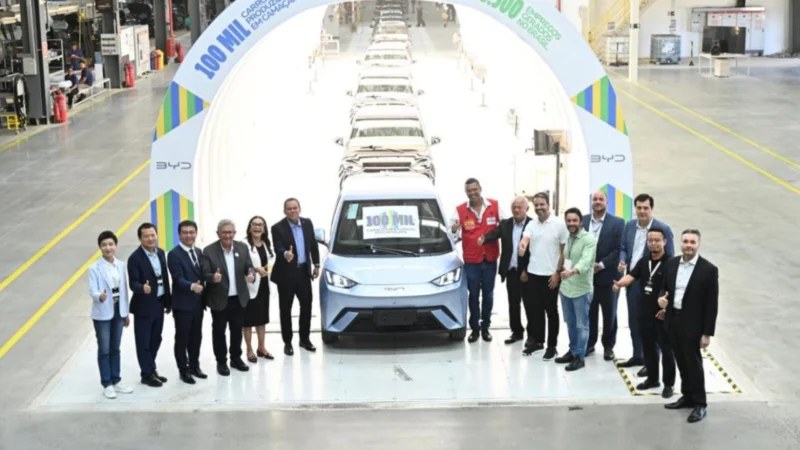 BYD Brazil plant in Camacari, Bahia, produced the 100,000th vehicle on July 16. It took the company slightly over a year to achieve this milestone, as the plant started operations on July 1, 2025. In late November last year, BYD Brazil added the second shift, ramping up the production capacity. The BYD Dolphin Mini (Seagull / Atto 1 / Dolphin Surf) became the anniversary car that rolled off the production line. This model starts at 118,900 reais (23,270 USD) without limited-time discounts. On July 2, BYD Brazil revealed that 99,029 vehicles were delivered in H1 2026. The company handed over 21,254 cars to owners in June 2026. The BYD Dolphin Mini was among the bestsellers with 6,457 units sold. The BYD Dolphin Mini Back to the BYD Brazil plant, it has an annual production volume of 150,000 units. However, the company’s long-term goal is to increase the annual volume to 600,000 cars. At press time, the plant’s workforce has surpassed 5,500 employees. The company aims to raise the localization rate of Brazilian-made cars to 50%. Previously, BYD executive vice president Stella Li shared that the Brazilian plant secured export orders totaling 100,000 vehicles from Argentina and Mexico. The top manager clarified that the orders are evenly split, with 50,000 vehicles designated for Argentina and another 50,000 for Mexico. BYD Brazil produced the 100,000th vehicle and hired the 5,500th employee At the moment, the BYD Brasil plant assembles three models in Brazil. The list includes the all-electric BYD Dolphin Mini and two plug-in hybrid models: the BYD King (Chaser / Chazor / Destroyer 05) and the BYD Song Pro (Sealion 5). Later, the plant will commence volume production of other models. The company’s long-term goal is to become Brazil’s best-selling car brand by 2030. BYD is actively pushing its overseas development amid intensifying domestic competition. According to China EV DataTracker, BYD sold 1,777,321 cars globally, down 16.1% Y-O-Y. Its domestic deliveries dropped by 45.9% to 795,169 units.
 -
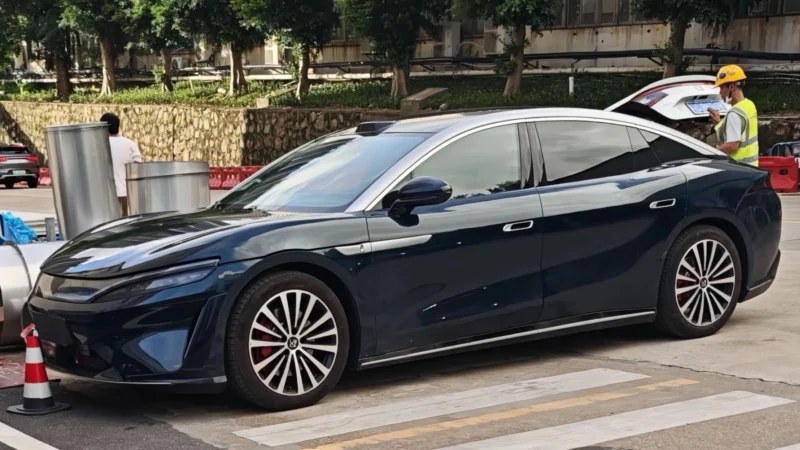 The BYD Da Han flagship full-size sedan revealed a 102.3 kWh LFP battery pack that weighs 725.9 kg. It takes over 30% of the car’s curb weight. The Da Han EV will enter China with up to 1,008 km of range under CLTC conditions. Another variant of its name is BYD Great Han. According to the purchase tax reduction list released by the Chinese Ministry of Industry and Information Technology (MIIT), the all-electric variant of the Da Han will come standard with a 102.326 kWh LFP battery pack manufactured by BYD subsidiary FinDreams. Its weight reaches 725.9 kg. The BYD Da Han. Credit: SugarDesign The RWD variant of the Da Han has a single e-motor for 370 kW (496 hp). Its electric range lies between 970 and 1,008 km under CLTC conditions, depending on the equipment. The curb weight of this version is 2,260 – 2,325 kg. The top-trim BYD Da Han AWD offers two electric motors with a combined peak power of 570 kW (764 hp). This modification has a curb weight of 2,505 kg. The electric range of the Da Han AWD is 820 – 880 km under CLTC conditions. It is worth noting that the BYD Da Han will be available for purchase with a DM-i plug-in hybrid version. It adopts a 1.5-liter turbocharged petrol-powered BYD472ZQB engine with a peak power of 115 kW (154 hp) and an electric motor for 200 kW (268 hp). Thanks to a 54.489 kWh LFP battery, the Da Han PHEV can run up to 470 km in electric mode. The BYD Da Han. Credit: MIIT Dimensions of the Da Han are 5256/1999/1510 mm. The wheelbase reaches 3,130 mm. For clarity, the Da Han is 66 mm longer than the standard Mercedes-Benz S-Class. This model was previously seen in China during road tests without camouflage as it nears the market launch with a price of around 300,000 yuan (44,290 USD). According to China EV DataTracker, the domestic sales of the standard BYD Han reached 3,285 units in June. The more powerful Han L delivered 584 units in the same period.
 -
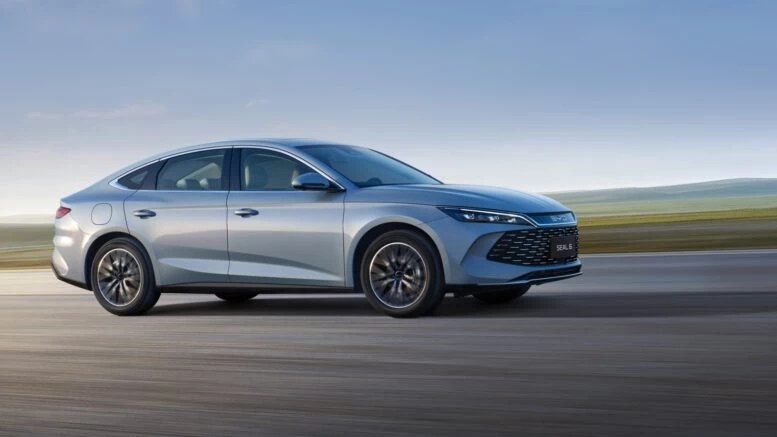 С сегодняшнего дня казахстанские дилеры BYD начали принимать предзаказы сразу на три новые гибридные модели: седан Seal 6 DM-i, городской кроссовер Yuan Up DM-i и семиместный Atto 8 DM-p, которые пополнят линейку моделей BYD. Все автомобили адаптированы для казахстанского рынка: они получат русифицированную мультимедийную систему, голосовой помощник на русском и казахском языках, поддержку фирменного мобильного приложения и официальную гарантию. Оформить заявку можно в любом из 21 официального дилерского центра марки. BYD Seal 6: до 2020 км без дозаправкиГибридный седан Seal 6 построен на гибридной системе DM-i пятого поколения. Она объединяет 1,5-литровый бензиновый двигатель, электромотор и фирменную батарею Blade емкостью 15,8 кВт·ч. Заявленный расход топлива составляет от 3,4 литра на 100 километров, а совокупный запас хода по циклу NEDC достигает 2020 километров. Седан BYD Seal 6 DM-i Flagship На казахстанском рынке Seal 6 предложат в топовой комплектации Flagship. Седан выполнен в фирменной стилистике Dragon Face с покатой линией крыши в духе фастбэков, полностью светодиодной оптикой и 18-дюймовыми колесными дисками. На выбор будут доступны четыре цвета кузова: синий, белый, черный и серый. Салон оформлен в сдержанной стилистике с элементами, вдохновленными традиционной китайской живописью. При этом основной акцент сделан не на декоре, а на технологиях. В доступной комплектации предусмотрены 15,6-дюймовый поворотный экран мультимедийной системы с поддержкой 4G и обновления систем мультимедиа, подогрев и вентиляция передних сидений, атмосферная подсветка с различными сценариями освещения, беспроводная зарядка мощностью 50 Вт и встроенный холодильник, который способен не только охлаждать напитки до –6 °C, но и поддерживать температуру блюд до +50 °C. Интерьер седана BYD Seal 6 DM-i Flagship Часть функций автомобиля доступна удаленно через приложение BYD Auto App, а вместо привычного ключа можно использовать смартфон с поддержкой NFC. Не поскупились и на системы безопасности. Seal 6 оснащен семью подушками безопасности, адаптивным круиз-контролем, системой удержания в полосе, ассистентом предотвращения схода с полосы, круговым обзором с 3D-визуализацией и парковочными датчиками. BYD Atto 8: новый флагманский семиместный кроссоверСледующей новинкой станет BYD Atto 8 – самый крупный гибрид в казахстанской линейке бренда. Кроссовер длиной 5040 мм рассчитан на семь пассажиров и будет доступен в одной максимальной комплектации AWD DM-p с полным приводом. Кроссовер BYD Atto 8 В основе силовой установки – 1,5-литровый турбированный двигатель и два электромотора. Вместе они позволяют разгоняться до 100 км/ч за 4,9 секунды, сохраняя при этом средний расход топлива на уровне 6,6 литра на 100 километров. Параллельно-последовательный гибрид оснащен более мощной гибридной системой DM-p (Dual Mode Performance) в сравнении с уже привычной многим системой DM-i. Кроссовер BYD Atto 8 За питание электромоторов отвечает фирменная батарея Blade емкостью 35,6 кВт·ч. На одной электротяге Atto 8 способен проехать до 152 километров, а общий запас хода достигает 1017 километров. Пополнить заряд с 30 до 80 процентов на быстрой станции можно примерно за 20 минут. Салон выполнен по трехрядной схеме и предлагает широкий набор оборудования. Здесь установлены 15,6-дюймовый поворотный экран мультимедийной системы, премиальная аудиосистема DiSound с 21 динамиком и панорамная крыша площадью 2,39 квадратного метра. Салон кроссовера BYD Atto 8 с 15,6-дюймовым поворотным экраном мультимедийной системы Не меньше внимания уделено и ходовой части. BYD Atto 8 получил интеллектуальную подвеску DiSus-C, двухрычажную переднюю и пятирычажную заднюю подвески, а также систему iCCT, которая координирует работу силовой установки, тормозов и подвески в зависимости от дорожной ситуации. Такой комплекс должен обеспечить не только высокий уровень комфорта, но и более точные реакции автомобиля в поворотах и на неровном покрытии. Все новости о китайских автомобилях в Казахстане — в нашем Telegram-каналеBYD Yuan Up DM-i: городской гибрид с запасом хода до 1100 кмТретьей новинкой станет BYD Yuan Up DM-i – гибридная версия уже знакомого компактного кроссовера. С переходом на силовую установку Super Hybrid DM автомобиль сохранил свои городские габариты, но стал заметно практичнее для дальних поездок. Кроссовер BYD Yuan Up DM-i Flagship Заявленный средний расход топлива составляет от 3,1 литра на 100 километров. При этом на одной электротяге Yuan Up DM-i способен проехать до 110 километров, а совокупный запас хода достигает 1100 километров, что позволяет большую часть повседневных поездок совершать без запуска бензинового двигателя. При длине кузова 4330 мм кроссовер получил колесную базу 2620 мм, а объем багажника варьируется от 425 до 1335 литров в зависимости от положения заднего ряда сидений. Кроссовер BYD Yuan Up DM-i Flagship Интерьер выполнен в привычной для современных моделей BYD цифровой концепции. Перед водителем расположена 8,8-дюймовая приборная панель, а по центру – 12,8-дюймовый мультимедийный экран. В оснащение автомобиля входят система кругового обзора, передние и задние парковочные датчики, электропривод водительского сиденья, подогрев передних сидений и рулевого колеса, беспроводная зарядка для смартфона мощностью 50 Вт и панорамная крыша. Интерьер кроссовера Кроссовер BYD Yuan Up DM-i Flagship Еще одна особенность модели, уже знакомая по другим гибридным и электрическим автомобилям BYD – функция Vehicle-to-Load (V2L). Она позволяет использовать тяговую батарею как внешний источник питания мощностью до 4 кВт, подключая к автомобилю бытовую технику, электроинструмент или туристическое оборудование. За безопасность и помощь водителю отвечает комплекс электронных ассистентов, включающий адаптивный круиз-контроль, систему удержания в полосе, электронную систему стабилизации, контроль тяги и ассистент при спуске. Ставка на гибридыС появлением этих моделей линейка BYD в Казахстане станет заметно разнообразнее. Если до сих пор бренд в основном ассоциировался с электромобилями, то теперь дилеры предложат сразу несколько подключаемых гибридов в разных сегментах – от бизнес-седана до полноразмерного семиместного SUV. При этом все три новинки объединяют фирменная технология DM и батарея BYD Blade, а также адаптация для казахстанского рынка, с поддержкой официального приложения и гарантией на автомобиль 6 лет или 150 000 км (8 лет/150 000 км на батарею и электромотор, 4 года/120 000 км на ходовую часть). Каждая модель ориентирована на свою аудиторию и отличается прежде всего форматом и характером эксплуатации. Цены на новинки уже объявлены: BYD Seal 6 DM-i Flagship – 12 990 000 тенге, BYD Yuan Up DM-i Flagship – 12 690 000 тенге, BYD Atto 8 DM-p Flagship – 23 490 000 тенге. Автомобили уже доступны к предзаказу и в скором времени появятся в наличии во всех официальных дилерских центрах по Казахстану. Елена НИКИТЕНКО (@AutochinaKz), Алматы
 -
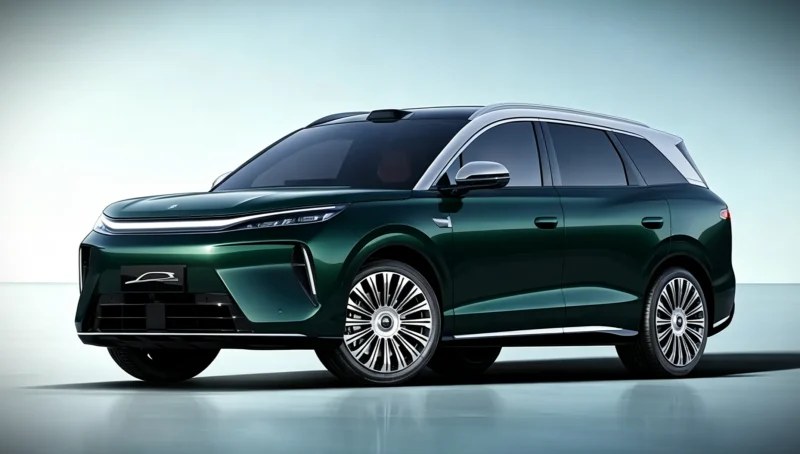 BYD has revealed the production design of the new 8 Series Tang electric SUV, adding another large pure-electric model to the Dynasty lineup while raising questions about the future structure of its Tang family. Released by Lu Tian, General Manager of BYD Dynasty Series, the finalised design images arrived shortly after the SUV appeared in China’s Ministry of Industry and Information Technology (MIIT) catalogue. The filing provided the first confirmed details about its dimensions, seating layouts, and electric powertrain. Where the new model fits remains unclear. The 8 Series Tang joins the Tang L and the larger 9 Series Da Tang in BYD’s domestic SUV lineup, while overseas markets have used the Atto 8 and Sealion 8 names for related vehicles. BYD has not confirmed whether the new SUV will eventually replace the Tang L or remain positioned as a separate model. Another Tang enters the lineup Appearing in MIIT records under the codes BYD6500BBBEV1 and BYD6500BBBEV2, the new SUV is officially positioned by BYD as a mid-to-large model focused on a “large five-seat” family layout. The regulatory filing, however, shows that the vehicle could offer additional seating flexibility. One registered variant is listed as a five-seat model, while the other supports both five-seat and seven-seat configurations. Measuring 5,045 mm long, 1,980 mm wide, and up to 1,760 mm tall, the 8 Series Tang rides on a 2,950 mm wheelbase with 1,700 mm front and rear tracks. Both versions use lithium iron phosphate (LFP) batteries and BYD’s TZ205QYD permanent-magnet synchronous motor, producing 300 kW of peak power and 150 kW of rated output. The listed top speed reaches 250 km/h, although battery capacity and pack specifications remain undisclosed. The 8 Series Tang uses BYD’s TZ205QYD permanent-magnet synchronous motor with a peak output of 300 kW. The 800 km question BYD claims its pure-electric range will exceed 800 km. BYD has not released battery capacity, detailed testing conditions, or independent verification data to demonstrate how the target was achieved. Media reports have linked the 8 Series Tang with second-generation Blade Battery technology, flash charging capability, and DiSus-A intelligent body control with dual-chamber air suspension. Those features have not been confirmed through BYD’s announcement or the available MIIT documentation. BYD’s Tang family gets more complicated Beyond the specifications, the arrival of the 8 Series Tang adds another layer to BYD’s large SUV strategy. China EV DataTracker data shows Tang L domestic sales reached 629 units in June 2026, compared with 3,338 units in December 2025, although the available figures do not prove that the new model is intended as a direct replacement. The final relationship between the 8 Series Tang, Tang L, and 9 Series Da Tang will become clearer once BYD announces pricing and launch details. We expect the model to arrive in the second half of 2026, but BYD has not yet confirmed an official launch timeline.
 -
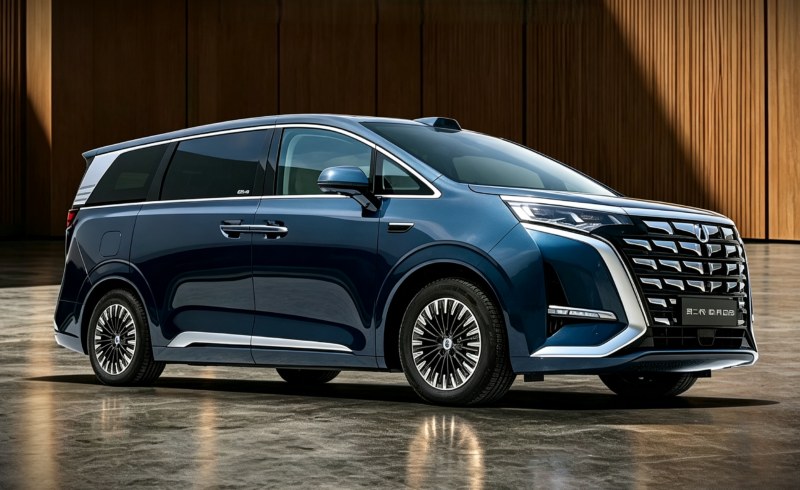 BYD’s Denza has expanded the second-generation D9 plug-in hybrid (PHEV) lineup with a new Flash Charging Luxury Variant priced at 329,800 yuan (48,700 USD), reducing the model’s entry price by 30,000 yuan (4,430 USD) compared with the previous base version. The new variant keeps the D9’s dual-motor four-wheel-drive PHEV system, the second-generation Blade Battery, and LiDAR-based driver-assistance hardware. To reach the lower price point, Denza removed several premium interior features and adjusted certain chassis components. Lower entry price, same core technology The second-generation Denza D9 launched in April 2026 with six variants priced between 359,800 yuan and 459,800 yuan (53,100–67,900 USD). The new Flash Charging Luxury Variant adds a lower-priced version below the existing lineup. The refreshed second-generation D9 and Z9 GT, equipped with BYD’s Flash Charging technology, began arriving at dealerships across China in May, marking the start of the rollout of the updated models. The new entry-level variant expands that flash-charging lineup with a more affordable option rather than introducing a new powertrain. Power comes from a 1.5T plug-in hybrid system paired with two electric motors. The front motor produces 200 kW, while the rear motor delivers 45 kW. The petrol engine delivers 115 kW and 225 Nm of torque, with the system configured as a four-wheel-drive. A 58.5 kWh second-generation Blade Battery provides a CLTC pure electric range of 350 km. Denza lists the vehicle’s combined range at 1,480 km under comprehensive operating conditions. Some media reports have cited a pure-electric range exceeding 400 km, but those figures conflict with the 350 km CLTC figure shown in official materials for the 58.5 kWh battery version. The higher range figures appear to refer to other D9 configurations with different battery specifications. The new variant also supports Denza’s direct-drive dual-gun supercharging architecture. Denza claims the system can complete a full nominal charging cycle in 9 minutes under its test conditions. The company also states that charging performance at -30°C adds about 3 minutes to the charging time. Higher charging power requires management of increased electrical current and heat generation. The long-term effects of repeated high-power charging on battery ageing remain unknown. Luxury cuts focus on cabin equipment The lower price is achieved through changes to equipment levels rather than changes to the vehicle’s basic powertrain layout. The new variant removes features including the head-up display, 15.6-inch passenger entertainment screen, fragrance system, and real wood interior trim. The front passenger lumbar adjustment and massage functions are also removed, while rear-seat heating and ventilation are no longer available. The chassis continues to use Denza’s DiSus-C Intelligent Damping Body Control System. However, this variant does not include higher-specification components such as dual-valve mechanical hardware, road preview sensors, or iCVC intelligent control functions. The vehicle retains the same exterior dimensions as other second-generation D9 variants, measuring 5,250 mm long, 1,960 mm wide, and 1,900 mm tall with a 3,110 mm wheelbase. LiDAR and flash charging remain Several electronic systems remain unchanged on the new entry-level variant. The D9 Flash Charging Luxury Variant is equipped with one roof-mounted LiDAR unit, three 4D millimetre-wave radars, 11 cameras, and 12 ultrasonic sensors. Denza markets the system as the God’s Eye 5.0 Intelligent Driving Assistance System. The retained sensor package means the variant continues to use the same listed driver assistance hardware as higher-positioned versions, while equipment reductions focus on cabin functions and materials. Denza’s domestic sales reached 18,631 units in June 2026, compared with 15,620 units in May and 10,638 units in April, according to China EV DataTracker. The new variant adds another configuration to the D9 lineup during a period when the brand’s monthly domestic sales increased. Source: Denza, Autohome
 -
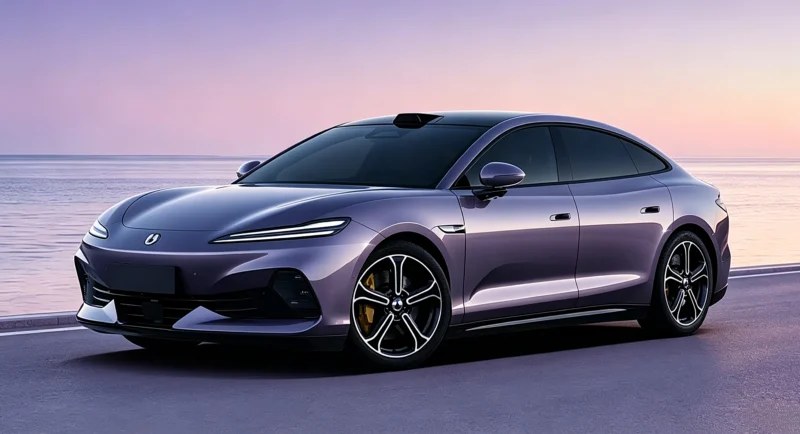 BYD’s Denza has released the first official images of its upcoming Z9S sedan, revealing a new “Dawn Purple” exterior colour and confirming the model’s production design direction. At the same time, regulatory data and technical document reports have exposed a shorter body format, multiple electric powertrain options, and a claimed range figure of up to 920 km CLTC. A shorter Z9 with a different mission The official images released by Denza show the sedan finished in the “Dawn Purple” paint scheme. Denza describes the Z9S as a “technology luxury intelligent sedan,” while its registered dimensions place it between large luxury sedans and more performance-focused electric models. The Z9S arrives as a new addition to Denza’s sedan lineup, but its dimensions suggest it is not simply a direct copy of the existing Z9. Measuring 5090 mm long with a 3025 mm wheelbase, the Z9S is 145 mm shorter overall and has a 100 mm shorter wheelbase than the current Denza Z9. Regulatory data reveals two sides of the Z9S lineup MIIT regulatory datashows that the Z9S will be offered with at least two single-motor configurations. The lower-power version uses a rear permanent magnet synchronous motor supplied by Zhengzhou BYD Auto, producing 320 kW peak output and 160 kW rated power. MIIT data also lists a total vehicle weight of 2,700 kg for the low-power version, along with a 19-inch tyre specification of 245/50R19 at the front and 275/45R19 at the rear. The regulatory documents also show a top speed rating of 250 km/h, highlighting the Z9S’s performance-oriented positioning despite its long-range focus. A higher-power single-motor version increases peak output to 370 kW (around 496 hp) while maintaining a rear-wheel-drive layout. Both versions are listed with a 102.326 kWh battery pack and a CLTC range of 920 km. The differences between the two single-motor versions beyond output. The lower-power variant lists battery cells supplied by Hefei BYD with pack assembly handled by Shanwei FinDreams Battery, while the higher-power version uses Wuwei FinDreams cells assembled by Shenzhen BYD Auto Industry. A separate three-motor version has been reported with a combined output of 890 kW (1194 hp) and a CLTC range of 780 km. However, the available MIIT document extraction does not directly map to the three-motor configuration in the same way as the two single-motor registrations, leaving the relationship between all variants partly unresolved. High output comes with unanswered questions The Z9S also arrives as Denza continues expanding its sedan range. Previous sales data showed 6,952 deliveries of the Denza D9 and 6,025 deliveries of the Denza Z9 GT in June 2026, according to China EV DataTracker. Those figures represent existing models and do not indicate sales performance for the newly revealed Z9S. For now, several technical details remain undisclosed. However, we expect the production model to feature the second-generation Blade Battery and God’s Eye B driver assistance system. Source: IThome, Autohome Official Denza Z9S exterior images reveal the sedan’s shorter-wheelbase design compared with the existing Z9 model.
 -
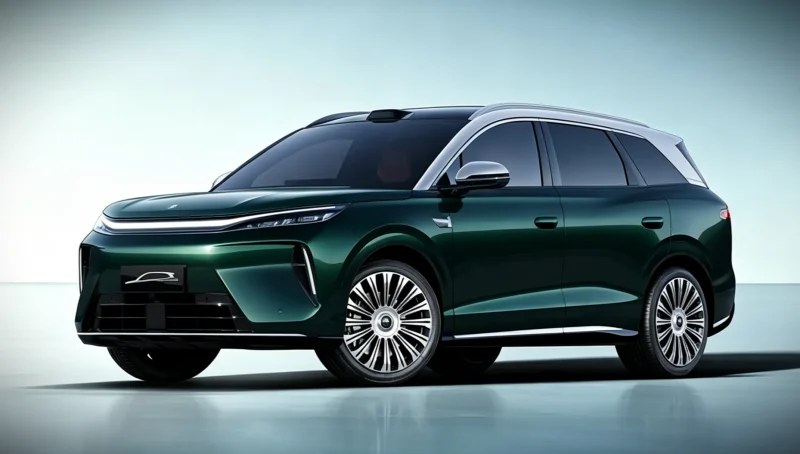 BYD has revealed the production design of the new 8 Series Tang electric SUV, adding another large pure-electric model to the Dynasty lineup while raising questions about the future structure of its Tang family. Released by Lu Tian, General Manager of BYD Dynasty Series, the finalised design images arrived shortly after the SUV appeared in China’s Ministry of Industry and Information Technology (MIIT) catalogue. The filing provided the first confirmed details about its dimensions, seating layouts, and electric powertrain. Where the new model fits remains unclear. The 8 Series Tang joins the Tang L and the larger 9 Series Da Tang in BYD’s domestic SUV lineup, while overseas markets have used the Atto 8 and Sealion 8 names for related vehicles. BYD has not confirmed whether the new SUV will eventually replace the Tang L or remain positioned as a separate model. Another Tang enters the lineup Appearing in MIIT records under the codes BYD6500BBBEV1 and BYD6500BBBEV2, the new SUV is officially positioned by BYD as a mid-to-large model focused on a “large five-seat” family layout. The regulatory filing, however, shows that the vehicle could offer additional seating flexibility. One registered variant is listed as a five-seat model, while the other supports both five-seat and seven-seat configurations. Measuring 5,045 mm long, 1,980 mm wide, and up to 1,760 mm tall, the 8 Series Tang rides on a 2,950 mm wheelbase with 1,700 mm front and rear tracks. Both versions use lithium iron phosphate (LFP) batteries and BYD’s TZ205QYD permanent-magnet synchronous motor, producing 300 kW of peak power and 150 kW of rated output. The listed top speed reaches 250 km/h, although battery capacity and pack specifications remain undisclosed. The 8 Series Tang uses BYD’s TZ205QYD permanent-magnet synchronous motor with a peak output of 300 kW. The 800 km question The biggest number attached to the new Tang is BYD’s claim that its pure-electric range will exceed 800 km. For now, the figure remains an official company claim. BYD has not released battery capacity, detailed testing conditions, or independent verification data to demonstrate how the target was achieved. Achieving long range from a large electric SUV requires balancing several factors. A longer body, larger cabin, and higher vehicle weight increase energy demand, meaning battery size and efficiency tuning will determine how closely real-world driving matches the claimed figure. Media reports have linked the 8 Series Tang with second-generation Blade Battery technology, flash charging capability, and DiSus-A intelligent body control with dual-chamber air suspension. Those features have not been confirmed through BYD’s announcement or the available MIIT documentation. BYD’s Tang family gets more complicated Beyond the specifications, the arrival of the 8 Series Tang adds another layer to BYD’s large SUV strategy. China EV DataTracker data shows Tang L domestic sales reached 629 units in June 2026, compared with 3,338 units in December 2025, although the available figures do not prove that the new model is intended as a direct replacement. The final relationship between the 8 Series Tang, Tang L, and 9 Series Da Tang will become clearer once BYD announces pricing and launch details. We expect the model to arrive in the second half of 2026, but BYD has not yet confirmed an official launch timeline.
 -
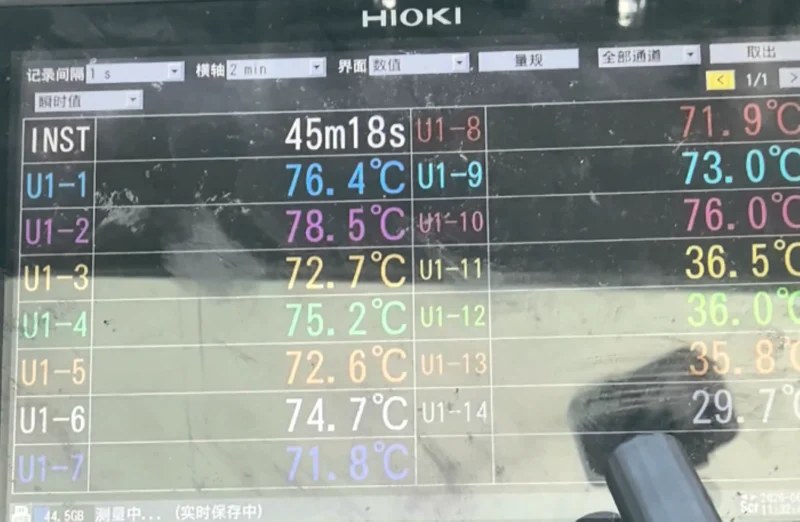 After its earlier self-testing attracted attention, automotive self-media outlet Cai Shen Dao commissioned a laboratory evaluation of BYD’s second-generation Blade Battery, which recorded a peak cell-surface temperature of 78.5°C during a high-current flash-charging session. The evaluation used BYD’s Fang Cheng Bao Tai 3 (FCB Ti3) Flash Charging Edition, specifically the dual-motor AWD variant. The model is equipped with a 78.72 kWh lithium iron phosphate (LFP) battery pack, produces 310 kW of combined output, and has a 565 km CLTC range rating. During the test, the SUV charged from 7% to 97% state of charge (SOC) in 8 minutes and 32 seconds, with peak charging current reaching approximately 1,200 amps. The laboratory measurements also showed an approximately 8°C difference between direct temperature probes installed on the battery cell surface and the vehicle’s battery management system (BMS) temperature data. From battery teardown to laboratory testing Cai Shen Dao previously attracted attention after dismantling a BYD Blade Battery 2.0 pack to document its internal cell structure. The same team later conducted a May 2026 flash-charging temperature test using its own equipment, reporting a peak cell-surface temperature of 76.42°C, while the vehicle’s BMS showed 71.0°C. The earlier results led to discussion around testing methods used by automotive self-media channels. To obtain additional measurements under laboratory conditions, Cai Shen Dao commissioned Guolian Research Institute, part of the China National Power Battery Innovation Centre, to conduct a follow-up evaluation. The latest test came after Cai Shen Dao’s accounts were restricted across several Chinese platforms, including WeChat, Bilibili, Douyin, and Weibo, following tighter restrictions around automotive testing content from self-media channels. The team also noted that dedicated national standards for ultra-fast charging temperature-rise evaluations are still developing, with current third-party assessments relying on complete vehicles rather than standalone battery packs. The laboratory report was shown in Cai Shen Dao’s July 15 WeChat Channels video. A banned Chinese car blogger’s latest BYD battery test has revealed one of the most detailed looks yet at the thermal conditions behind fast EV charging. Inside the 1,200A flash-charging evaluation Guolian installed physical temperature probes on the battery cells while recording the vehicle’s BMS data during charging. A probe attached to the cell’s large face recorded the highest reading at 78.5°C. Testing was carried out at outdoor temperatures ranging from 29.0°C to 29.7°C. The published laboratory results showed: Charging range: 7% to 97% SOC Charging time: 8 minutes 32 seconds Peak charging current: approximately 1,200 A Maximum cell-surface temperature: 78.5°C Time for measured temperature to fall below 70°C: 14 minutes Time for measured temperature to fall below 60°C: 32 minutes 56 seconds The Fang Cheng Bao Ti3 Flash Charging Edition launched on March 13, 2026. The tested AWD version is priced at 169,800 yuan (25,100 USD), while the entry-level rear-wheel-drive version starts at 153,800 yuan (22,700 USD). The model uses BYD’s second-generation Blade Battery with Cell-to-Body (CTB) integration. The evaluation focused on thermal behaviour during a single high-current charging event. Why the probe and BMS readings differed During the same charging session, the physical probe recorded a peak temperature of 78.5 °C, while the BMS reported approximately 70.5°C. The difference is related to where the two systems collect temperature data. Laboratory probes measure localised temperatures at the battery cell surface, while BMS sensors are integrated into the vehicle’s battery system and monitor temperature through the battery management architecture. The two systems were therefore measuring different points within the battery rather than identical locations. The result provides another data point on the development of BYD’s fast EV charging, as automakers continue to balance charging speed, thermal management, and battery durability.
 -
 Péter Szijjártó, the former Minister of Foreign Affairs and Trade of Hungary, announced on July 15, 2026, that he is resigning from his parliamentary seat to join the Chinese electric vehicle giant, BYD, as reported by SHobserver. Szijjártó, 47, who served as a member of the Hungarian National Assembly since 2002 and held the position of Foreign Minister from 2014 until May of this year, shared the news on his Facebook. He described the move as a transition to a “highly prestigious” international role at one of the world’s leading enterprises. “BYD is one of the most successful companies in the automotive industry over the past 20 years and a global leader in new energy vehicle manufacturing,” Szijjártó wrote. “Starting today, I will serve as an executive responsible for the group’s external relations and the expansion of new business lines.” In 2024, Péter Szijjártó also attended the signing of the cooperation agreement between BYD and Hungary (second from right). This appointment underscores the deepening strategic ties between Hungary and China in the EV sector. BYD, which broke ground on its first European electric vehicle production plant in the southern Hungarian city of Szeged in 2024, has been expanding its footprint in the region. Last year, the Hungarian government and BYD signed a strategic cooperation agreement, which included the establishment of BYD’s European headquarters and a new research and development centre in Budapest. During the signing of the agreement, then-Prime Minister Viktor Orbán emphasised that the world is in an era of transformation characterised by new technologies and shifting consumer demands. He noted that China’s leadership in EV technology makes this strategic partnership an essential engine for Hungary’s economic growth, positioning the nation to lead in the new era of automotive technology. In April, Prime Minister Magyari reaffirmed this vision, stating, “We hope to make Hungarian local enterprises partners to BYD, CATL, and other major investors. I believe we will certainly be able to achieve mutually beneficial cooperation.” In recent years, many companies within the Chinese new energy vehicle supply chain have established a presence in Hungary. Regarding original equipment manufacturers (OEMs), BYD is building a vehicle production base in Hungary with a capacity of 300,000 units, while also setting up its European headquarters in Budapest. Nio has established a European energy plant focusing on the manufacturing and R&D of battery swap stations. In terms of the supply chain, power battery companies such as CATL, EVE Energy, and Sunwoda are all building battery factories in Hungary. Péter Szijjártó’s post on Facebook.
 -
 BYD expects to surpass Toyota as the bestselling automaker in five years without access to the US market, executive vice president Stella Li shared. The company is ramping up its overseas presence, targeting Europe, Latin America, South-east Asia, and Australia. Stella Li made this bold statement shortly after BYD had achieved the cumulative NEV production volume of 17 million units. It is worth noting that the company picked up the pace in recent years. The BYD’s 1 millionth NEV rolled off the production line in May 2021. In November 2024, BYD produced 10 million new energy vehicles. What is more, it took the company six months to jump from 15 to 17 million assembled NEVs. According to China EV DataTracker, BYD stopped falling Year-Over-Year in May 2026 after eight consecutive months of passenger car sales decline as the company shifts priorities towards foreign sales. In H1 2026, BYD sold 1,777,321 cars globally, down 16.1% Y-O-Y. Its domestic deliveries dropped by 45.9% to 795,169 units. However, the steady growth of BYD’s overseas sales could offset the domestic decline in H2. Back to Stella Li, she shared with Financial Times that BYD set the mentioned goal based on the organic growth. Executive VP highlighted that this result can be achieved without relying on the US market, which established high tariffs on China-made cars. The first BYD’s flash charger in the UK. Credit: He Zhiqi Stella Li stated that BYD doesn’t need to acquire automakers to boost sales and take the crown from Toyota. If a suitable opportunity arises in the future, the company would not rule out acquiring European luxury brands. But at present there are no specific acquisition targets. Last month, BYD founder and chairman, Wang Chuanfu, also announced plans to surpass Toyota and become the world’s bestselling automaker within the same period. According to the head of the company, this result could be achieved by rapid leveraging of charging technology and explosive overseas growth. Last year, BYD sold 4.55 million cars globally. For comparison, Toyota sold 10.5 million units (excluding Daihatsu and Hino). For 2026, BYD has guided for 5.0 to 5.5 million total global NEV sales, including 1.5 million overseas.
 -
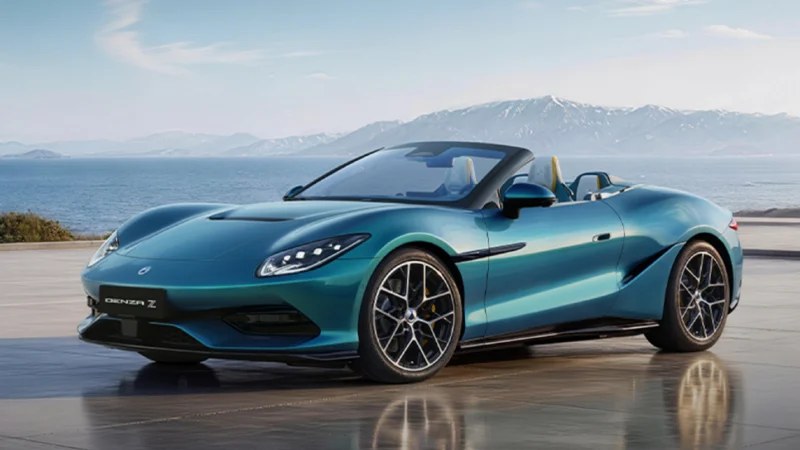 BYD‘s premium brand, Denza, has officially unveiled its new electric supercar, the Denza Z, at the Goodwood Festival of Speed in the UK. The vehicle has recorded over 1,000 orders globally within the first 24 hours of its domestic pre-sale, which launched on July 13. Pricing and Performance The Denza Z is positioned in the high-end market, with China market pre-sale prices starting at 680,000 yuan (100,000 USD) for the Coupe version. The Spider (convertible) and Racing (track) versions are priced at 780,000 yuan (114,700 USD) and 1,180,000 yuan (173,500 USD), respectively. In contrast, the model’s European pricing starts at approximately 142,900 pounds (184,800 USD). The supercar is powered by a three-motor drive system, delivering a combined output of 1,180 kW (1,582 hp). The Racing version boasts a 0-100 km/h acceleration time of 1.96 seconds and a top speed of 350 km/h. Denza Z pre-sale performance. Technology The Denza Z introduces three “world-first” technologies: e3 Platform: The first electric supercar based on this platform, enabling torque distribution across all four wheels. DiSus-M suspension: The world’s first electric supercar equipped with a magnetorheological suspension system, featuring a damping response time of less than 10 milliseconds. Integrated powertrain: Features a 15-in-1 integrated electric drive unit and the second-generation CTB blade battery, capable of charging from 10% to 70% in 5 minutes, with a peak power of 1,500 kW. Designed under the leadership of BYD’s Global Design Director Wolfgang Egger, the car features a “Pure Emotion” design language, characterised by a low-slung, wide-body silhouette and carbon fibre aerodynamic kits. Denza has announced that the Z will head to the Nürburgring Nordschleife this autumn to attempt a top-tier lap record. BYD’s global expansion strategy At the Goodwood Festival of Speed, Stella Li, Executive Vice President of BYD, emphasised that the company is moving beyond simple exports to building a global brand identity, as reported by The Paper. To support its international growth, BYD is expanding its charging infrastructure. The company plans to build 6,000 flash-charging stations overseas between March 2026 and March 2027, with 3,000 in Europe, 2,000 in the Americas, and 1,000 in the Asia-Pacific region. As of the first half of 2026, BYD’s overseas sales reached 789,400 units, a 68% year-on-year increase, with overseas markets now accounting for over 40% of the company’s total sales.
 -
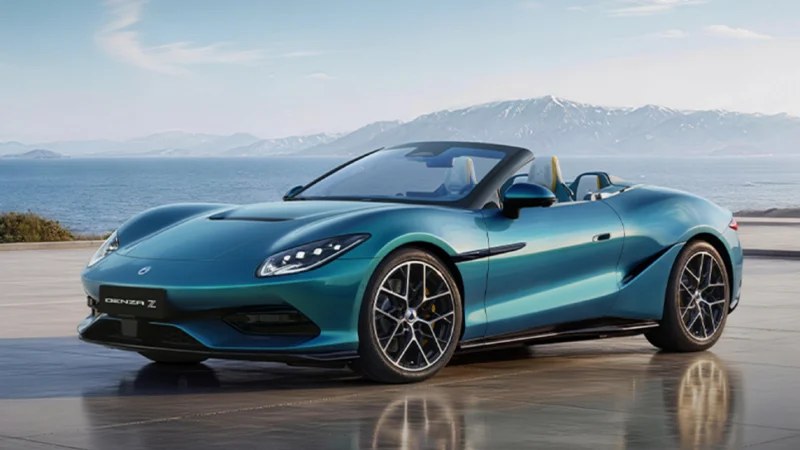 BYD‘s premium brand, Denza, has officially unveiled its new electric supercar, the Denza Z, at the Goodwood Festival of Speed in the UK. The vehicle has recorded over 1,000 orders globally within the first 24 hours of its domestic pre-sale, which launched on July 13. Pricing and Performance The Denza Z is positioned in the high-end market, with China market pre-sale prices starting at 680,000 yuan (100,000 USD) for the Coupe version. The Spider (convertible) and Racing (track) versions are priced at 780,000 yuan (114,700 USD) and 1,180,000 yuan (173,500 USD), respectively. In contrast, the model’s European pricing starts at approximately 142,900 pounds (184,800 USD). The supercar is powered by a three-motor drive system, delivering a combined output of 1,180 kW (1,582 hp). The Racing version boasts a 0-100 km/h acceleration time of 1.96 seconds and a top speed of 350 km/h. Denza Z pre-sale performance. Technology The Denza Z introduces three “world-first” technologies: e3 Platform: The first electric supercar based on this platform, enabling torque distribution across all four wheels. DiSus-M suspension: The world’s first electric supercar equipped with a magnetorheological suspension system, featuring a damping response time of less than 10 milliseconds. Integrated powertrain: Features a 15-in-1 integrated electric drive unit and the second-generation CTB blade battery, capable of charging from 10% to 70% in 5 minutes, with a peak power of 1,500 kW. Designed under the leadership of BYD’s Global Design Director Wolfgang Egger, the car features a “Pure Emotion” design language, characterised by a low-slung, wide-body silhouette and carbon fibre aerodynamic kits. Denza has announced that the Z will head to the Nürburgring Nordschleife this autumn to attempt a top-tier lap record. BYD’s global expansion strategy At the Goodwood Festival of Speed, Stella Li, Executive Vice President of BYD, emphasised that the company is moving beyond simple exports to building a global brand identity, as reported by The Paper. To support its international growth, BYD is expanding its charging infrastructure. The company plans to build 6,000 flash-charging stations overseas between March 2026 and March 2027, with 3,000 in Europe, 2,000 in the Americas, and 1,000 in the Asia-Pacific region. As of the first half of 2026, BYD’s overseas sales reached 789,400 units, a 68% year-on-year increase, with overseas markets now accounting for over 40% of the company’s total sales.
 -
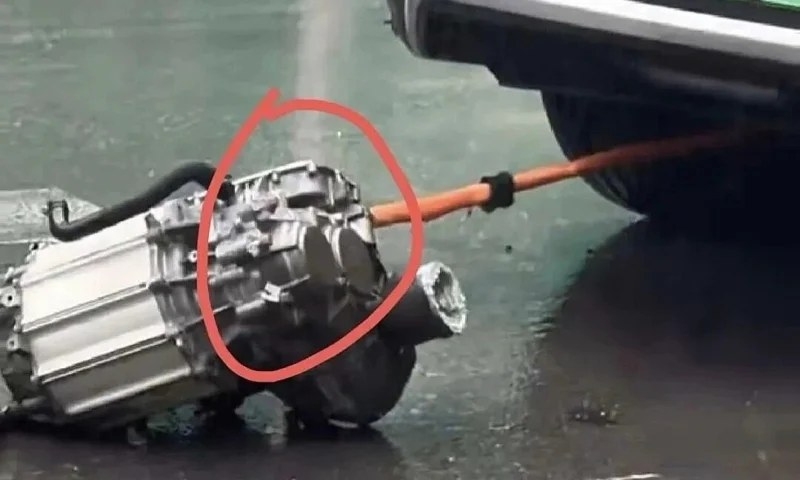 BYD says the rear motor assembly seen dragging behind a Tang SUV in Shenyang detached after the vehicle struck a submerged object while driving through floodwater, describing the incident as impact damage rather than a manufacturing defect. The explanation came during a July 14 telephone inquiry by Langzhang News (浪涨新闻) with BYD Auto’s official customer service. Unlike self-media accounts that later reposted the interview, Langzhang News is a state-backed mainstream media outlet, making the phone interview the first verified primary-source response from BYD. The company explained that the Tang “experienced a severe underbody collision” and that the damage was “caused by a collision while wading through water, not a quality issue.” The response comes a day after we first reported the incident, when videos from flooded streets in Shenyang showed a Tang dragging a large metallic assembly beneath its rear bumper, sparking online jokes that the SUV had “given birth” to its rear motor. READ ALSO BYD Tang ‘gives birth’ in flood as rear motor detached Underbody impact identified as the cause According to BYD’s customer service, operating data and damage to the mounting points indicate the rear electric drive motor assembly was torn loose after the SUV struck a submerged object while driving through floodwater. The footage clearly showed the detached motor assembly trailing behind the SUV, but BYD did not immediately explain what had happened. That fueled widespread speculation online. The company states it has contacted the owner and arranged an inspection after the Shenyang Tang flood incident. Credit: Weibo Mirrors executive warning issued five days earlier BYD’s explanation closely echoes a warning issued by Executive Vice President He Zhiqi on July 8, just five days before the Shenyang incident. He said Blade Battery packs meet IP67 and IP68 ingress-protection standards for emergency situations, but stressed that those ratings should never be interpreted as permission to drive through deep floodwater. Instead, he warned that submerged rocks, curbs and other unseen obstacles could severely damage a vehicle’s underbody even if the battery and high-voltage system remain protected. We previously reported on those flood-safety warnings after self-organised relief convoys entered flood-hit regions in southern China. BYD has not published a written technical report or inspection findings. For now, the July 14 Langzhang News interview is the company’s only public explanation of the incident. About the BYD Tang The Tang is BYD’s three-row SUV, offered in both plug-in hybrid and battery-electric versions. Standard DM-i plug-in hybrid versions use a front-wheel-drive powertrain, while the higher-performance DM-p and dual-motor EV variants feature an all-wheel-drive layout with a dedicated rear electric drive unit—the same type of assembly involved in the Shenyang incident. Depending on the variant, the SUV measures up to 4,905 mm long, 1,950 mm wide and 1,725 mm tall, with a 2,820 mm wheelbase. Higher trims are equipped with BYD’s DiPilot 300 driver assistance system, powered by an Nvidia Drive Orin X processor and 12 GB of system memory, supporting functions including highway navigation assistance.
 -
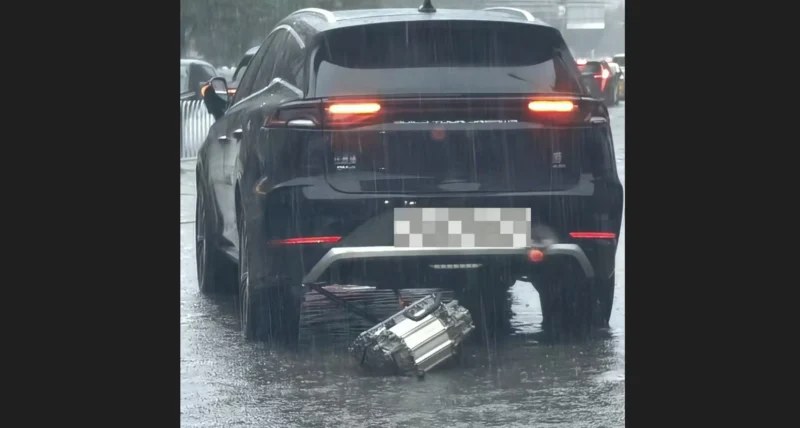 Multiple videos filmed during flooding in Shenyang have sparked widespread discussion on Chinese social media after viewers claimed a BYD Tang SUV had lost its rear electric motor. The videos show the SUV stopped in floodwater with its hazard lights flashing while a large metallic component is visible behind the vehicle and appears to remain connected beneath the rear of the SUV. The footage prompted widespread speculation online, with some netizens claiming the detached component was the vehicle’s rear electric drive unit. BYD has not publicly commented on the incident or identified the detached component. Why the claim is disputed The videos confirm that a large component detached from the underside of the SUV. However, they do not establish what the component is or what caused it to separate from the vehicle. Neither BYD nor local authorities have publicly identified the detached part, and no inspection results have been released. As a result, claims circulating on social media that the SUV’s rear electric motor fell from the vehicle remain unverified based on the publicly available evidence. The videos also do not show the vehicle before the incident or explain how the damage occurred, leaving the sequence of events unclear. BYD’s flood warning The Shenyang incident comes less than a week after BYD publicly reminded owners not to use its water-resistance technologies as an excuse to drive through floodwater. Five days before the videos circulated, BYD Executive Vice President He Zhiqi said the company’s Blade battery water-resistance ratings are designed to provide emergency safety protection rather than encourage drivers to enter flooded roads. He said the battery pack’s IP67 and IP68 ratings demonstrate resistance to water ingress under specified test conditions, but should not be interpreted as approval to deliberately drive through deep water. During the same period of heavy rainfall, BYD-supported volunteer convoys using Denza and Fang Cheng Bao vehicles entered flood-affected areas in Guangxi to deliver emergency relief supplies. The company described those missions as organised disaster-relief operations rather than examples for everyday motorists. High hydrodynamic pressure from wading through deep water can easily tear off exterior protective underbody panels. BYD has issued similar reminders before. During Super Typhoon Ragasa in 2025, videos of a Yangwang U8 driving through deep floodwater attracted widespread attention after waves created by the vehicle reportedly damaged nearby storefronts. At the time, BYD said the U8’s Emergency Floating Mode is intended as an emergency safety feature rather than for routine flood driving. The company continues to advise drivers to avoid flooded roads whenever possible, noting that deep water can damage body panels, underbody components and other vehicle systems even if the battery and high-voltage system remain protected. The Shenyang videos have generated widespread speculation about what was detached from the SUV, but the available footage does not provide a definitive answer. Based on the available videos, it is clear that a large metallic component has separated from the underside of the vehicle. However, the identity of that component has not been publicly confirmed. Until BYD or another official source releases further information, claims that the vehicle’s rear electric motor detached remain unverified. Market context According to China EV DataTracker, in June 2026, BYD domestic sales reached 177,442 units, up 7.6% month on month, even as year-on-year sales contracted by 44.4%. The brand maintained an 11.0% domestic market share for the month, demonstrating steady momentum despite shifting industry conditions. Updated: 14/07/2026 17:35 pm China time – replaced enhanced images
 -
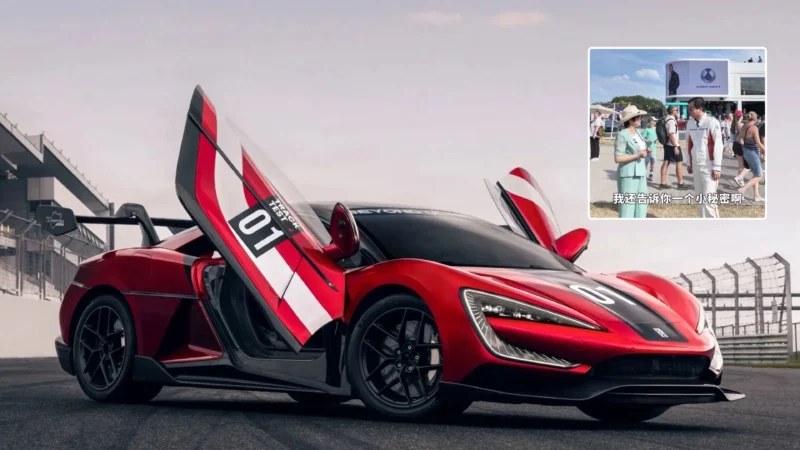 Speaking outside Denza’s booth at the Goodwood Festival of Speed, BYD vice president Stella Li announced new plans for the Yangwang U9 Xtreme to attempt a top speed record above 500 km/h. Last September, the supercar reached 496.22 km/h, making it the world’s fastest production car. The U9 Xtreme set its current record at Automotive Testing Papenburg’s (ATP) proving grounds in Germany. It surpassed the 490.5 km/h record set earlier by the Bugatti Chiron Super Sport 300+. Koenigsegg claims its Jesko Absolut hypercar can reach even higher speeds, though this is based on simulations. How Yangwang plans to break 500 km/h The published video shows Stella Li chatting with Li Yunfei, BYD’s brand and PR manager. The VP reveals that after the U9 Xtreme’s record run last September, the testing team informed her that the car still had untapped speed and potential. The team then requested a second attempt at breaking the barrier. The Yangwang testing team at the ATP test track. Source: Di Chui Zhi Jia (Subtitles: They still have more energy – So we still have to provide them – One opportunity) The video ends with the VP promising Yangwang’s testing team a “second chance” and asking viewers to await the U9 Xtreme’s second run in November. It appears that the U9 Xtreme’s first attempt left some performance on the table. Last September, BBC’s Top Gear reported that after the supercar’s record-breaking run, data showed test driver Marc Basseng still had 1.5 seconds of full-throttle time left before he had to decelerate. It’s expected that the Yangwang team will still conduct the November run at the ATP test track, a 12.3 km high-speed oval with two 4km stretches of straight track. With the car, driver, and track already pushed to their limits, it remains to be seen if the U9 Xtreme can achieve its 500 km/h claim. More on Yangwang and the U9 Xtreme The U9 Xtreme is a performance variant of the Yangwang U9 supercar. It features extensive aero upgrades: a large carbon front splitter, a rear diffuser, a dual-channel hood, and a tall swan-neck rear spoiler. The Yangwang U9 Xtreme. Credit: Yangwang Powered by BYD’s quad-motor e4 (Yi Si Fang) platform, the U9 Xtreme now delivers 2,220 kW (2,977 hp). It delivers 1,200 hp per ton, and its torque vectoring system adjusts up to 100 times per second. As BYD’s performance flagship, the firm’s other signature tech items are here as well. Blade Battery tech is now combined with dual-layer cooling, and the U9 Xtreme’s LFP pack can sustain track sessions with discharge rates of up to 30 C. The standard U9 features BYD’s DiSus-X active suspension, enabling viral dance and hop tricks. On the Xtreme, it controls vertical motion to enhance grip and handling, keeping the 2,480 kg body composed at all times. Yangwang’s domestic deliveries, July 2025 to June 2026. Source: China EV DataTracker According to China EV DataTracker, Yangwang delivered 455 units domestically in June 2026. As BYD’s flagship halo brand, it isn’t expected to sling cars in large volumes. Nevertheless, Yangwang sees consistent year-on-year growth of over 100% each month. Source: Yangwang, WeChat – Di Chui Zhi Jia / Home of BYD Fans
 -
 BYD’s new Ocean series flagship, the Seal 08 sedan, was involved in its first reported road collision less than two weeks after hitting the market. A photo shared on Chinese automotive communities and a report by Toutiao show the flagship sedan, which retails between 196,900 yuan (28,944 USD) and 239,900 yuan (35,265 USD), tangled up with an older Venucia D60 EV Plus at an urban intersection. While the Venucia D60 EV Plus appeared to suffer heavy front-end damage, including a crushed hood and deformed engine bay, the Seal 08 showed only minor paint scuffs on its front-left fender panel. Chinese automotive enthusiasts quickly joked that the EV had simply brushed the dirt off its shoulder, referencing the passerby photographer’s viral comparison to a smudge on light fabric. However, the accident’s impact speed and potential hidden structural damage remain unverified. The available image does not show obvious passenger cabin deformation. Some online posts also claimed the front doors continued to operate normally, although that has not been independently verified. The photo shows the Seal 08 with limited visible damage after the collision. Body structure The collision has drawn attention to the Seal 08’s published body structure specifications. According to BYD, the Seal 08 uses a ten-horizontal and seven-vertical cage body structure, with high-strength steel and aluminium accounting for 86.3% of the body. The A-pillars, B-pillars, and door impact beams use 2,000 MPa hot-formed steel designed to reduce cabin deformation during a collision. The incident comes after separate discussions around BYD vehicle safety, including a Qin L PHEV collision in which the vehicle did not experience a battery fire after a highway crash. The Seal 08 also features BYD’s second-generation Blade Battery and optional DiSus-A air suspension. The incident has brought BYD’s published safety specifications back into focus among Chinese automotive enthusiasts. Market sales momentum The intersection accident occurred just as the Seal 08 entered the market with strong early orders. CarNewsChina previously reported that the Seal 08 received more than 65,000 locked orders within 30 hours of launch, while BYD expanded production following the model’s debut. BYD recorded 177,442 domestic passenger vehicle sales in June 2026, down 44.4% year-on-year, according to China EV DataTracker. The Seal 08 is among the company’s newer models entering the sedan segment. Updated: 14/07/2026 16:33 China time – car model corrected
 -
 BYD’s new Ocean Network flagship, the Seal 08 sedan, was involved in its first reported road collision less than two weeks after hitting the market. A photo shared on Chinese automotive communities and a report by Toutiao show the flagship sedan, which retails between 196,900 yuan (28,944 USD) and 239,900 yuan (35,265 USD), tangled up with an older Nissan Bluebird at an urban intersection. While the Nissan sedan appeared to suffer heavy front-end damage, including a crushed hood and deformed engine bay, the Seal 08 showed only minor paint scuffs on its front-left fender panel. Chinese automotive enthusiasts quickly joked that the EV had simply brushed the dirt off its shoulder, referencing the passerby photographer’s viral comparison to a smudge on light fabric. However, the accident’s impact speed and potential hidden structural damage remain unverified. The available image does not show obvious passenger cabin deformation. Some online posts also claimed the front doors continued to operate normally, although that has not been independently verified. The photo shows the Seal 08 with limited visible damage after the collision. Body structure The collision has drawn attention to the Seal 08’s published body structure specifications. According to BYD, the Seal 08 uses a ten-horizontal and seven-vertical cage body structure, with high-strength steel and aluminium accounting for 86.3% of the body. The A-pillars, B-pillars, and door impact beams use 2,000 MPa hot-formed steel designed to reduce cabin deformation during a collision. The incident comes after separate discussions around BYD vehicle safety, including a Qin L PHEV collision in which the vehicle did not experience a battery fire after a highway crash. The Seal 08 also features BYD’s second-generation Blade Battery and optional DiSus-A air suspension. The incident has brought BYD’s published safety specifications back into focus among Chinese automotive enthusiasts. Market sales momentum The intersection accident occurred just as the Seal 08 entered the market with strong early orders. CarNewsChina previously reported that the Seal 08 received more than 65,000 locked orders within 30 hours of launch, while BYD expanded production following the model’s debut. BYD recorded 177,442 domestic passenger vehicle sales in June 2026, down 44.4% year-on-year, according to China EV DataTracker. The Seal 08 is among the company’s newer models entering the sedan segment.
 -
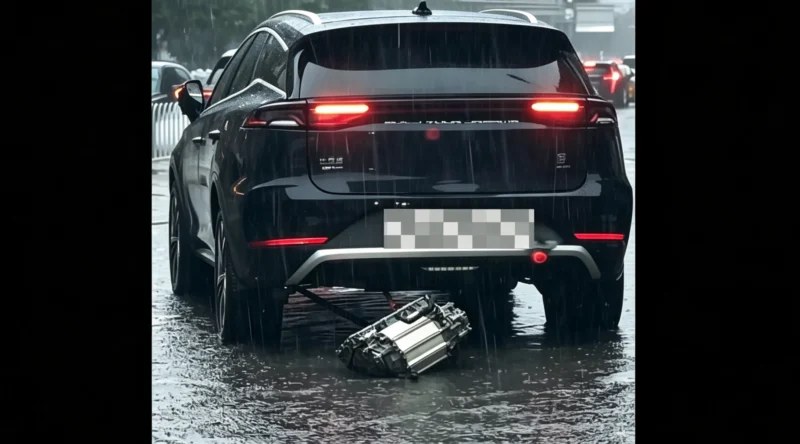 Multiple videos filmed during flooding in Shenyang have sparked widespread discussion on Chinese social media after viewers claimed a BYD Tang SUV had lost its rear electric motor. The videos show the SUV stopped in floodwater with its hazard lights flashing while a large metallic component is visible behind the vehicle and appears to remain connected beneath the rear of the SUV. The footage prompted widespread speculation online, with some netizens claiming the detached component was the vehicle’s rear electric drive unit. BYD has not publicly commented on the incident or identified the detached component. Why the claim is disputed The videos confirm that a large component detached from the underside of the SUV. However, they do not establish what the component is or what caused it to separate from the vehicle. Neither BYD nor local authorities have publicly identified the detached part, and no inspection results have been released. As a result, claims circulating on social media that the SUV’s rear electric motor fell from the vehicle remain unverified based on the publicly available evidence. The videos also do not show the vehicle before the incident or explain how the damage occurred, leaving the sequence of events unclear. BYD’s flood warning The Shenyang incident comes less than a week after BYD publicly reminded owners not to use its water-resistance technologies as an excuse to drive through floodwater. Five days before the videos circulated, BYD Executive Vice President He Zhiqi said the company’s Blade battery water-resistance ratings are designed to provide emergency safety protection rather than encourage drivers to enter flooded roads. He said the battery pack’s IP67 and IP68 ratings demonstrate resistance to water ingress under specified test conditions, but should not be interpreted as approval to deliberately drive through deep water. During the same period of heavy rainfall, BYD-supported volunteer convoys using Denza and Fang Cheng Bao vehicles entered flood-affected areas in Guangxi to deliver emergency relief supplies. The company described those missions as organised disaster-relief operations rather than examples for everyday motorists. BYD has issued similar reminders before. During Super Typhoon Ragasa in 2025, videos of a Yangwang U8 driving through deep floodwater attracted widespread attention after waves created by the vehicle reportedly damaged nearby storefronts. At the time, BYD said the U8’s Emergency Floating Mode is intended as an emergency safety feature rather than for routine flood driving. The company continues to advise drivers to avoid flooded roads whenever possible, noting that deep water can damage body panels, underbody components and other vehicle systems even if the battery and high-voltage system remain protected. The Shenyang videos have generated widespread speculation about what was detached from the SUV, but the available footage does not provide a definitive answer. Based on the available videos, it is clear that a large metallic component has separated from the underside of the vehicle. However, the identity of that component has not been publicly confirmed. Until BYD or another official source releases further information, claims that the vehicle’s rear electric motor detached remain unverified. Market context According to China EV DataTracker, in June 2026, BYD domestic sales reached 177,442 units, up 7.6% month on month, even as year-on-year sales contracted by 44.4%. The brand maintained an 11.0% domestic market share for the month, demonstrating steady momentum despite shifting industry conditions. High hydrodynamic pressure from wading through deep water can easily tear off exterior protective underbody panels. Updated: 14/07/2026 12:15 pm China time
 -
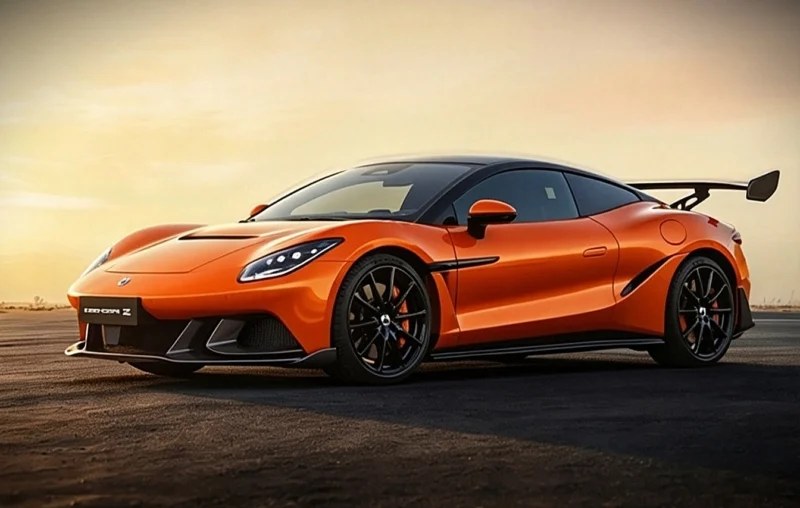 BYD Denza Z electric supercars have exposed a wide regional pricing gap, opening domestic presales from 680,000 yuan (100,300 USD) while foreign markets face a much higher entry point. Following a high-profile global public showcase at the Goodwood Festival of Speed, parent automaker BYD confirmed localised targets well below its United Kingdom export mark of 142,900 pounds (184,800 USD). The tri-motor hypercar handles this performance via a specialised platform and an advanced steer-by-wire FinDreams chassis layout that completely removes physical mechanical steering links to optimise track response. International price gap International launch datasets reveal a pronounced variance when comparing export targets against domestic market presales. In the United Kingdom, the entry-level Coupe trim begins its international pre-sale rollout at 142,900 pounds (184,800 USD). This represents a clear premium over the local Chinese pricing structure, where the exact same Coupe hardtop variant is positioned at 680,000 yuan (100,300 USD). This regional divergence extends across the rest of the product array. The Spider convertible variant commands a domestic presale price of 780,000 yuan (115,100 USD), while the track-tuned Racing variant scales to 1,180,000 yuan (174,100 USD). These domestic figures emphasise the cost efficiencies of localised manufacturing ecosystems compared to foreign-market retail networks. Trim DesignationRangeOriginal Price (yuan)Converted Price (USD)Coupe Hardtop254 miles WLTP680,000100,300 Spider Convertible–780,000 115,100 Racing Track–1,180,000174,100 Compiled by CarNewsChina Dimensions and powertrain Physical sizing metrics reveal that the Coupe hardtop trim measures 4,780 mm in length, 1,990 mm in width, and 1,330 mm in height, riding on a 2,780 mm wheelbase. The design provides a functional four-seat interior layout that distinguishes it from standard two-seat supercars, targeting practical high-end use cases without sacrificing performance. Alternative body options feature expanded exterior sizing to accommodate unique aerodynamic treatments. The Spider convertible trim stretches to 4,865 mm in length and 1,350 mm in height, while the specialised Racing trim extends to 4,870 mm in length to integrate a fixed rear wing and a prominent front splitter. The underbody package houses a tri-motor setup that delivers an official combined system output of 1,582 hp, delivering energy through an intelligent all-wheel-drive platform. The rear axle utilises dual independent electric drive motors capable of rotating up to 30,000 rpm, enabling the specialised Racing trim to complete the 0-100 km/h sprint in 1.96 seconds before topping out at a verified 350 km/h. Energy delivery relies on a 76 kWh second-generation flat-pack lithium-iron-phosphate Blade battery pack supporting a dual-gun FLASH charging layout that recovers capacity from 10% to 97% within a nine-minute window, while a brief five-minute charge restores the pack from 10% to 70%. Brand delivery volume This flagship addition alters the product lineup as the brand updates its broader sales trajectory. June 2026 registration datasets indicate that the Denza D9 multi-purpose vehicle remains the leading volume anchor for the company, securing 6,952 deliveries to claim a 37.3% brand share, despite a year-over-year contraction of 16.0%. Other premium variants continue to gain volume in the domestic market. The Denza Z9 GT shooting brake secured second place with 6,025 sales, capturing 32.3% brand share. The Denza N8L sport utility vehicle achieved 4,002 units to log a 21.5% slice, while the full-size Denza N9 added 1,652 monthly deliveries for an 8.9% share, according to China EV DataTracker. Official image from Denza.
 -
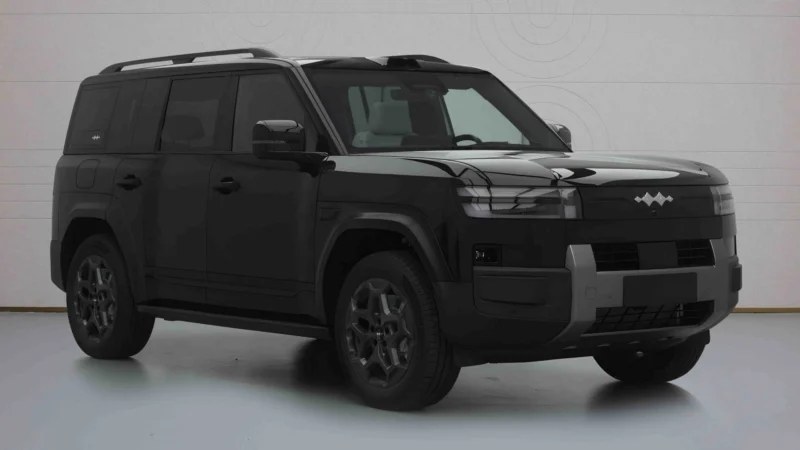 The updated BYD Ti7 plug-in hybrid crossover will adopt a large 50 kWh LFP battery in China, suitable for 230 km of electric range under WLTC conditions. The ongoing variant of this SUV, marketed as Fang Cheng Bao Ti7 in China, has been released in foreign markets this year. The currently available plug-in hybrid modification of the BYD Ti7 for the Chinese market offers two battery options. The entry-level car adopts a 26.6 kWh battery for 105 km of WLTC electric range. As for the more expensive trim level, it offers a 35.6 kWh pack for 140 km of WLTC range. Recently, the Chinese Ministry of Industry and Information Technology (MIIT) exposed the long-range version of the Ti7 during the domestic homologation process. The updated BYD Ti7 adopts a 50 kWh LFP battery manufactured by BYD subsidiary FinDreams. This pack boasts a weight of 384 kg. It is 164 kg heavier than the battery of the entry-level Ti7 PHEV. The long-range Ti7 has a curb weight of 2,350 – 2,530 kg, depending on the drive type. The entry-level model with a 1.5-liter ICE for 115 kW (154 hp) and a single electric motor for 200 kW (268 hp) can run up to 230 km in electric mode (WLTC conditions). Its fuel consumption with a depleted battery is 5.98 liters per 100 km. The BYD Ti7 with a 50 kWh battery The AWD variant of the long-range BYD Ti7 has an EV range of 210 km and a fuel consumption of 6.3 liters per 100 km. This model has the same 1.5-liter ICE paired with two electric motors with a combined peak power output of 360 kW (483 hp). There is a chance the long-range variant of the BYD Ti7 PHEV will adopt the flash charging technology, allowing it to charge the battery from 10% to 97% in nine minutes. The BYD Ti7 PHEV for the domestic market is a five-seat SUV with a five-seat interior. Its dimensions are 4999/1995/1865 mm with a wheelbase of 2,920 mm. It can tow up to 2,000 kg. This model is also available with a BEV powertrain option. It has two battery variants for 92 kWh and 105.7 kWh, boasting 675 – 755 km of CLTC range. The Ti7 is priced between 179,800 and 239,800 yuan (26,530 – 35,385 USD). According to China EV DataTracker, the BYD Ti7 sold 94,417 units in China, becoming one of the most popular models domestically despite widespread issues with its panoramic glass roof. The BYD Ti7 monthly sales volume in China. Credit: China EV DataTracker
 -
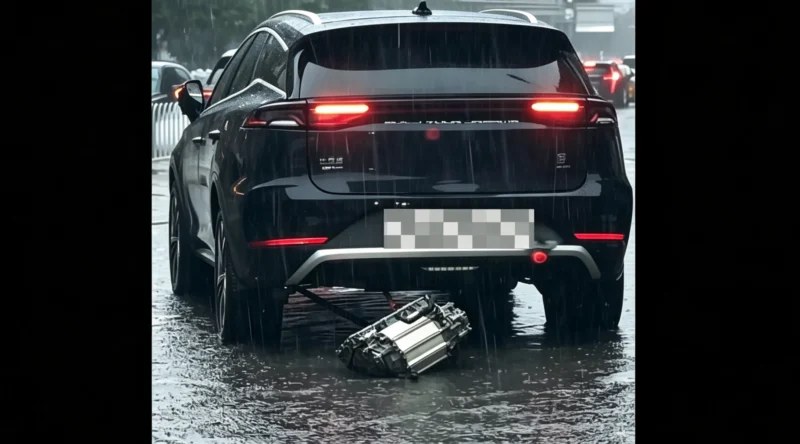 BYD passenger vehicles navigating deep urban water accumulation became the centre of a social media debate on July 13, 2026, after video footage from Shenyang, China, showed an underbody component separating from a BYD Tang. The clip triggered online rumours claiming that the electric powertrain motor had uncoupled and dropped directly into the floodwater. Netizens quickly weaponised the incident, using satirical nicknames to mock the automaker even as the vehicle continued to drive forward after the component fell. The detached part involves the lower protective skid plate rather than the physical electric motor assembly. Ripping off large plastic or composite shields is a known mechanical byproduct of the high hydrodynamic pressure that occurs when vehicles force their way through deep water. Because the vehicle maintained operational power and functioning rear lamps, the internal electrical systems remained entirely intact. Engineering reality From an automotive engineering perspective, separating an electric motor while driving is impossible without causing an instantaneous electrical shutdown. High-voltage orange power lines and cooling conduits connect the powertrain directly to the chassis, so a structural drop would instantly tear them apart. This would immediately activate insulation-fault safety mechanisms, resulting in a power cut. Furthermore, the powertrain transfers energy to the wheels through metallic half-shafts. Had the motor housing fallen, these spinning shafts would have warped or been completely severed, locking the wheels and stopping the vehicle. Instead, the video shows the vehicle gliding smoothly through the water, confirming that the propulsion unit remained securely in place in the engine bay. Executive warnings The social media response highlights a growing public misunderstanding regarding the limits of electric vehicle waterproofing. This event occurred five days after BYD Executive Vice President He Zhiqi published a safety brief on July 8, 2026, clarifying the boundary between hardware resilience and risky driving habits. He noted that while the signature Blade battery pack features IP67 and IP68 water resistance, allowing immersion at a depth of 1 meter for 24 hours without leakage, these specifications are engineering safety limits rather than operational guidelines. Drivers frequently overestimate these ratings, treating family vehicles like amphibious craft, as seen in previous severe weather events across China. This mindset reflects a pattern in which car owners attempt risky crossings, as seen in the widely discussed instances of the BYD Yangwang U8 navigating deep flood waters during Super Typhoon Ragasa. Official advice states that if water levels cover more than half of the tyre, drivers must bypass the area. Market trajectory The incident occurs during a shifting demand cycle for the company. In June 2026, BYD domestic sales reached 177,442 units, up 7.6% month on month, even as year-on-year sales contracted by 44.4%, according to China EV DataTracker. The brand maintained an 11.0% domestic market share for the month, demonstrating steady momentum despite shifting industry conditions. To assist in severe weather crises, specialised BYD emergency support convoys entered flood zones to provide disaster relief earlier this month. As electric vehicles capture substantial portions of the local automotive ecosystem, public scrutiny of underbody durability under weather conditions will likely intensify. High hydrodynamic pressure from wading through deep water can easily tear off exterior protective underbody panels.
