




Vitaly
Administrators
-
Joined
-
Last visited
Everything posted by Vitaly
-
@thaaer You need to update the blocks via VDS
-
 Sodium-ion battery chemistry has officially entered mass automotive production lines as part of Changan Auto passenger models. The latest manufacturing intelligence from a CIConsulting briefing reveals that the initial vehicle validation phase has concluded. Commercial scale rollout now positions the alternative cell technology to enter high-volume vehicle segments. Engineering designs utilise dual aluminium foil current collectors to replace expensive copper alternatives in traditional lithium setups. This metallurgical shift reduces direct cell material costs while maintaining core structural parameters. Manufacturers are accelerating the deployment of polyanion cathodes to optimise long-term pack stability. Technical cost parameters Cell manufacturing data tracks a significant reduction in component expenditure over recent production cycles. During the first quarter of 2026, the raw sodium cell manufacturing cost ranged from 0.35 yuan (0.051 USD) to 0.40 yuan (0.059 USD) per watt-hour. This narrows the financial-expenditure delta relative to traditional lithium-iron phosphate units. Lithium-iron phosphate cells currently maintain a market benchmark of 0.34 yuan (0.050 USD) per watt-hour. Industrial modelling indicates that continued production efficiencies will further reduce sodium manufacturing costs. The report explicitly projects complete cost dominance over lithium alternatives by the conclusion of 2027. The physical cell matrices also deliver specific thermal and climate advantages over standard lithium variants. Sodium hardware maintains more than 90% of its nominal capacity at cold baselines down to -20 degrees Celsius. Traditional lithium iron phosphate arrays frequently drop below an 80% retention threshold under identical ambient exposure. Advanced testing arrays also confirm excellent performance characteristics down to minus 40 degrees Celsius. The intrinsic chemistry architecture also exhibits an elevated thermal runaway starting threshold exceeding 200 degrees Celsius. This provides a definitive protection mechanism against fire hazards during cell short circuits. Corporate platform deployment Automaker implementation strategies now reflect a clear division across specialised passenger car segments. Changan Auto is leading the entry vehicle sector by utilising CATL cell packs with an energy density of 175 watt-hours per kilogram. These integrated vehicle platforms are hitting standard target driving ranges of 400 kilometres. The industry shifts align with recent CATL sodium readiness projections at Davos, highlighting commercial scaling milestones. Simultaneously, the BYD micro-mobility architecture strategy concentrates on alternative low-speed vehicles and specialised logistics platforms. BYD is currently advancing its third-generation technology platform toward a 10,000-cycle lifespan baseline. Pure-play pioneer Hina Battery is diversifying into heavy commercial platforms by delivering 200 heavy trucks. These vehicles utilise localised cell setups that complete a full recharge within 25 minutes. Industrial supplier Huayang Group has expanded deployment to install a 17.04 megawatt-hour emergency backup system. Corporate financial data outlines the asset bases participating in this chemical transition. CATL recorded an annual revenue of 423.702 billion yuan (62.326 billion USD) alongside a net profit of 72.201 billion yuan (10.621 billion USD). Electronic components manufacturer Transimage is investing 5 billion yuan (735.495 million USD) in its Phase 2 facilities. Structural scale execution Upstream material tracking confirms that polyanion compounds have captured a 70% share of global shipping. Total sector investments remain elevated as Wik Technology allocates 429 million yuan (63.105 million USD) toward new automatic production arrays. Component suppliers like Dingsheng New Materials control up to 50% of the dedicated collector foil supply. However, the wider battery supply network continues to face real manufacturing bottlenecks. Despite over 42 independent domestic expansion projects, real factory utilisation rates remain under 40%. Hard-carbon negative anodes also suffer from a high logistical reliance on imported biomass precursors. The alternative cell scaling plays out against an expanding domestic lithium battery ecosystem. China’s lithium cell shipments grew to 1888.6 GWh, capturing 82.8% of the global market share. The final production metrics indicate that, while lithium remains widespread, sodium scaling will naturally tie into entry-vehicle grids.
 -
 BYD obtained multiple final and first-instance court victories against high-profile automotive influencers in China, according to an enforcement update released via its official Weibo account. The automaker pursued litigation to defend legitimate rights and maintain a fair competition market order. The targeted channels published defamatory statements against the brand and its products. Corporate legal claims addressed fabricated details concerning cell performance metrics, sales figures, and financial tracking data. BYD representatives noted that the litigation involved systematic verification of real-world operational logs against unverified social media assertions. These actions target false disclosures regarding core battery architectures and vehicle quality baselines. Litigation penalty metrics The judgment against Tiger Wolf Talks Cars ordered a public apology and 210,000 yuan (30,900 USD) in damages. Courts also fined Zhengren Talks Cars and Solid-State Batteries Are Here 100,000 yuan (14,700 USD) each for making untrue statements and engaging in commercial disparagement. These first-instance decisions mandate comprehensive public retractions. Additional rulings penalised 987 Crazy Dad 85,000 yuan (12,500 USD) for spreading false claims of product quality defects and cutting corners. The account Xiaoyu Doesn’t Understand Cars was fined 55,000 yuan (8,100 USD) for alleging sales and financial fraud. Rulings also hit accounts, including Hippo War God and Zhang Bin Plays Off-Road. Legal defence frameworks The coordinated legal sweep marks an extension of corporate enforcement frameworks. The automaker previously topped the China EV lawsuit leaderboard with large claims against individual digital creators. These actions establish a strict legal precedent regarding unauthorised commercial defamation within the domestic automotive marketplace. Judicial enforcement has consistently penalised unauthorised rumours, as shown by a second-instance ruling ordering an apology from independent bloggers. To further combat paid smear campaigns, BYD reaffirmed its long-term whistleblower reward program. The framework offers incentives ranging from 50,000 yuan (7,349 USD) to 5,000,000 yuan (734,880 USD) for verified evidence. Retail delivery metrics This litigation milestone occurs during a period of expanding retail footprints for the company’s newest plug-in hybrid and battery electric vehicle lines. In May 2026, the BYD Sealion 06 achieved wholesale registrations of 18,856 units, while the compact Yuan UP crossover recorded 17,043 deliveries. The Song Pro DM-i crossover tracked 15,497 units, according to China EV DataTracker. Additional manufacturing volumes reached 12,971 units for the Qin Plus EV and 12,819 units for the Dolphin hatchback.
 -
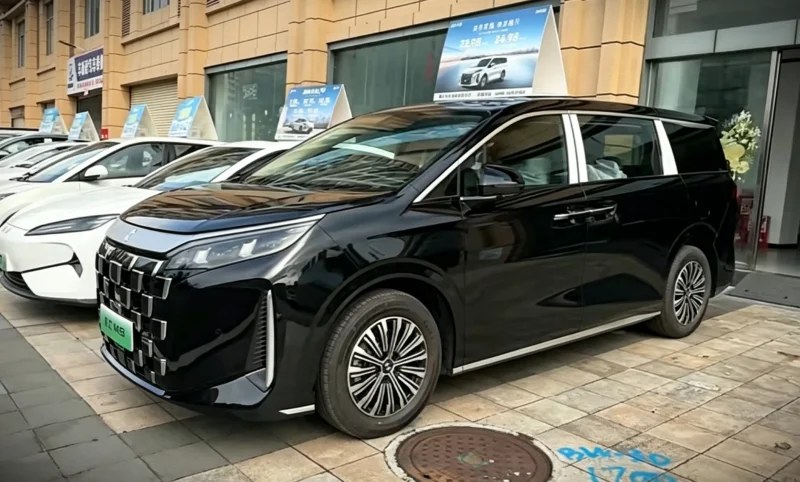 BYD Linghui M9 have commenced deliveries to showrooms across China, according to Linghui. The new flagship business multi-purpose vehicle targets both corporate and private family buyers. While showcase availability has scaled nationwide, official pricing frameworks remain unannounced under a pre-release timeline. The new vehicle belongs to a dedicated corporate ecosystem designed to separate fleet business lines from premium consumer nameplates. Engineering configurations integrate the proprietary Eye of the Gods advanced driving assistance system alongside the DiSus intelligent body control platform. Technical architectures combine fifth-generation dual-mode plug-in hybrid setups with an eight-in-one electric powertrain matrix. Mobility brand strategy BYD established the specialised sub-brand to mitigate negative sales impact from ride-hailing ties across its standard retail configurations. This corporate directive allows the automaker to capture high-volume commercial mobility contracts while protecting premium passenger car residual values. The upcoming flagship follows the initial rollout of official images for the ride-hailing market earlier this winter. Powertrain and hardware The flagship utilises thermal management systems alongside an optimised eight-in-one electric powertrain matrix. It follows Linghui e9 sedan, which officially launches with flash charging to support commercial operations. That vehicle utilises second-generation blade chemistry for quicker replenishment intervals. The electric sedan model starts at 150,800 yuan (22,198 USD) for entry-level specifications. Upgraded trims require 159,800 yuan (23,523 USD) and 169,800 yuan (24,995 USD), respectively. These established baselines provide a baseline for the unpriced van segment. Domestic sales trends The commercial multi-purpose vehicle arrives as an alternative family stablemate experiencing shifting demand. The upscale, consumer-focused BYD M9 (known as Xia in China) posted sales of 732 units in January, then dropped to 625 in February. Volume hit 897 units in March before descending to 648 deliveries in May, according to China EV DataTracker. A look inside the front seats and dashboard of the new BYD Linghui M9 van.
 -
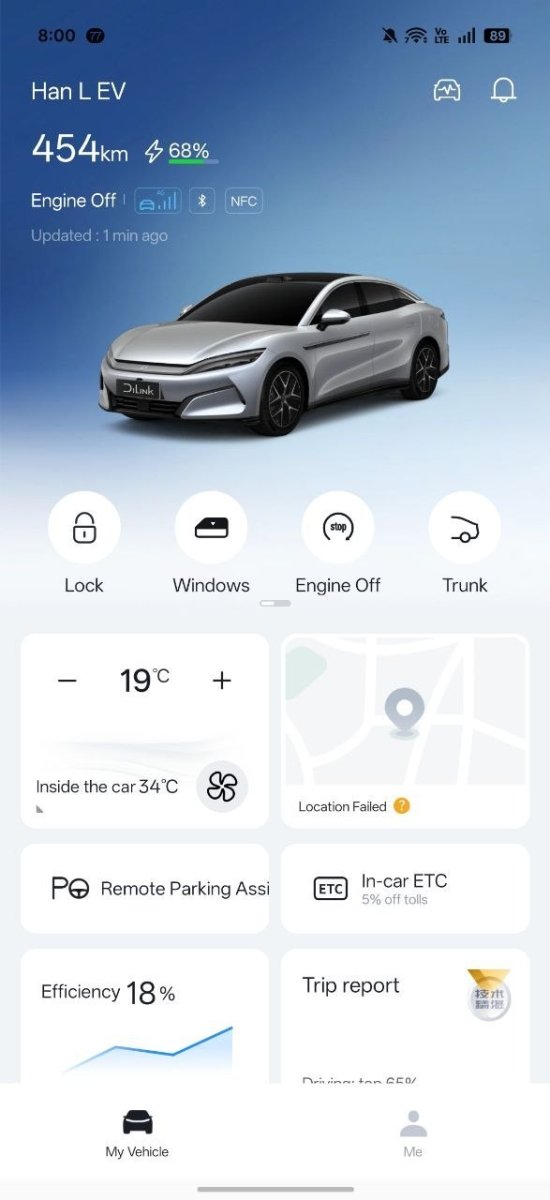
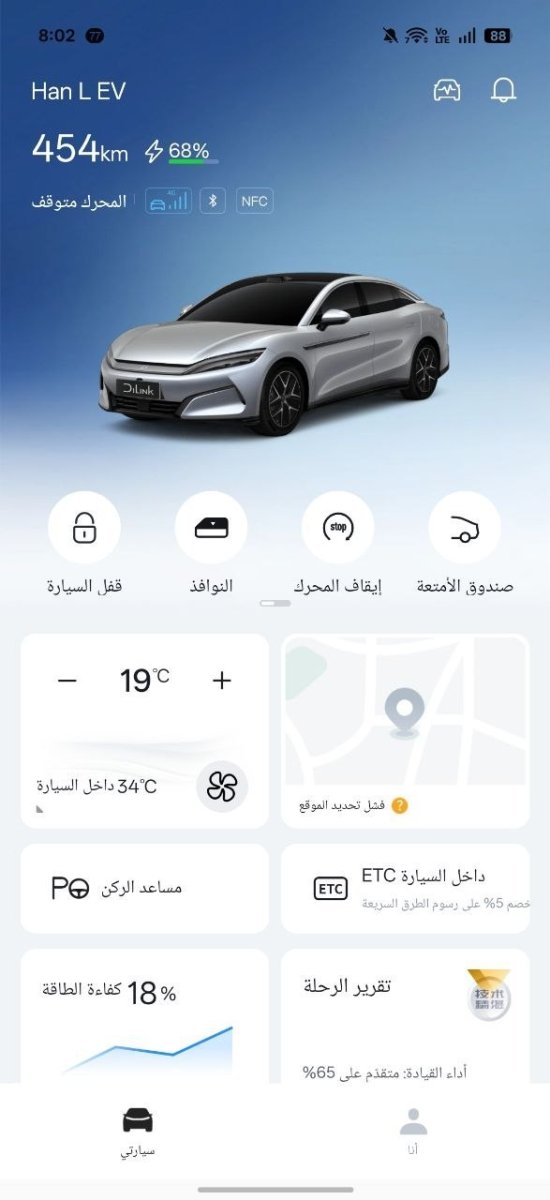
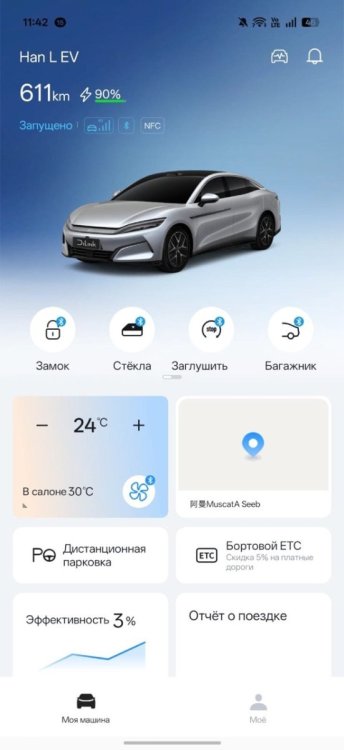
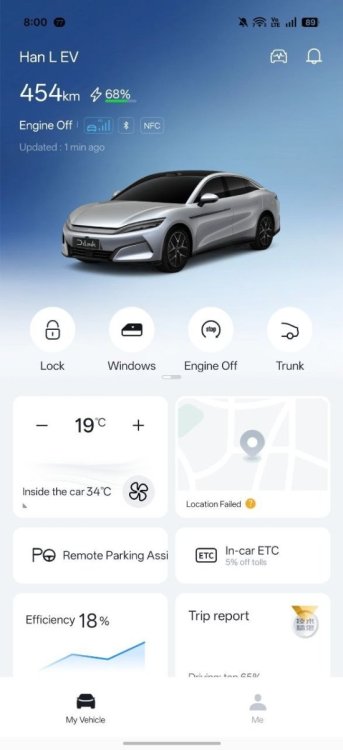
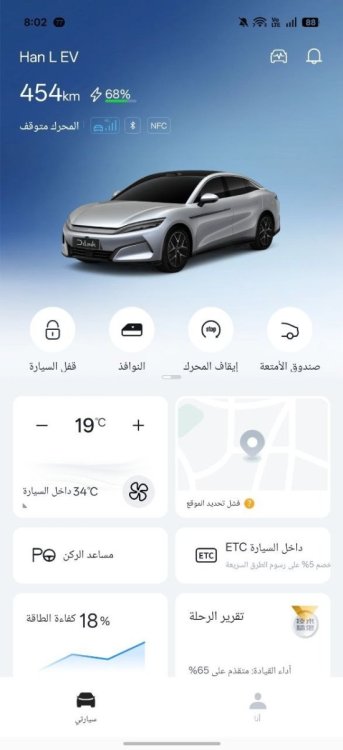
BYD App (com.byd.aeri.caranywhere) Screenshots 🇺🇸 The modified BYD app has been updated to version 9.13.1. 🆕 What's new: 🚶 Walk-Up Unlock — your vehicle automatically unlocks when you approach with your phone and locks when you walk away. 📱 Bottom Bar Customization — show or hide Community, Mall, and Service tabs to keep only what you use. Also included: ✅ Full English, Arabic and Russian localization. ✅ In-app language switcher. ⚠️ For reliable Walk-Up Unlock operation, disable battery restrictions for the app and enable Auto-launch. Update instructions: • If you already have our modified version installed, simply install the new APK over the existing one (your login and settings will be preserved). • If you are using the official BYD app, uninstall it first, then install the modified version and sign in again. 🇷🇺 Обновили модифицированное приложение BYD до версии 9.13.1. 🆕 Что нового: 🚶 Автоматическая разблокировка при приближении — автомобиль сам открывается, когда вы подходите с телефоном, и закрывается при удалении. 📱 Настройка нижнего меню — теперь можно скрывать или отображать вкладки «Сообщество», «Магазин» и «Сервис». Также доступны: ✅ Полная локализация на английский и арабский языки. ✅ Переключение языка прямо в приложении. ⚠️ Для корректной работы автоматической разблокировки рекомендуется отключить ограничения батареи для приложения и включить автозапуск. Обновление: • Если у вас уже установлена наша версия — просто установите новый APK поверх старого (настройки и авторизация сохранятся). • Если установлен официальный BYD App — удалите его и установите модифицированную версию заново. Version Link v9.13.1 (EN, AR, RU) Telegram v9.13.1 (EN, AR) Modhub24
.png.fc2b3e53d9098ac5636c42f09490ebd7.png)
-
 BYD electric vehicle development structures are shifting toward a decentralised framework to reverse sudden sales slowdowns, according to Sina. Media leaks indicate the manufacturer will split its central Automotive Engineering Research Institute into five distinct brand research centres. This structural transformation redefines how the automotive group coordinates its engineering workforce. Under the upcoming framework, the core engineering division will function strictly as a technology middleware repository. This centralised unit will retain sole responsibility for blade battery chemistry, dedicated electric platforms, and electronic architecture baselines. Individual vehicle applications and chassis adjustments are moved entirely to separate peripheral teams. Brand autonomy The newly established research facilities will gain independent authority over product definition and vehicle planning. Dynasty, Ocean, Denza, Fang Cheng Bao, and Yangwang will each operate an autonomous division. Personnel from the historical centralised engineering unit will transfer directly into these specific brand teams. This restructuring shifts frontend engineering decisions closer to consumer market channels. Historically, product definitions remained confined within the central engineering centre, leaving individual sales teams decoupled from design decisions. The new strategy harmonises market accountability with actual engineering controls. Financial accountability Alongside structural reengineering, the manufacturer will implement an independent profit-and-loss accounting mechanism for individual portfolios. Dynasty, Ocean, Denza, and Fang Cheng Bao must operate under a self-financing directive. The ultra-luxury Yangwang brand remains temporarily exempt from these near-term profitability targets. Individual brands will face market-rate cost billing when accessing shared corporate assets. This internal settlement aims to optimise cost efficiency, though the decentralised management framework could, conversely, increase overall organisational complexity. Shared technology baselines may also trigger heightened competition for internal resources among the sister divisions. Market delivery trackers The organisational pivot aims to resolve product overlaps across a wide price range. BYD assets span from 100,000 yuan (14,770 USD) entry models up to 1,000,000 yuan (147,700 USD) performance vehicles. Centralised platform deployment previously caused consumer cannibalisation between the similarly priced Ocean and Dynasty lines. This structural reengineering coincides with recent premium network expansion campaigns, such as the launch of the flagship Dynasty Great Tang crossover to secure better margins in upscale multi-row family segments. Concurrently, the Ocean layout accelerates the deployment of premium models, as seen in the upcoming delivery of the high-voltage Seal 08 sedan to regional dealership networks. The operational shift directly responds to a 20 per cent decline in volume in the first five months of 2026, when sales reached 1.405 million vehicles. This compressed metric highlights the strategic necessity of transitioning from pure volume scaling toward decentralised engineering efficiency. This structural mechanism mirrors decentralised frameworks deployed by Geely Automobile to stabilise long-term premium vehicle margins.
 -
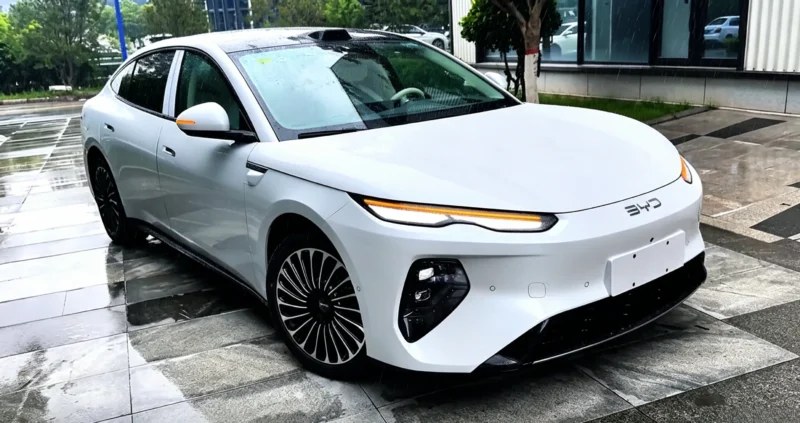 The BYD Seal 08 flagship sedan is arriving at dealerships in China ahead of its scheduled July 2, 2026, market launch, according to Douyin. Regional sales personnel confirm the presence of showcase inventory on showroom floors, providing an early look at this premium full-size model. A recent dealer vehicle leak confirmed key pricing benchmarks. This premium platform supports both plug-in hybrid and battery electric architectures. The engineering team prioritised high-voltage electrical performance and chassis dynamics to distinguish the flagship model from the existing BYD Ocean Network product catalogue lines. Chassis and powertrain The performance battery-electric four-wheel-drive configuration delivers a peak output of 694 horsepower. This mechanical capability enables a 785 km certified range baseline under standardised testing conditions. Proprietary DiSus-A intelligent body control manages real-time vehicle stability during high-speed transit. The advanced chassis hardware includes a closed, dual-chamber air suspension system, combined with active rear-wheel steering, for enhanced urban manoeuvrability. Technology and pricing Dealership networks have officially started taking pre-orders to secure early allocation slots for the premium sedan. Initial procurement data indicates a baseline pricing of 250,000 yuan (36,900 USD) for the top-tier four-wheel-drive package. Retail showroom pricing is expected to trend lower upon the official commercial launch in July. This commercial deployment strategy replicates the market entry pattern established during the recent launch of the Great Tang crossover. The vehicle utilises an 800-volt electrical architecture for rapid flash-charging operations. A prominent roof-mounted LiDAR sensor housing provides environmental mapping data directly to the integrated God’s Eye 5.0 software package. Interior cabin comfort features front- and rear-facing zero-gravity seating. These specialised passenger layouts aim to improve ergonomics and material quality for flagship buyers seeking premium alternatives in the market. Market volume tracking The Seal 08 enters a competitive environment as domestic registrations for the older Seal 07 DM-i continue to slide. China EV DataTracker data show that 615 units were registered domestically in May 2026, a 2.1 percent month-on-month decline. Manufacturing for the automaker reached 164,971 domestic deliveries throughout May 2026. Global commercial volumes scaled to 376,990 units during the same period to support the physical rollout of this new flagship sedan. BYD Seal 08 flagship sedan at a regional showroom.
 -
 CATL and BYD production lines face an immediate reevaluation of equipment assets under the incoming national standards. The implementation of GB/T 43568-2026 on July 1 establishes clear chemical boundaries for solid-state classifications. This shift exposes an inflation in projected manufacturing infrastructure valuations across the wider supplier network, according to 21Jingji. The upcoming state guidelines mandate that any battery containing between 5% and 20% liquid electrolyte is categorised as a hybrid system. True all-solid-state cells must drop below the 5% threshold while maintaining specific thermal mass stability under vacuum conditions. These strict boundaries impact near-term assembly asset procurements. Manufacturing asset compatibility Conventional lithium-ion machinery remains highly compatible with the hybrid architectures slated for near-term vehicle production. Industry evaluations indicate that existing factory lines can process these semi-solid variations with under 10% equipment alterations. This technical intersection directly limits the immediate need for a complete overhaul of assembly systems. Production line economics Initial capital outlays for specialised all-solid-state manufacturing lines currently range from 400 million yuan (59.02 million USD) to 500 million yuan (73.78 million USD) per GWh. Industrial projections suggest these equipment costs will scale down to 200 million yuan (29.51 million USD) by 2030. Dongfeng targets mass production of hybrid packs, utilising existing floor footprints to optimise near-term capital expenditure. Sulfide-based pilot operations deployed by tier-one manufacturers are focusing on interface stability rather than capacity expansions. Recent CATL executive disclosures confirm that the commercial viability of all-solid-state batteries remains constrained by engineering bottlenecks. Concurrently, academic materials, such as the Chinese Academy of Sciences’ electrolyte research, emphasise that solid-state interfaces require prolonged cycling validation before automated scale-up. Market volume dynamics Market analysts previously projected that next-generation line transitions would create a 59.2 billion yuan (8.73 billion USD) machinery demand. This forecast faces structural adjustments as conventional liquid batteries maintain their primary share of monthly installations. Pilot projects like Eve Energy assembling 60 Ah units and Gotion High-tech designing a 2 GWh facility function primarily as technical baselines. Monthly installation data from China EV DataTracker indicate that CATL maintained market leadership with 33.08 GWh, representing a 46.7% market share. BYD secured the second position with 11.87 GWh for a 16.8% share, followed by Gotion High-tech at 4.44 GWh. CALB tracked 4.3 GWh with 6.1%, while Eve Energy registered 3.23 GWh to secure a 4.6% share of the volume. These volume trends confirm that existing liquid cell manufacturing assets dominate the industrial landscape. Equipment procurement strategies must align with the gradual adoption of hybrid systems before true all-solid-state integration alters the wider supply chain. The incoming July 1 regulation provides a realistic framework that grounds machinery market expectations within current battery chemistry capacities.
 -
 BYD Da Tang (also known as Great Tang) marketing assets reportedly became the primary focus of an organised retail counterstrategy developed by a regional dealer network, according to digital video captures preserved in a public Weibo post. The leaked presentation slides, which surfaced via a localised retail outlet account before they were subsequently removed from short video platforms, expose specific tactical response parameters for consumer cross-shopping interactions. These regional actions reflect escalating retail friction within the premium crossover marketplace. Retail comparison scripts The leaked documentation details a standardised comparison matrix targeting the local new energy platform. The text outlines three specific attack vectors and three defensive positioning points for retail staff. Showroom personnel utilise these metrics to counter the market scaling of local battery systems. The dealer slide elevates a range extender powertrain paired with ternary lithium cells as an alternative framework. This specific hardware configuration claims a comprehensive operational range of 1,651 kilometres alongside a 4.85-meter turning radius. The documentation instructs staff to frame corporate manufacturing experience as a primary indicator of stability. Leaked training data reveals legacy manufacturer sales scripts targeting the newly launched BYD Da Tang. Battery and production BYD Da Tang architecture utilises a 130 kWh second-generation Blade battery pack manufactured by the FinDreams Battery subsidiary. More than 70 percent of initial buyers chose the maximum capacity option during the early rollout phase. The standard specifications listed in the brand database outline this platform layout. Delivering the targeted 20,000 units per month will require 2 GWh of battery cells. Consequently, manufacturing capacity limits have emerged as the primary operational bottleneck rather than downstream retail demand parameters. A Toutiao retail capacity report confirmed that the components supplier is expanding production shifts to mitigate delays. The 950 km variant and Shengshi configurations represent the mainstream choices among early consumer vehicle selections. Order adjustments indicate that prospective buyers initially targeting the 850 km configuration frequently chose to upgrade directly to the highest tier specifications. Real-world operational testing shows the premium vehicle maintains a continuous high-speed highway range of 600 kilometres. Strong holiday showroom demand for the premium crossover is triggering extended delivery wait times at Chinese dealerships. Market segment metrics An industry analysis by specialised Chefans automotive retail platforms notes that regional scripts target configurations such as the flagship architecture. Regional retail networks face a backlog of vehicle deliveries that exceeds 6 months. This competitive friction mirrors a prior dispute where Li Auto accused Nissan of a smear campaign. Future product strategies will utilise the crossover baseline to anchor prices for upcoming premium platforms, such as the Da Han. These upcoming models are slated to enter the regional marketplace at above 200,000 yuan (29,544 USD). Corporate financial tracking shows the group-average vehicle selling price has exceeded 160,000 yuan (23,635 USD). Initial tracking records 150,000 refundable intent orders since the vehicle debuted at its starting price baseline of 240,310 yuan (35,500 USD). Data from an Autohome industrial platform thread indicates that intent-to-lock conversion rates exceed 50%. This commercial velocity successfully stabilises macro vehicle delivery standings across the domestic marketplace. The leaked presentation materials seemingly represent localised dealer training tactics rather than official manufacturer corporate policy.
 -
 BYD Qin L plug-in hybrid sedans demonstrated high structural integrity during a severe collision captured in viral footage, reported by TT. The vehicle sustained heavy damage to the front fascia, which is the forward-facing section of the car, after a 45-degree offset impact with a gasoline sedan. While the electric vehicle’s safety systems prevented the battery from catching fire, the gasoline-powered rival ignited rapidly. The integrated lithium-iron phosphate blade battery pack remained entirely intact, with no thermal runaway observed. Onboard sensors triggered an automatic high-voltage power cut-off sequence immediately upon impact. No fatalities or injuries were reported in this accident as all occupants evacuated safely before emergency services arrived. Crash location analysis The vehicle registration plate (辽B FA9218) indicates the collision occurred within the city limits of Dalian, Liaoning Province. Local infrastructure tracking identifies a background Jinghua Car Wash facility adjacent to the wet urban intersection. The overhead utility poles, traffic light configurations, and roadside evergreen coniferous trees match localised northern municipal infrastructure. The burning vehicle was identified as a third-generation Mazda 3 Axela compact sedan manufactured between 2014 and 2019. Visible door contours, wheel arch geometry, and side window silhouettes confirm the specific combustion model despite severe thermal damage. The 45-degree angled impact directed deceleration forces through the front crumple zones, rupturing the Mazda fuel systems. Exterior perspective of the burning Mazda 3 Axela engine bay displaying significant thermal breakdown damage. Battery safety systems Immediate high-voltage circuit isolation safely prevented electrical arcing across the damaged hybrid powertrain components within milliseconds of detection. The integrated lithium iron phosphate blade battery cells utilise highly stable materials that resist oxygen release during physical deformation. This structural safety layer kept the floor-mounted battery pack entirely inert during the crash. The impact forces concentrated on the front wheel area triggered automatic dual airbag deployment and an immediate transmission gear lock. This post-collision protocol keeps the vehicle stationary, preventing manual relocation away from the nearby combustion fire. Onboard safety links permanently cut electrical pathways to protect the overarching passenger chassis. Vehicle fire safety remains a highly scrutinised performance metric across the Chinese domestic market. Industry discussions frequently contrast real-world impact resilience against external vulnerabilities, such as the poplar fluff fire destroying fleet vehicles. Incidents like the spontaneous combustion of a sedan in traffic highlight ongoing engineering efforts to develop crash-triggered isolation protocols. Market delivery trends The hybrid model architecture targets a competitive mass-market segment priced under 150,000 yuan (21,000 USD). According to China EV DataTracker records, domestic deliveries of this model reached 10,019 vehicles in May 2026. This reflects a contraction in volume from the 31,304 units tracked during its peak market expansion phase in June 2025.
 -
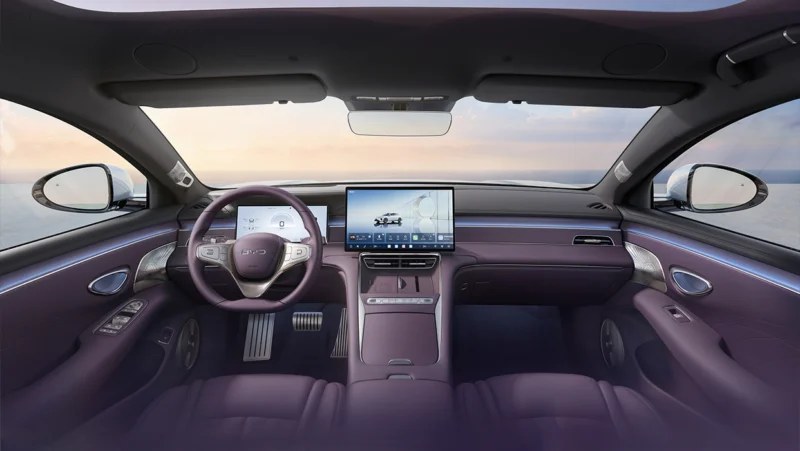 Zhang Zhuo, General Manager of BYD‘s Ocean Network Sales Division, took to social media today to reveal further interior details of the highly anticipated BYD Seal 08. The new model will be available in four interior colour schemes: Cloud Frost Rice, Dawn Rice, Misty Brown, and Night Purple. Blind pre-orders for the Seal 08 opened on June 12, with an official market launch expected on July 2nd. Design and exterior The Seal 08 adopts the “Ocean Aesthetics 2.0” design language. The front fascia features a closed-off design, complemented by slender, elongated headlights and a sculpted hood. Notably, the vehicle is equipped with a roof-mounted LiDAR sensor, supporting BYD’s God’s Eye B intelligent driving assistance system. The exterior will be available in a variety of premium colours, including Coral Red, Cloud White, Glaze Silver, Sea Mist Purple, Poseidon Green, and Obsidian Black. The side profile showcases a sleek fastback design paired with semi-concealed door handles. The vehicle rides on large, multi-spoke wheels. At the rear, the car features a full-width taillight assembly. The Seal 08 measures 5,150 mm in length, 1,999 mm in width, and 1,505 mm in height, with a wheelbase of 3,030 mm. Cloud Frost Rice, Dawn Rice and Misty Brown interior colours. Interior and technology Inside, the Seal 08 features the Ocean Aesthetics 2.0 flagship cockpit. The minimalist centre console is equipped with a large floating infotainment screen and a digital instrument cluster. Additional interior amenities include a three-spoke steering wheel and a wireless smartphone charging pad in the front row. Performance and powertrain Built on an 800V high-voltage platform, the Seal 08 integrates BYD’s latest technologies, including the second-generation Blade Battery, flash-charging capabilities, rear-wheel steering, and the DiSus-A suspension system. The vehicle boasts a pure electric range of 900 km, with a flash charging capability that adds 400 km of range in 5 minutes. The front, side and rear of Seal 08.
 -
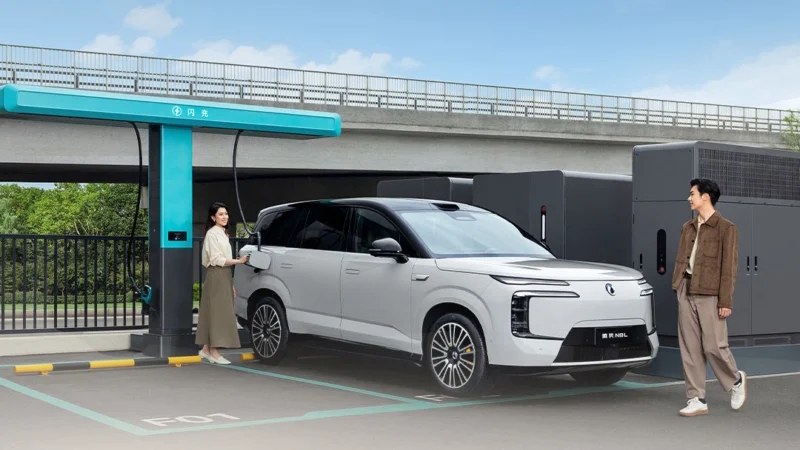 Denza, BYD‘s premium sub-brand, has launched the refreshed N8L plug-in hybrid SUV in China. This update increases EV range to 430 km and introduces flash charging. The new N8L comes in two trims, priced at 319,800 and 349,800 yuan (47,200 and 51,600 USD). Launched in late 2025 as an affordable sibling to the Denza N9, the six-seater N8L featured a 2.0-litre turbo PHEV powertrain and offered only 230 km of EV range. The refreshed N8L was revealed in MIIT listings in mid-March, and Denza started pre-sales on April 10. The exterior of the N8L. Source: Denza What’s new with the N8L BYD’s flash charging takes centre stage in the N8L’s refresh, with Denza claiming a maximum DC fast-charging power of 728 kW. The SUV is now compatible with the Chinese auto giant’s rapid charging ecosystem, which boasts: 5 minutes from 10% to 70% 9 minutes from 10% to 97% Only 3 minutes slower at -30°C This is achieved with the N8L’s new 1000V architecture and LFP battery, now boosted to 75.26 kWh. This is a ~60% increase in capacity over the existing 46.99 kWh pack. CLTC EV range has grown from 230 km to 430 km. Pricing and trims The new N8L starts at 319,800 yuan (47,200 USD). The flagship version is priced at 349,800 yuan (51,600 USD) and includes features such as 21-inch rims, power doors, active seatbelt pretensioners, a 17.3-inch second-row screen, and a “zero-gravity” front passenger seat. The improved power electronics and new features come with a price, though. The N8L’s starting price, which was 299,800 yuan (44,300 USD) in 2025, has increased by 20,000 yuan (~3,000 USD). Chassis and Specifications The N8L measures 5,200 mm in length, 1,999 mm in width, 1,820 mm in height, and it has a 3,075 mm wheelbase. Curb weight is 2,980-3,120 kg, depending on trim. It uses front dual wishbones and rear five-bar multi-link suspension. BYD’s DiSus-A active suspension is seen here, too, and a 10-degree rear wheel steering (RWS) system shrinks its turning radius down to 4.58 meters. Assisted driving is performed by the firm’s DiPilot 300 system, pairing a roof-mounted LiDAR unit with 3 mmWave radars and 7 sensing cameras. The Denza N8L is built on BYD’s e3 (Yi San Fang) tri-motor PHEV platform, which combines a 2.0T engine and a single motor at the front, and dual motors at the rear. The petrol engine cranks out 150 kW (202 hp), while its total power output is 560 kW (751 hp). The interior of the N8L. On the inside, the N8L takes up a 2+2+2 layout. The front and second rows get heated, massaging and ventilated seats as standard, while the third row only gets heated seats. A 17.3-inch infotainment screen is mounted up front, with the front passenger also receiving a 13.2-inch screen. More on Denza and the N8L The Denza N8L’s domestic deliveries, October 2025 to May 2026. Source: China EV DataTracker According to China EV DataTracker, Denza delivered 2,032 N8L units domestically in May 2026. The SUV started strong after its late 2025 launch, reaching a peak of 6,510 units in December 2025 before the partial phase-out of NEV subsidies. While sales are currently sluggish, the introduction of flash charging and an improved EV range will improve the N8L’s competitiveness. Interestingly, Denza is offering an exclusive 10,000 yuan (~1,500 USD) rebate to BYD and Mercedes-Benz owners, perhaps a nod to their former partnership. Denza is offering an exclusive 10,000 yuan (~1,500 USD) rebate to BYD & Mercedes-Benz owners. Source: Denza
 -
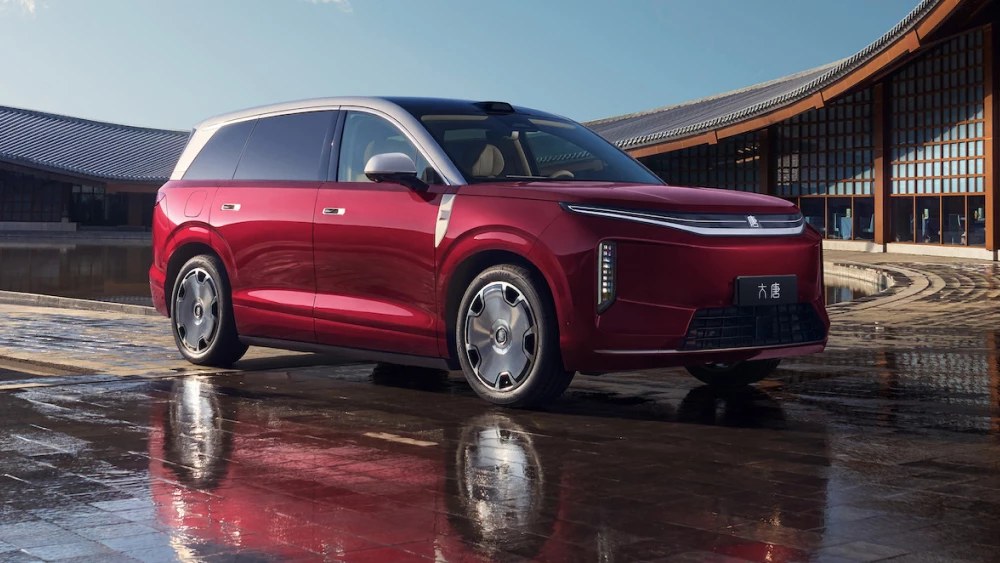 Старт продаж нового полноразмерного кроссовера BYD Datang объявили в Китае. Начальная стоимость электромобиля составила 239,9 тысячи юаней (2,6 млн рублей). Это 5,3-метровый SUV с трёхрядным салоном, подруливающей задней осью, запасом хода около 1000 км и мощностью до 796 л.с. Отметим, что Datang – название для внутреннего рынка Китая. В сети также встречаются другие варианты имени – Great Tang и Grand Tang. Пока неизвестно, под каким именем флагманский SUV будут продавать на зарубежных рынках. Не исключено, что его будут знать как Sealion 9 или Atto 9. Подробнее о BYD DatangBYD Datang является ярким представителем сегмента полноразмерных SUV. Его точные размеры составили 5263 х 1999 х 1790 мм при колёсной базе 3130 мм. В передней части разместили фирменный элемент ДХО длиной 2,41 метра. Другими особенностями стали полускрытые дверные ручки, сенсор LiDAR на крыше и крупный монофонарь. Длина кроссовера BYD Datang близка к 5,3 метрам / фото из соцсети На центральной консоли флагмана BYD разместили три монитора, включая 12,3-дюймовую приборную панель, экран переднего пассажира того же размера, а также 17,3-дюймовый тачскрин. При этом водителю доступен и проекционный дисплей. Сам салон предлагает конфигурацию 2+2+3. Кресла первого и второго рядов получили функции вентиляции, обогрева и массажа. Для задних пассажиров предусмотрен ещё один экран на потолке. Центральная консоль BYD Datang предлагает три монитора / фото из соцсети Особенностями оснащения автомобиля стали 27 динамиков французского бренда Devialet и панорамная крыша площадью 2,53 квадратных метра. Капот Datang оборудовали электроприводом. Под ним спрятался отсек для хранения вещей объёмом 252 литра. При этом багажник кроссовера стандартно предлагает 464 литра. Со сложенным третьим рядом сидений этот показатель можно увеличить до 1359 литров. Задним пассажирам BYD Datang доступен экран на потолке / фото из соцсети Особенностью BYD Datang стала система подвески DiSus-A. Она включает в себя амортизаторы с регулируемой жёсткостью и двухкамерную пневмоподвеску. Клиренс можно регулировать на 100 мм. А задняя ось может поворачиваться на 7 градусов, снижая радиус разворота до 5,2 метра. При этом автомобиль оснащается комплексом ассистентов водителя DiPilot 5.0 с сенсором LiDAR. Он позволяет машине двигаться от адреса к адресу самостоятельно. Водителю нужно лишь наблюдать за происходящим. Силовая установкаВ движение начальную версию BYD Datang приводит двигатель мощностью 408 л.с. на задней оси. Его мощности хватает для разгона до 100 км/ч за 7,8 секунды. Максимальная скорость составляет 240 км/ч. Данный электромотор питает тяговая батарея ёмкостью 105,8 кВт⋅ч. Полного заряда аккумулятора хватает на 800 км по циклу CLTC. При этом зарядить батарею с 10% до 97% можно на быстрых станциях BYD всего за 9 минут. BYD Datang у дилера в Китае / фото из соцсети Следующая модификация BYD Datang предлагает более мощный электромотор с пиковой отдачей 503 л.с. Он приводит в движение задние колёса, позволяя разогнаться до 100 км/ч за 6,2 секунды. Максимальная скорость та же. Такое исполнение Datang предлагает аккумулятор ёмкостью 130,15 кВт⋅ч. Его хватает на 950 км запаса хода по циклу CLTC. Таким образом, Datang стал одним из немногих электромобилей, способных проехать почти 1000 км. Кроссовер BYD Datang Полноприводное исполнение BYD Datang оснащается парой электромоторов с пиковой отдачей 796 л.с. Такая версия набирает первую «сотню» за 3,9 секунды и может разогнаться до 250 км/ч. Полного заряда батареи на 130,15 кВт⋅ч хватает на 850 км пробега в электрическом режиме. ЦеныBYD Datang стал доступен к покупке в Китае в четырёх комплектациях. Стоимость двух моноприводных версий лежит в диапазоне 239,9–269,9 тысячи юаней (2,6–2,9 млн рублей). Они отличаются друг от друга по большей части силовой установкой. BYD Datang у дилера в Китае / фото из соцсети Диапазон цен полноприводных модификаций составил 289,9–309,9 тысячи юаней (3,1–3,35 млн рублей). Максимальное исполнение выделяется за счёт дверей и порогов с электроприводом, продвинутой аудиосистемы и рулевого колеса с памятью. Денис БОБЫЛЕВ (YouTube)
 -
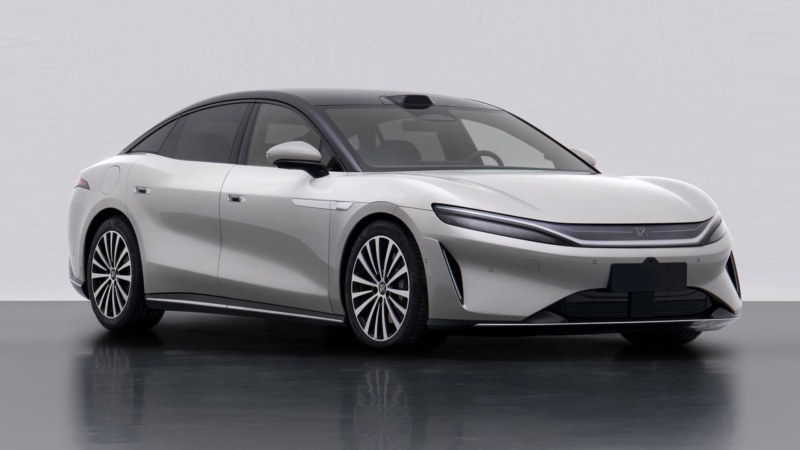 The BYD Great Han revealed core specs as a 5.3-meter flagship sedan with a peak power of 570 kW (764 hp) and up to 1,008 km of range during the domestic homologation process. The PHEV variant is also available. It will enter the Chinese market this year. The BYD Great Han (or Dahan) is a full-size sedan with dimensions of 5256/1999/1510 mm. Its wheelbase reaches 3,130 mm. For clarity, it is 66 mm longer than the standard Mercedes-Benz S-Class. The Great Han’s exterior styling aligns with the brand’s distinguishing Loong Face (Dragon Face) design language. It adopts thin headlights joined by a chrome-plated panel. The BYD Great Han The Great Han has an active air intake in the front bumper, semi-hidden door handles, multi-spoke rims, and a single taillight unit with a Chinese knot pattern. The car boasts blackened pillars and a roof. There is also a LiDAR sensor on the roof. It means the Great Han will adopt the DiPilot driver’s assistance system with the Navigate On Autopilot (NOA) capability on urban roads and highways. Powertrain The Great Han rides on 20-inch or 21-icnh wheels with various design variants, including monoblocks. The front and rear overhangs are 992 and 1,134 mm, respectively. The approach and departure angles reach 13 and 14 degrees. The car’s curb weight lies between 2,210 and 2,505 kg. The gross weight is 2,660 – 2,955 kg, depending on the powertrain variant. The entry-level Great Han EV has a single electric motor in the rear axle producing 370 kW (496 hp). The top speed reaches 240 km/h, which is a decent number for an EV. The battery is LFP. Its capacity has yet to be revealed. According to previous information, the RWD variant of the Great Han will offer 1,008 km of range under CLTC conditions. The AWD version boasts a peak power of 570 kW (764 hp). Its top speed is 270 km/h. The range reaches 880 km. Equipment of the BYD Great Han The PHEV version of the BYD Great Han adopts a 1.5-liter turbocharged petrol-powered BYD472ZQB engine with a peak power of 115 kW (154 hp). It works in pairs with a 200-kW (268 hp) e-motor. This sedan has an LFP battery for 54.489 kWh that weighs 389 kg. The Great Han’s electric range reaches 370 km. Its fuel consumption with a depleted battery reaches 4.6 liters per 100 km. More details & market context It is expected that the BYD Great Han will adopt the same level of tech as the Great Tang SUV. The latter model boasts the Flash Charging technology, DiSus-A suspension, dual-chamber air suspension with adjustable clearance, and rear-wheel steering. Previously, the Great Tang SUV became a massive success in China, getting 100,000 orders in less than two weeks. As a result, BYD postponed the car’s launch two times to make sure it would meet the capacity. The existing BYD Han lineup continues to sell in China. According to China EV DataTracker, the domestic sales of the standard BYD Han reached 3,390 units in May. The more powerful Han L delivered 689 units in the same period.
 -
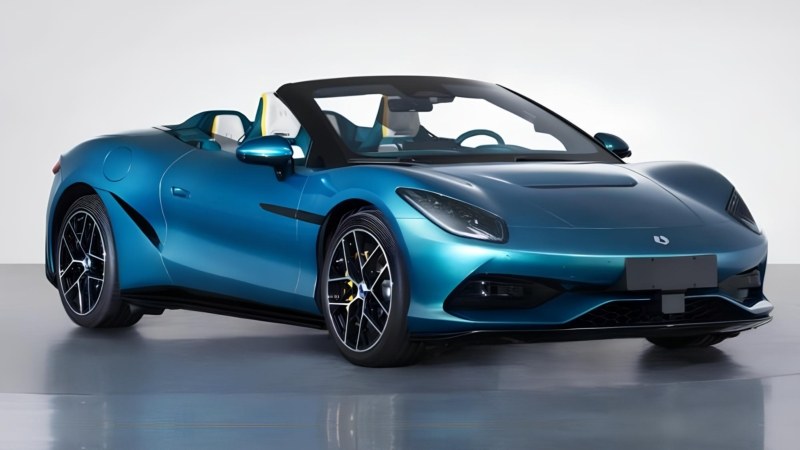 The BYD‘s Denza Z sports car revealed a peak power of 1,180 kW (1,582 hp) and other core specs during the domestic homologation process. This EV with a top speed of 350 km/h will enter China as a four-seat roadster and convertible in July. The Denza Z stands out from the brand’s lineup, which focuses primarily on comfortable minivans, large crossovers, and grand tourers. The new model is a driver-focused sports car that follows a new design language. It is a planted car with a slanted bonnet line with a real air duct, pronounced rear fenders, a sporty rear diffuser, and diamond-shaped taillights. Basics on Denza Z The Denza Z comes standard with two body types. The first is a convertible with a soft top. This vehicle also has semi-hidden door handles. It rides on 20-inch wheels with staggered tires (255/40 in the front and 265/40 in the rear). Denza Z convertible Dimensions of this modification are 4780/1990/1350 mm with a wheelbase of 2,780 mm. For clarity, it is 52 mm longer than the electric Mercedes-Benz AMG GT Coupe. The Denza Z convertible’s curb weight is 2,290 kg, while the gross weight reaches 2,650 kg. Denza Z hardtop roadster The second modification of the Denza Z is a hardtop roadster with flush door handles and blackened pillars & roof. The standard variant of this car adopts 20-inch wheels with 255/40 tires in the front and 295/35 in the rear. This variant is 20 mm lower than the convertible. Despite the low roofline, the Denza Z has four seats inside. Its top speed is 300 km/h. The curb weight is 2,220 km while the gross weight is 2,580 kg. Sporty variant of the Denza Z There is also the Denza Z roadster with a sports package. It boasts more aggressive bumpers and a large rear wing mounted on the trunk door. The length of this modification reaches 4,870 mm. It also has 275/35 ZR21 tires in the front and 325/30 ZR21 in the rear. Thanks to additional downforce from the rear wing, this car can speed up to 350 km/h. For comparison, the mentioned AMG GT Coupe has a top speed of 317 km/h. Powertrain The Denza Z’s top speed is due to a three-motor layout with a front TZ220QYD e-motor producing 500 kW (670 hp) and two TZ226XYG electric motors in the rear boasting a combined power of 680 kW (912 hp). The combined peak power of this powertrain reaches 1,180 kW (1,582 hp). The AMG GT Coupe has a peak power of 860 kW (1,153 hp). Those electric motors are powered by an LFP battery. Its capacity has yet to be revealed. It was previously claimed that the Denza Z will speed up to 100 km/h in 2 seconds. It will boast the DiSus-M magnetorheological (MR) active suspension, flash charging, and the DiPilot 5.0 assisted driving system. More information about the Denza Z will be disclosed closer to the official launch scheduled for July. According to China EV DataTracker, Denza delivered 15,620 units domestically in May, up 7.3% Year-Over-Year. It is the first truly successful month for the brand this year as it stopped falling Y-O-Y.
 -
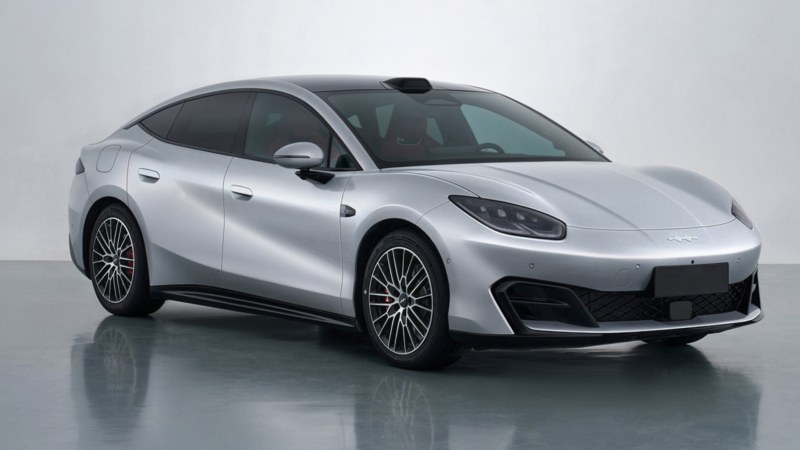 BYD Fang Cheng Bao applied for the sales license for the Formula S liftback and the Formula S GT station wagon. These cars revealed core specs with 657 hp and the top speed of 240 km/h ahead of the market launch scheduled for Q3 2026. Fang Cheng Bao (FCB) was launched in China in 2023 as a hardcore off-road brand. Its model line comprised Bao 5 and Bao 8 body-on-frame plug-in hybrid SUVs, and the electric Ti3 crossover. Later, the unibody crossover Fang Cheng Bao Ti7 entered China, quickly becoming the brand’s bestseller. According to China EV DataTracker, FCB delivered 26,361 units, up 109.3% Year-Over-Year. In 2024, Fang Cheng Bao revealed plans on launching electric sports cars to reach a wider market audience. It released the Formula X concept car at the Beijing Auto Show 2026. On June 10, two Fang Cheng Bao models broke covers during the domestic homologation process. They are the Formula S liftback and the Formula S GT wagon. More about FCB Formula S The Fang Cheng Bao Formula S is a sleek four-door liftback with exterior design language matching the Denza Z sports car we covered in a previous article. It has a closed front end with teardrop-shaped headlights. From the back, it has diamond-shaped taillights and a decorative diffuser. The Formula S boasts hefty dimensions of 5060/1967/1483 mm with a wheelbase of 2,960 mm. Fang Cheng Bao Formula S The new vehicle rides on 19- or 20-inch wheels. The Formula S has an impressive set of different rim designs with various colors and configurations. The car’s approach and departure angles are 13 and 15 degrees, respectively. It has a LiDAR sensor on the roof, hinting at the adoption of the DiPilot 5.0 assisted driving system. Another feature includes semi-hidden door handles. The car’s curb weight lies between 1,999 and 2,250 kg. Equipment of the Fang Cheng Bao Formula S The entry-level Formula S adopts a single TZ205QYS electric motor in the rear axle, producing 245 kW (329 hp). It is paired with an LFP battery with unknown capacity. The top speed is 240 km/h. There is also a more powerful RWD variant with a TZ205QYD e-motor for 300 kW (402 hp). The top-trim AWD version of the Formula S adds a YS230XYF electric motor to the rear axle, bringing the combined peak power to 490 kW (657 hp). FCB Formula S GT details The Formula S GT station wagon (estate or shooting brake) is a more practical variant of the liftback. It has an almost flat roofline with roof racks and a roomy trunk compartment. However, it seems that the trunk opening could have been a bit wider to increase the practicality. Dimensions of the Formula S GT are 5025/1967/1483 mm with the same wheelbase. Fang Cheng Bao Formula S GT This station wagon can tow up to 500 kg. With a tow hook installed, its body length increases to 5,095 mm. The car’s curb weight lies between 2,170 and 2,280 kg. Its gross weight reaches 2,705 kg. The entry-level Formula S GT offers a single e-motor for 300 kW. The AWD variant produces 490 kW. It is worth noting that Fang Cheng Bao cars are sold in foreign markets under Denza or BYD brands. For example, the FCB Bao 5 sells as the Denza B5. And the FCB Ti7 is marketed as the BYD Ti7. There is a high chance the Formula S & the Formula S GT will enter the overseas markets as a part of Denza, as their exterior styling aligns with the Denza Z.
 -
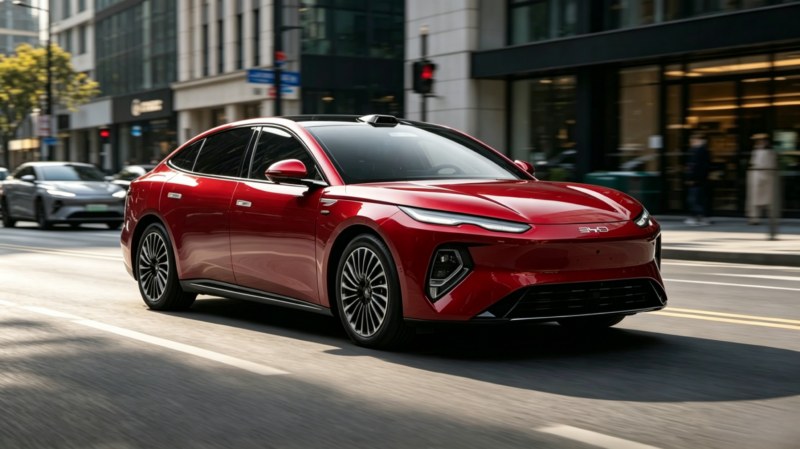 A leaked dealer pre-deduction sheet suggests BYD’s upcoming Seal 08 flagship sedan could enter the market at a lower-than-expected price point, with the 785 km all-wheel-drive flagship version listed at 250,000 yuan (36,900 USD). The figure is below the previously disclosed 300,000–350,000 yuan price range and emerged weeks before the model’s anticipated launch in late June or early July, according to Y-Auto. Flagship sedan targets premium EV segment The Seal 08 was first previewed globally in March and represents the largest sedan yet in BYD’s Ocean lineup. Earlier regulatory disclosures, we reviewed a vehicle measuring 5,150 mm long with a 3,030 mm wheelbase, placing it firmly in China’s large executive sedan category. The model adopts BYD’s Ocean Aesthetics 2.0 design language, featuring a fastback profile, full-width rear lighting, semi-hidden door handles, and a roof-mounted LiDAR sensor. Five exterior colours have been revealed so far: Coral Red, Cloud White, Silver Glow, Sea Mist Purple, and Poseidon Green. Flash charging and rear-wheel steering headline technology package Previous reporting indicated the Seal 08 would become one of the most technically advanced sedans in BYD’s portfolio, combining an 800V high-voltage platform with second-generation Blade Battery technology. The architecture supports flash charging, with BYD claiming that five minutes of charging can add approximately 400 km to the driving range. Earlier disclosures also indicated a maximum CLTC range of 1,000 km for selected battery-electric variants. Beyond charging performance, the sedan integrates rear-wheel steering and the DiSus-A intelligent air suspension system. Rear-wheel steering reduces the turning radius of a large vehicle by allowing the rear wheels to steer independently at low speeds while improving stability during high-speed lane changes. Combined with adaptive air suspension, the setup aims to balance luxury-car ride comfort with manoeuvrability in urban environments. Y-Auto revealed a leaked image of the Seal 08 EV’s pricing. Interior focuses on luxury equipment Leaked information indicates the Seal 08 will offer dual front zero-gravity seats, ventilation, heating and massage functions for all seats, double-layer acoustic glass, powered soft-close doors, and multiple magnetic accessory mounting points throughout the cabin. The flagship interior adopts a new Ocean Aesthetics 2.0 cockpit design centred around a large floating infotainment display and digital instrument cluster. Sales context The Seal 08 arrives as BYD seeks to refresh its sedan lineup. According to China EV DataTracker, domestic retail sales of the Seal 07 DM-i reached 615 units in May 2026, down 2.1% month-on-month and 77.5% year-on-year. Monthly sales have remained below 700 units since December 2025, creating room for a new flagship model positioned above the existing sedan range. If the leaked dealer figure proves accurate, the Seal 08 could enter the market with a significantly lower starting threshold than initially expected while bringing several technologies previously reserved for higher-end premium EVs.
 -
Firmware update 34.1.25.2602261.1.34.2.3.2602103.2Firmware version34.1.25.2602261.1.34.2.3.2602103.2ModelsDenza N9Denza N8LDenza Z9Update contentCan get OTAChipset34 chipsetRegionChineseDetailsDi5.1_34.1.25.2602261.1.34.2.3.2602103.2 34.1.5 Old version 🇷🇺 Китайская прошивка на 34 чипсет. 🇺🇸 Chinese firmware for 34 chipset. 🇺🇿 34-chipset uchun xitoy proshivka LinksFirmware
-
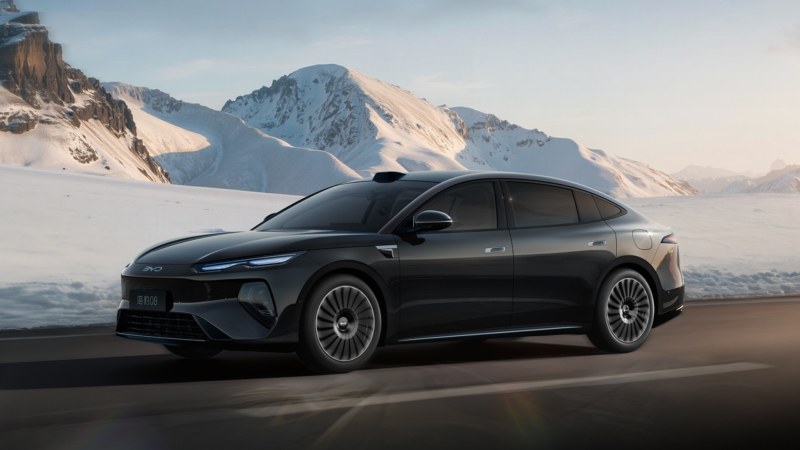 The BYD Seal 08 large sedan started taking pre-orders in China. It boasts a body length of 5.2 meters, rear-wheel steering, and a zero-to-hundred acceleration time of 3.3 seconds. The BEV variant of the Seal 08 will offer up to 900 km. The BYD Seal 08 is a flagship sedan of the brand’s Ocean series aimed at younger buyers. On June 12, BYD Ocean sales division General Manager Zhang Zhuo officially disclosed that the Seal 08 started taking pre-orders. The car’s official price range wasn’t disclosed. Previously, CarNewsChina reported that this vehicle can potentially start at 250,000 yuan (36,895 USD). The BYD Seal 08 sedan Starting to take pre-orders early without disclosing the car’s price is a common practice in China. Local car makers call them “blind” pre-orders. Their purpose is to attract attention to the model and to assess potential sales volume based on booking statistics and user interest. These reservations could be withdrawn at any time. Pre-orders could be placed in the BYD App. It is important for BYD to accurately assess demand, as the company was previously forced to postpone the launch of the BYD Great Tang in China twice to ensure it could meet demand. More about the Seal 08 The BYD Seal 08 is a large sedan with dimensions of 5150/1999/1505 mm and a wheelbase of 3,030 mm. It follows the Ocean Aesthetics 2.0 design language. BYD revealed that this car will be available in Obsidian Black body color. Other color options include white, silver, purple, green, and red. The car’s interior offers a large floating display, an LCD instrument cluster, and a gear shifter behind the wheel. The BYD Seal 08 sedan The electric variant of the BYD Seal 08 adopts an 800V high-voltage system and the second-gen Blade Battery. It means this car supports Flash Charging. It can charge the battery from 10% to 97% in around 9 minutes. BYD claims the EV version has 900 km of range. The AWD variant of the Seal 08 EV boasts two e-motors for 510 kW (684 hp). It speeds up to 100 km/h in 3.3 seconds. The PHEV variant of the Seal 08 integrates the DM-i plug-in hybrid system. It comprises a 1.5-liter engine producing 115 kW (154 hp) and an electric motor for 200 kW (268 hp). The car can run up to 400 km under CLTC conditions, thanks to a 45.36 kWh LFP battery. It was also reported that this car will be available with the DM-p version that boasts two electric motors with a combined power output of 400 kW (536 hp). Interior of the BYD Seal 08 Other highlights of the BYD Seal 08 include rear-wheel steering and the DiSus-A chassis with dual-chamber air suspension. It will also boast the DiPilot 5.0 assisted driving system capable of the Navigate On Autopilot (NOA) function on urban roads and highways. According to China EV DataTracker, BYD delivered 164,971 cars domestically in May 2026, down 37.9% Year-Over-Year. However, its global sales stopped falling Y-O-Y due to the increased foreign sales. In May 2026, BYD sold 376,990 vehicles around the globe.
 -
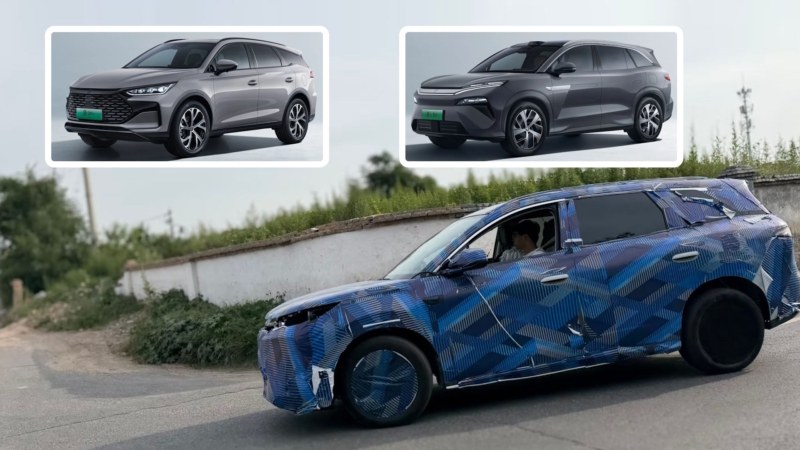 BYD is testing the next-generation Tang in China, with real-world sightings revealing an SUV similar in size to the Sealion 8 (Tang L) and smaller than the Great Tang. It’s expected to serve as the entry-level option in the Tang family, strengthening the series with a lower-priced SUV. The Sealion 8, also known as the Atto 8, is marketed in China as the Tang L. It should not be confused with the Chinese market Sealion 08, which is currently being rolled out nationwide. The BYD Tang was first launched in 2015 with ICE and plug-in hybrid powertrains. The current generation of the Tang SUV, which retails for 179,800 – 199,800 yuan (26,500 – 29,500 USD), dates back to 2018 and received a facelift in 2022. With BYD focusing on the Sealion 8 and Great Tang, this 8-year-old platform is becoming less competitive. The current BYD Tang. Source: BYD The spy shots show the Tang with updated styling cues, bringing it closer to the Sealion 8 in terms of design. The camouflaged vehicle’s rear lights and D-pillars are reminiscent of BYD’s latest SUVs, while its front lights show a similar silhouette to the Sealion 8. The next-gen BYD Tang under wraps. Source: Di Fen Zhi Jia What’s new with the Tang While the new Tang is expected to be an entry-level option, Chinese sources close to BYD claim it will feature the Sealion 8’s interior and chassis and will remain almost identical in size. The new Tang is not expected to come in a performance DM-p trim, but BYD’s Disus-A air suspension and rear-wheel steering may be available as optional extras. It is unclear what name BYD will choose for the new Tang’s export models. With the Sealion 6, 7, and 8 monikers already taken, the next Tang could be marketed under the Atto name. The Sealion 8 (Tang L) is also marketed overseas as the Atto 8, so an “Atto 7” or “Atto 6” name may be possible. More on the Sealion 8 (Tang L) The Sealion 8 is currently on sale in its home market as the Tang L. It currently retails for 229,800 – 289,800 yuan (33,900 – 42,800 USD). EV trims have a maximum CLTC range of 670 km from a 100.5 kWh LFP battery, and are compatible with BYD’s Flash Charging. The range-topping dual-motor trim has a combined motor output of 810 kW (1086 hp). PHEV trims come with a 35.6 kWh LFP pack, with the FWD DM-i trim rated for 215 km of CLTC range. The AWD trims come with BYD’s dual-motor DM-p system, and maximum CLTC range shrinks to 200 km. DM-p variants have a combined motor output of 400 kW (536 hp). The Sealion 8, also known as the Atto 8 and Tang L. The Sealion 8 measures 5,040 mm in length, 1,996 mm in width, and 1,760 mm in height, with its wheelbase being 2,950 mm. Curb weight is 2,400 to 2,882 kg, depending on trim and powertrain. The Tang L’s domestic deliveries, May 2025 to April 2026. Source: China EV DataTracker According to China EV DataTracker, the Sealion 8 (Tang L) is struggling in China, delivering only 616 units in May 2026. This is a 91.2% year-on-year drop, and its high price may deter potential buyers. If a low-cost SUV variant comes to fruition, it may boost sales for the Tang family. Source: Weibo – re65_LandRoads, Wechat – Di Fen Zhi Jia
 -
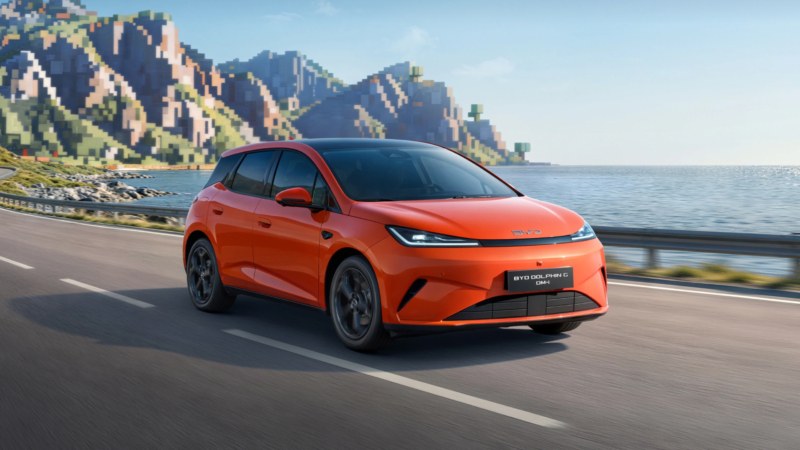 The BYD Dolphin G DM-i plug-in hybrid hatchback, designed for Europe, revealed prices as its full market rollout is scheduled for autumn 2026. This PHEV started taking orders at 28,990 EUR (33,550 USD) in Germany before subsidies. The BYD Dolphin G DM-i is the first model developed exclusively for Europe and set to be manufactured at the company’s plant in Szeged, Hungary. It adopts a distinguishing design language with thin headlights, semi-hidden door handles, and short overhangs. Dimensions are 4160/1825/1575 mm with a wheelbase of 2,610 mm. For clarity, it is 130 mm shorter and 55 mm wider than the European variant of the Dolphin BEV. Interior of the BYD Dolphin G DM-i The interior of the BYD Dolphin G DM-i offers an 8.8-inch LCD instrument cluster and a floating touchscreen with a diameter of 10.1 or 12.8 inches, depending on the trim level. The center tunnel has a wireless phone charging pad, cup holders, and a block of physical buttons. This urban driver offers a trunk capacity of 425 liters as standard. The trunk volume reaches 1,225 liters with the rear seats folded flat. Powertrain The Dolphin G DM-i comes standard with a plug-in hybrid system. It has a 1.5-liter naturally aspirated engine under the hood for 70 kW (94 hp). This ICE is paired with an electric motor for 120 kW (161 hp). The combined power output of the entry-level Dolphin G DM-i Active is 129 kW (173 hp) due to the usage of a small 7.42 kWh battery, suitable for 40 km of electric range under WLTP conditions. Powertrain of the BYD Dolphin G DM-i The Boost, Comfort, and Sport trim levels of the Dolphin G DM-i have a bigger 18.3 kWh battery on board. It allows the car to drive up to 105 km in electric mode (WLTP conditions). The combined power output of the system is also higher at 156 kW (209 hp). The Dolphin G DM-i speeds up to 100 km/h in 8.3 seconds. Its fuel consumption is 4.5 liters per 100 km. Trims & prices The price of the entry-level BYD Dolphin G DM-i Active is 28,990 EUR (33,550 USD) before subsidies. However, its price could be reduced to 18,990 EUR (21,985 USD), thanks to the governmental EV subsidy and the automaker’s bonus. For clarity, the Cupra Leon E-Hybrid hatchback from Volkswagen Group costs 49,620 EUR (57,450 USD) in Germany. These cars represent slightly different segments. However, the price difference is significant. BYD Dolphin G DM-i Prices of the Dolphin G DM-i are as follows (without and with subsidies): Active: 28,990 / 18,990 EUR (33,550 / 21,985 USD) Boost: 31,990 / 21,990 EUR (37,040 / 25,460 USD) Comfort: 33,490 / 22,990 EUR (38,775 / 26,620 USD) Sport: 34,490 / 23,990 UER (39,930 / 34,720 USD) According to China EV DataTracker, BYD delivered 164,971 cars domestically in May 2026, down 37.9% Year-Over-Year. However, its global sales stopped falling Y-O-Y due to the increased foreign sales. In May 2026, BYD sold 376,990 vehicles around the globe.
 -
 BYD has published a new patent covering underbody living-organism detection, revealing how the automaker is extending computer-vision technologies beyond driving assistance and battery systems into vehicle safety monitoring. The patent was published by China’s National Intellectual Property Administration on June 12 under application CN122200729A, reported IThome. Baseline Imaging Forms The Core Detection Method The patented system captures an image of the vehicle’s underside when the vehicle is powered down and stores it as a reference image. Subsequent real-time images are compared against that baseline. Instead of continuously analysing the entire underbody area, the system first identifies regions that differ from the stored reference image. Those different regions become target images for further analysis. The architecture reduces unnecessary processing by keeping static components, such as suspension parts, battery enclosures, aerodynamic panels, and structural members, unchanged between scans. Computational resources can therefore focus only on newly detected objects or movement beneath the vehicle. After isolating the changed region, the system extracts feature-detection information, determines whether a living organism is present, and evaluates its status. Computer Vision Targets A Difficult Detection Environment Detecting living organisms beneath vehicles poses challenges distinct from those of conventional occupant-monitoring systems. Underbody environments contain shadows, changing lighting conditions, road debris, dirt accumulation, and varying ground surfaces. Traditional motion-detection systems often struggle to distinguish between harmless environmental changes and genuine biological movement. BYD’s baseline-comparison approach effectively creates a customised reference map for each parked vehicle. Rather than relying solely on object classification, the system first identifies environmental changes and then applies recognition algorithms to determine whether those changes correspond to an animal, person, or other living target. This two-stage architecture improves detection specificity while reducing false positives generated by static objects. Part Of A Broader Vehicle Monitoring Strategy The patent is not an isolated development. BYD recently disclosed another invention for detecting forgotten occupants inside a vehicle using radar channel impulse response data, frequency-domain features, and angle-of-arrival analysis. Together, the two systems address opposite sides of the vehicle. One monitors occupants left inside the cabin, while the new patent focuses on living organisms located beneath the vehicle. The strategy suggests that BYD is building a broader sensing ecosystem that combines computer vision, radar processing, and intelligent monitoring. A similar diversification is evident elsewhere in the company’s technology roadmap. In May, BYD published a sulfide solid-state battery patent targeting next-generation energy storage, while June brought the launch of its first German 1,500 kW flash-charging station as part of a planned 3,000-site European network. Why The Timing Matters The publication adds to a growing list of BYD patents focused on sensing, monitoring, and vehicle intelligence. In addition to the underbody detection system, the company recently disclosed a method for detecting forgotten occupants inside a vehicle using radar-based signal analysis. Together with recent filings covering solid-state batteries and charging technologies, the patent illustrates the breadth of BYD’s current research activity. However, publication of a patent application does not indicate production deployment. No vehicle application, launch timeline, or commercialisation plan was disclosed in the document. Sales Context China EV DataTracker data shows BYD’s sales remain spread across a broad range of models. The Sealion 06 led the lineup in May with 18,856 deliveries, reflecting the scale at which new software and safety technologies could be deployed across the brand’s portfolio.
 -
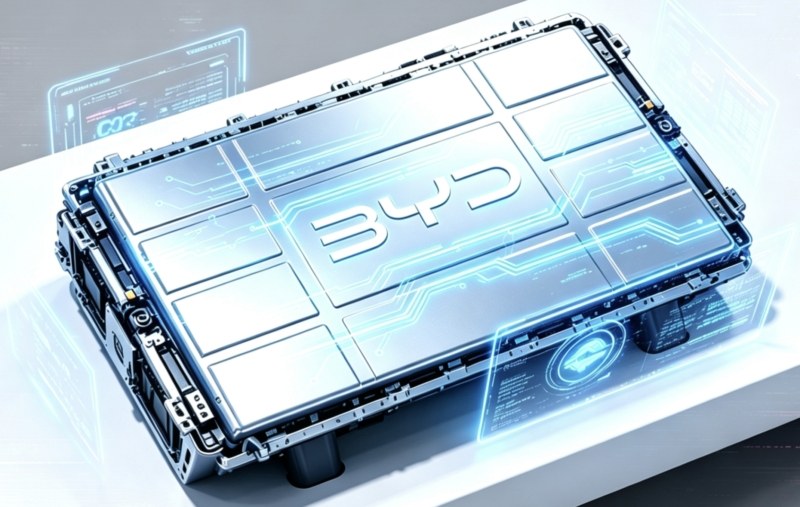 Mid-2026 market data shows a structural bifurcation in the sodium-ion battery sector, as industrial applications diverge from passenger-vehicle pathways. According to the June 12, 2026, Securities Daily report, Changan Automobile and CATL launched a mass-produced passenger vehicle featuring a 45 kWh sodium pack. In contrast, BYD is focusing its third-generation polyanion (NFPP) platform on stationary energy storage systems, targeting a stabilised manufacturing cost baseline of 0.3 yuan (0.04 USD) per watt-hour by 2027. Overcoming the Polyanion Conductivity Paradox The manufacturer’s grid storage strategy relies on a dedicated 189Ah, 2.9V heavy-duty cell architecture. The primary material constraint in polyanion chemistry is its three-dimensional framework, bound by strong covalent phosphate (PO₄³⁻) groups, which yields an intrinsic electronic conductivity range of 10⁻⁹ to 10⁻¹⁰ S/cm. This range characterises the un-modified material essentially as an electrical insulator. To mitigate high-temperature degradation and internal sodium plating under operational current stress, a dual-modification methodology was introduced. Reducing particle sizes below 100 nm via nanofabrication shortens electron transit pathways, while an amorphous carbon matrix coating across grain boundaries elevates electronic conductivity by four to five orders of magnitude. Quantifying the Structural Performance Variance Laboratory data compiled in a June 8 industry depth report by Minmetals Securities outlines the distinct performance parameters of competing sodium-ion pathways. These long-life parameters are engineered to fulfil multi-decade stationary demand metrics rather than weight-sensitive transport configurations. Performance & Abuse MetricPolyanion (NFPP) Cell BaselineLayered Oxide AlternativeGrid/Industrial SignificanceMax. Thermal Runaway Temp.273.32°C484.51°CCrucial for dense, indoor commercial energy storage installations.Total Volumetric Gas Evolution93.1 L123.25 LOptimises utility-scale grid power over weight-critical passenger cars.Target Field Deployment200Ah long-form cellLower-capacity, high Wh/kg cellOptimizes utility-scale grid power over weight-critical passenger cars. These thermal profiles support stable grid installations. The resulting framework enables an asset life threshold of ≥ 10,000 cycles, translating to a 33-year operational span under standardised power distribution cycles. This longevity underpins the system architecture as BYD breaks ground with solid-state battery and 10,000-cycle sodium tech to anchor static grid infrastructure. Addressing Supply Chain Hard Carbon Friction Widespread economic displacement of lithium iron phosphate remains limited by constraints on the negative electrode. The global supply chain for hard carbon anodes remains fragmented, lacks a standardised processing pathway, and leads to ongoing cell yield variations during mass manufacturing. Financial projections published by Minmetals Securities indicate that full-scale cost parity between scaled sodium production lines and established lithium iron phosphate lines will not materialise until 2027. This industrial transition accelerates as CATL and BYD fast-track the shift to sodium-ion batteries to mitigate structural macroeconomic resource volatility. Market Segmentation and Symbiosis Corporate filings from April 2026 show that the manufacturer deployed megawatt-hour-class polyanion systems during pilot phases in 2025. This specialised shift away from the automotive market occurs while the broader sector maintains a rigid volume hierarchy across mainstream transport fields. According to May data from the China EV DataTracker, the electric vehicle battery installation landscape remains highly centralised, with CATL maintaining a dominant lead at 33.08 GWh, securing a 46.7 per cent market share. BYD holds the second position with 11.87 GWh of installations, representing a 16.8 per cent market share, while Tier-2 manufacturers like Gotion High-tech and Calb follow at 6.3 per cent and 6.1 per cent, respectively, highlighting the massive scale disparity that forces players to navigate distinct, scenario-specific chemistry niches. Industrial data suggests a long-term multi-chemistry symbiosis. Lithium iron phosphate and high-nickel variants retain dominance in high-speed transport lines, while stable polyanion cells are allocated exclusively to heavy machinery, stationary installations, and stationary infrastructure networks, where longevity outweighs volumetric constraints.
 -
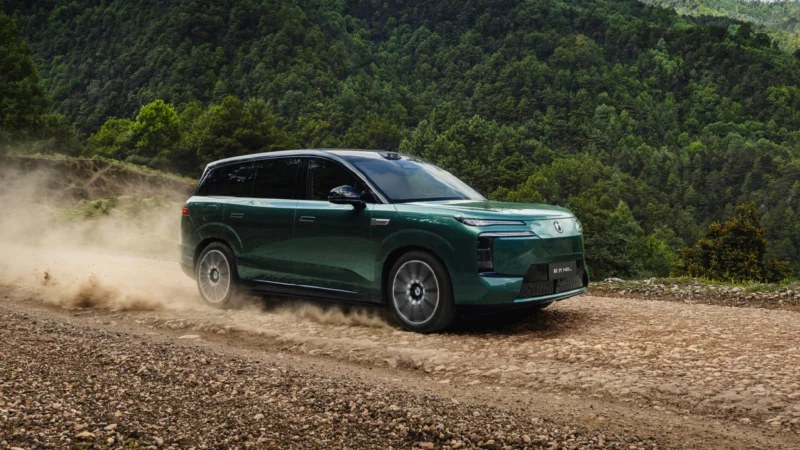 BYD’s new Denza N8L plug-in hybrid SUV with flash charging and a 75.26 kWh battery will launch in China on June 23. It is a full-size family driver with six seats and a pre-sale price range of 350,000 – 400,000 yuan (51,690 – 59,070 USD). The Denza N8L initially entered the domestic market with a price range of 299,800 – 329,800 yuan (44,275 – 48,705 USD). According to China EV DataTracker, Denza delivered 21,169 units of the N8L to clients in China cumulatively. In March 2026, Denza applied for a sales license for the updated N8L with a bigger battery. The new version kicked off pre-sales on April 10. The Denza N8L Denza officials confirmed that the updated version of the Denza N8L will enter the domestic market on June 23. As mentioned, its biggest update is a 75.26 kWh LFP battery, suitable for 420 km of CLTC range. For clarity, the ongoing modification uses a significantly smaller 46.99-kWh pack. The new battery adopts the 800V high-voltage system and the flash charging tech that can charge from 10% to 97% in 9 minutes. Interior of the Denza N8L The Denza N8L adopts a plug-in hybrid system with a 2-liter turbocharged engine and three electric motors. Their combined peak power reaches 560 kW (751 hp). It boasts the DiSus-A active suspension and rear-wheel steering, bringing the turning radius to just 4.58 meters. It is a decent number for a full-size crossover with dimensions of 5200/1999/1820 mm and a wheelbase of 3,075 mm. The updated Denza N8L has a new body color This family driver’s cabin adopts six seats with a 2+2+2 layout. The second-row captain chairs boast heating, ventilation, and massage functions. The front passenger’s seat adds a zero-gravity mode, while the third-row seats are heated as standard. Its dashboard adopts two 13.2-inch screens, a large 17.3-inch monitor, and a 50-inch augmented reality head-up display. The updated Denza N8L aligns with the ongoing model in terms of exterior styling. It has split headlights, retractable door handles, a LiDAR on the roof, and elongated taillights. A new Black & Red color scheme and 20-inch wheels could distinguish the updated model.
 -
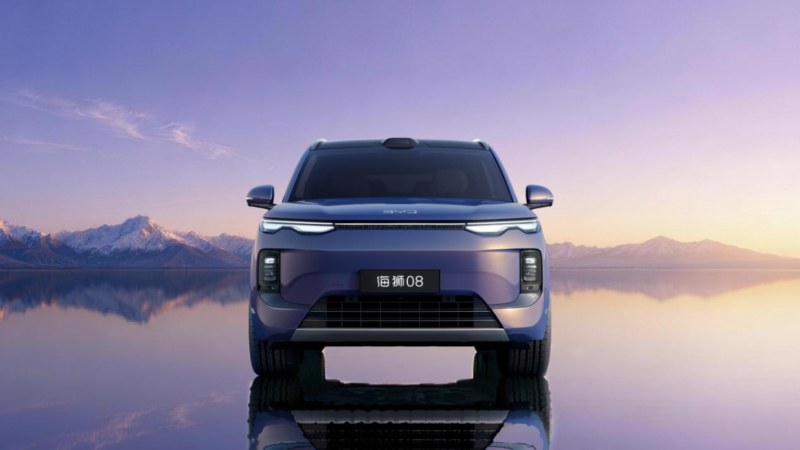 The BYD Sealion 08 electric SUV reveals a massive 115 kWh LFP battery for 900 km of CLTC range, as the car was listed in the purchase tax reduction list. This pack weighs 810.5 kg, which takes over 30% of the curb weight. Previously, the Sealion 08 reached dealers in China. According to the latest data, the entry-level variant of the all-electric BYD Sealion 08 crossover will offer a 92.093 kWh LFP pack developed by BYD. It is the second-gen Blade Battery capable of flash charging. It charges from 10% to 97% in nine minutes. This battery sends power to a single motor in the rear axle with a peak power of 320 kW (429 hp), resulting in 710 km of range (CLTC). It is also worth noting that the 92.093 kWh LFP pack weighs 633 kg. At the same time, the curb weight of the entry-level Sealion 08 is 2,420 kg. So, the standard battery takes around 26% of the car’s weight. The BYD Sealion 08 at the Beijing Auto Show 2026 The second battery option of the Sealion 08 is a massive 115.072 kWh pack. The car’s CLTC range reaches 900 km. As mentioned, this battery pack weighs 810.5 kg, highlighting the biggest drawback of LFP batteries, which is low energy density. The curb weight of the Sealion 08 Long-Range RWD is 2,595 kg. It means the battery takes 31.2% of the car’s weight. This trim has an e-motor with a peak power of 370 kW (496 hp). There is also the top-trim Sealion 08 with a range of 800 km under CLTC conditions. It is the dual-motor AWD variant with a combined peak power output of 585 kW (784 hp). Its curb weight is 2,710 kg. As a result, this large family driver accelerates to 100 km/h in a 5-second range. The BYD Sealion 08 crossover. Credit: BYD It is also worth noting that the Sealion 08 is available with a DM-i plug-in hybrid system. It comprises a 1.5-liter engine producing 115 kW (154 hp) and an electric motor for 200 kW (268 hp). The car can run up to 400 km under CLTC conditions. It was also reported that this car will be available with the DM-p version that boasts two electric motors with a combined power output of 400 kW (536 hp). The Sealion 08 is a large crossover with dimensions of 5115/1999/1800 mm and a wheelbase of 3,030 mm. Five-seat and six-seat layouts will be available. Its highlights include rear-wheel steering and the DiSus-A chassis with dual-chamber air suspension. It will also boast the DiPilot 5.0 assisted driving system capable of the Navigate On Autopilot (NOA) function on urban roads and highways. According to China EV DataTracker, BYD delivered 164,971 cars domestically in May 2026, down 37.9% Year-Over-Year. However, its global sales stopped falling Y-O-Y due to the increased foreign sales. In May 2026, BYD sold 376,990 vehicles around the globe.