



Vitaly
Administrators
-
Joined
-
Last visited
Everything posted by Vitaly
-
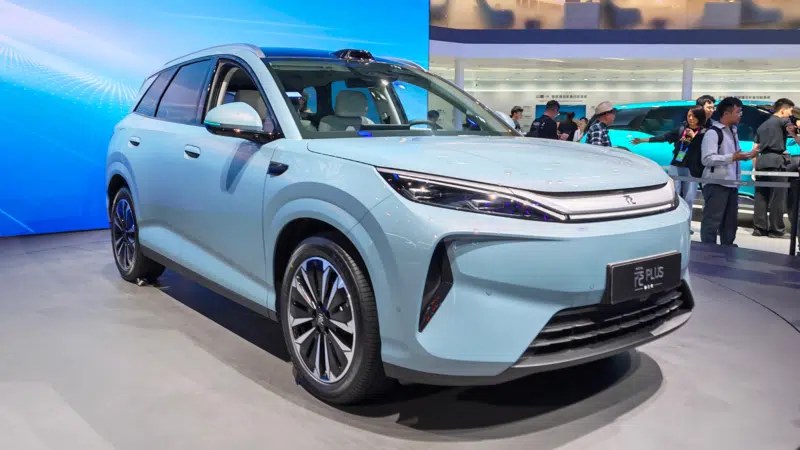 The all-new BYD Atto 3 crossover was revealed at the Beijing Auto Show 2026 with a peak power of 240 kW (326 hp) and up to 630 km of range. It adopts the LiDAR-based DiPilot 300 assisted driving system, a continuous damping system, and flash charging technology. This car is known in China by its domestic name Yuan Plus. BYD Atto 3 (Yuan Plus) sales in China. Credit: China EV DataTracker BYD positions the new Atto 3 as the third-generation model. It aims to boost the model’s domestic sales as BYD handed over just 10,675 units of this compact SUV in China, down 73.2% Year-Over-Year (China EV DataTracker). The new car adopts the brand’s latest Loong Face (Dragon Face) design language with sharp headlights, a chrome-plated element between them, and semi-hidden door handles. The third-gen BYD Atto 3. Credit: Gemini-Mini The new BYD Atto 3 is a compact-sized SUV with dimensions of 4665/1895/1675 mm. The wheelbase reaches 2,770 mm. It is 210 mm longer, 20 mm wider, and 60 mm higher than the outgoing crossover. The wheelbase of the updated variant was stretched by 50 mm. The new Atto 3 offers two wheel options for 18 and 19 inches. Previously, the Atto 3 applied for a sales license in China, getting ready for the sales start. Interior of the third-gen BYD Atto 3 The new BYD Atto 3 adopts a frunk for 101 liters. The car is offered with six color options. The car’s interior adopts 16 speakers, 16 speakers, a built-in refrigerator with heating function, and a power tailgate. This model offers a large floating touchscreen, an LCD instrument panel, a head-up display, and a gear shifter that sits behind a two-spoke steering wheel. The center tunnel has two wireless phone chargers. BYD Chairman Wang Chuanfu checks the third-gen Atto 3. Credit: Fanshijie-EV The third-gen Atto 3 comes standard with a 57.545 kWh LFP battery paired with a 200 kW (268 hp) electric motor in the rear axle. This variant offers 540 km of CLTC range. The second battery provides a capacity of 68.547 kWh. It works in pairs with an e-motor for 240 kW (322 hp). The electric range of this version is 630 km. The new Atto 3 adopts the flash charging technology that allows charging the battery from 10% to 97% in nine minutes.
 -
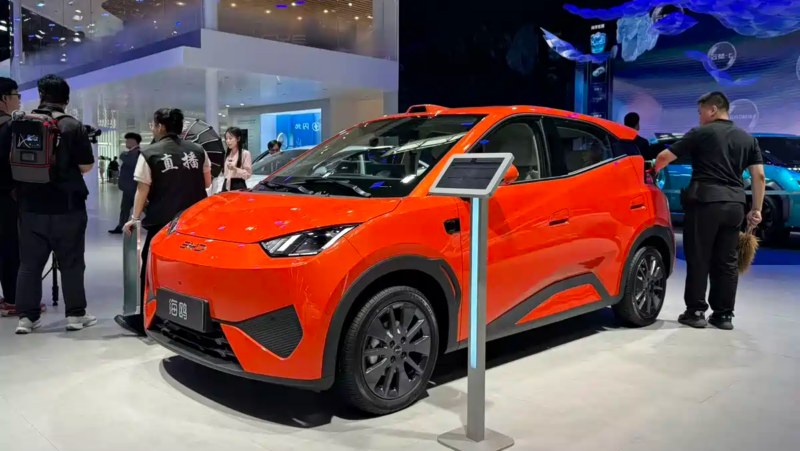 The 2026 BYD Seagull (known as the Dolphin Mini or Dolphin Surf in overseas markets) made its debut at the 2026 Beijing Auto Show, showcasing two major highlights alongside several detail refinements. Key upgrades The most significant improvements include a maximum range increase from 405km to 505km under CLTC standards, and the availability of an optional LiDAR system. The LiDAR-equipped variant will feature BYD’s “God’s Eye B” driver assistance system. Exterior changes While the overall design remains largely unchanged, the displayed model featured: A new red paint option New 16-inch wheels with 175/55 R16 tyre specifications LiDAR unit mounted on the roof Camera components on the front fenders A small blue light at the rear Dual wipers (upgraded from a single wiper) The exterior of BYD Seagull. Interior updates The interior design maintains continuity with the current model, with refinements including: Simplified steering wheel buttons Smart driving paddles for the intelligent driving variant Interior-colored center console buttons Upgraded 50W wireless fast charging with cooling vent Single cup holder configuration Flip-top armrest box Powertrain According to previously released filing information, the new motor’s maximum power has been increased to 60kW (80hp), while the high-spec model’s CLTC range has been upgraded from 405km to 505km. Official detailed specifications were not announced at the show. BYD Seagull sales performance in China. Data: China EV DataTracker The BYD Seagull hit its peak sales in China over the past year in April with 34,005 units. After selling 30,708 units in June, its sales have never returned to the 30,000+ mark. This is because it is facing immense competitive pressure from the Geely Xingyuan, which was the top-selling new energy vehicle model in the Chinese market last year. Due to Xingyuan’s outstanding performance, more and more competitors have emerged, including the Arcfox T1 launched last year and the Leapmotor A10 released last month. The interior of BYD Seagull.
 -
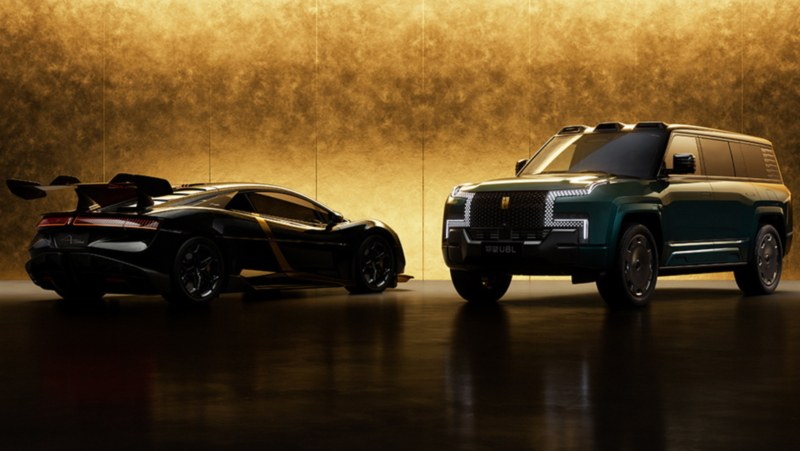 At the 2026 Beijing Auto Show, Yangwang, BYD‘s flagship sub-brand, unveiled special editions of its U8L SUV and U9 Xtreme supercar. The U8L, an SUV with almost 1200 hp, gains a luxury-oriented four-seater version. The U9 Xtreme supercar, which has over 3000 hp, gains a special black & gold paint job, with sales limited to 30 units. Pricing has not been announced, but it is expected to surpass every BYD model ever produced. The U8L’s four-seater version, marketed as the Ding Cang edition in its home market, is based upon the existing U8L SUV, which itself is an extended-wheelbase version of the U8 SUV. The latter features both luxury and off-road-oriented trims catering to different markets, while the new four-seater U8L, as well as the standard six-seater U8L, are solely dedicated to luxury and comfort. The exterior of the Yangwang U8L Ding Cang Edition. Source: Yiche Hu Xiaoqiang, Yangwang’s sales division manager, has previously stated that the new four-seater U8L focuses on enhancing the cabin experience, exclusive ownership benefits, and expanding personalization options. The new trim, which features approximately 5.3 cubic meters of interior space, is equipped with only two rows of seats, providing more cabin space for its passengers. The U9 Xtreme supercar, having made headlines for lapping the Nurburgring racetrack in less than seven minutes, is an upgraded trim of the existing U9 pure-EV supercar. This new limited edition features a custom paint job with black & gold theming, with gold accents peppered on the front splitter, hood, and doors. BYD has not announced whether this new edition will receive any aerodynamics or performance upgrades. The exterior of the U9 Extreme limited edition. Source: Yiche Yangwang has not announced pricing for both models, but considering their flagship positioning in both Yangwang’s and BYD’s lineups, it is expected to exceed all current models. The current U8L retails at 1,280,000 to 1,300,000 yuan (187,200 to 190,000 USD), while the U9 Xtreme lists for 1,800,000 yuan (263,300 USD), with customization options pushing the price tag even higher. More on the U8L, U9 and Yangwang The current U8L is built on BYD’s e4 platform, featuring a total of four motors at each corner of the car, and BYD claims this layout provides greater stability and control. The 800V extended-range EV (EREV) powertrain combines the 880 kW (1180 hp) motors with a 56.58 kWh LFP pack built in-house by BYD, with a 200 kW (268 hp) 2-litre turbocharged four-cylinder range extender up front. CLTC EV range is rated at 230 km, while the comprehensive range is rated at 1205 km. BYD’s flash charging is standard on this model, with a charge from 10% to 97% taking a claimed seven minutes. As its name suggests, the U9 Xtreme is a more “extreme” version of the existing U9 supercar, boosting motor power from a “measly” 960 kW (1287 hp) to a “barely adequate” 2220 kW (2977 hp). It has already shattered lap records, and currently holds the top speed record for a production car (496.22 km/h), regardless of powertrain and fuel source. The U9 Xtreme uses a 1200V variant of BYD’s e4 platform, with a motor in each corner, and while battery capacity and range have not yet been announced, the regular U9 achieves 450 km on the CLTC cycle with an in-house 80 kWh LFP pack. Total domestic deliveries of the Yangwang brand, up until March 2026. Source: China EV DataTracker Apart from the U8 SUV, the U9 supercar, and their variants, Yangwang also offers the U7, a luxury sedan with EV and plug-in hybrid (PHEV) powertrains. Yangwang’s sales figures are relatively minuscule compared with BYD’s other brands, with China EV DataTracker only recording 307 domestic deliveries in March 2026. It’s highly likely that this doesn’t bother either Yangwang or BYD, considering its niche and position as the firm’s flagship luxury halo brand, and the amount of customization on hand likely pushes per-vehicle profits way beyond regular BYD models. Several Chinese automakers have joined in on the customized luxury SUV trend, with Rox Motor’s Polestones introducing a Royal Edition of its Adamas EREV SUV, and fellow EREV connoisseur Li Auto announcing the L9 Livis. This trend is likely to continue, considering the continued erosion of profits as the Chinese market price war lingers on, and the potential earnings from customization and VIP services for models within the luxury niche.
 -
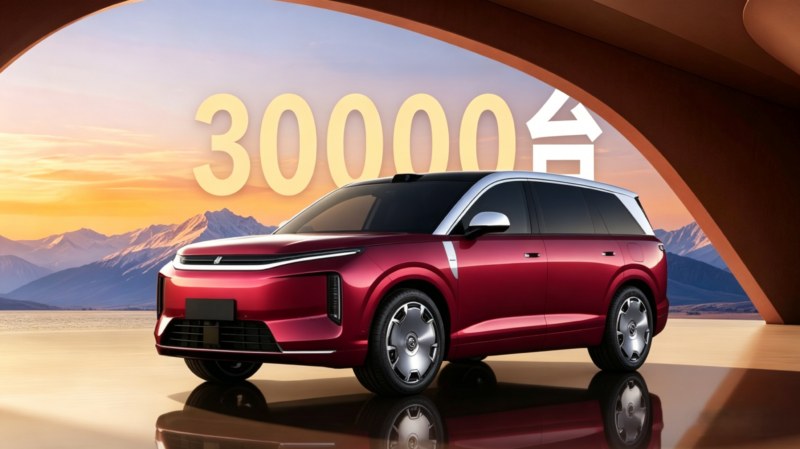 BYD opened pre-sales for its Great Tang flagship SUV on April 24 at the Beijing Auto Show, with pricing set at 250,000-320,000 yuan (36,460–46,670 USD). BYD announced that it had received pre-orders for more than 30,000 units within the first 24 hours. CarNewsChina previously reported that the Great Tang started arriving at dealerships across China on April 10, ahead of the official pre-sale. Flagship positioning The Great Tang is positioned as the largest SUV under BYD’s Dynasty lineup, derived from the Dynasty-D concept. With a body length exceeding 5.3 meters and a 3,130 mm wheelbase, it enters the full-size SUV segment with a three-row, seven-seat layout. The model introduces BYD’s latest design language, including a wide front light signature and vertically stacked headlights. Interior features include a floating central display, passenger entertainment screen, and a ceiling-mounted rear display. Powertrain and range The battery-electric version uses BYD’s second-generation Blade battery, combined with a 1000V high-voltage platform. The maximum CLTC range is listed at 950 km for the rear-wheel-drive version. The dual-motor all-wheel-drive variant produces up to 585 kW and accelerates from 0 to 100 km/h in 3.9 seconds. Fast-charging capability is supported at a 10C rate and a peak current of 1000A, positioning the model among the highest-charging-rate EVs disclosed in China. Hybrid variants In addition to BEV versions, BYD will offer plug-in hybrid variants. The DM-i variant pairs a 1.5T engine with a 300 kW electric motor, while the DM-p version uses dual motors with a combined output of 400 kW. The latter achieves 0–100 km/h in 4.3 seconds. Chassis and technology The Great Tang integrates DiSus-A dual-chamber air suspension with road preview capability, alongside rear-wheel steering. A turning radius of 5.2 meters is reported despite the vehicle’s size. Additional features include lidar-based driver assistance, a 3 nm cockpit chip, and a 27-speaker Devialet audio system. BYD’s sales in China. Credit: China EV DataTracker Market context BYD reported domestic sales of 303,150 vehicles in China in the first quarter of 2026, representing a year-on-year decline of 61.5% compared with 643,024 units in Q1 2025, according to China EV DataTracker. The result also marks a sequential drop from 788,019 units in Q4 2025. Market positioning Based on its size, performance, and pricing, the Great Tang sits at the upper end of the mainstream full-size SUV segment. It overlaps with large plug-in hybrid SUVs such as the Geely Galaxy M9 while remaining positioned below higher-priced premium sub-brands. BYD reported over 30,000 orders within 24 hours.
 -
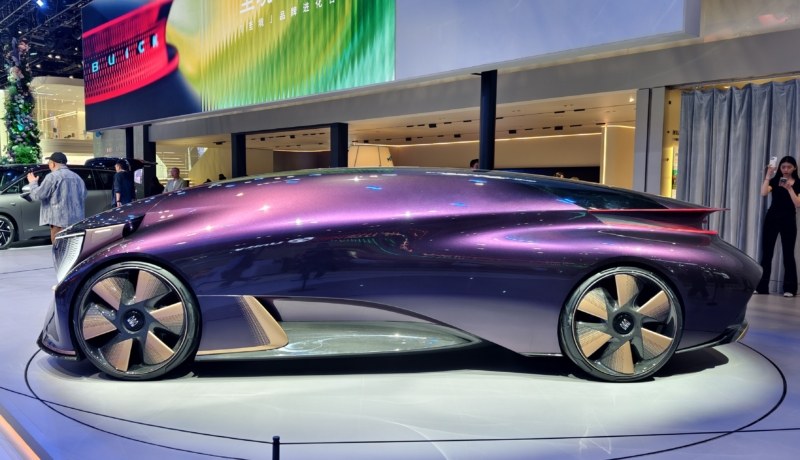 Concept vehicles presented at the 2026 Beijing Auto Show highlight a wide range of design and technology directions, with both domestic and joint-venture brands showcasing experimental and pre-production models. Expanding design boundaries The AvatrVision Xpectra concept measures approximately 5.8 meters in length and features pillarless coach doors and a full-length glass roof extending from front to rear. The model integrates lidar sensors into the front bumper. It uses a silicon carbide motor with a reported efficiency of up to 99.1%. L4-level hardware has been installed. Avatr Vision Xpectra concept with pillarless doors and a full-length glass roof. The Lynk & Co GT concept features a low-slung, wide-body coupe. Powertrain specifications have not been confirmed. Some discussions referenced hybrid configurations, including plug-in hybrid systems, but no official specification has been announced. Lynk & Co GT concept shown with a wide-body coupe design. Shift toward performance and technology integration Hongqi’s Tiangong S-Concept features a coupe-style body. The model includes driver assistance systems and cockpit technologies, with no production specifications confirmed at the time of the event. Hongqi Tiangong S-Concept coupe with integrated driver assistance systems. The Xiaomi Vision GT concept was presented alongside a design documentary covering its development process. The vehicle has a reported drag coefficient of 0.29 and a downforce figure of approximately 1.2 tons. The concept includes integration of performance and connected system features. It is not designated for production. Xiaomi Vision GT concept featuring aerodynamic performance-focused design. Targeting new segments BYD introduced the Ocean-V concept as part of the Ocean series. The model is designed with an emphasis on interior space layout and multi-purpose vehicle usage. No production specifications were provided. The BYD Ocean-V concept focused on a multi-purpose interior layout. Geely also expanded the 2026 Beijing Auto Show’s autonomy focus by unveiling China’s first native robotaxi prototype, a purpose-built driverless model developed as a Waymo-like platform rather than a converted passenger car. Geely introduced a robotaxi prototype at the event. The vehicle is described as a native driverless platform based on L4-level architecture. It includes a system called the World Action Model, which combines perception and planning functions. The vehicle is equipped with multiple sensors and onboard computing systems and does not include conventional driving controls. The system is planned for potential commercial use through Caocao Mobility. A production-oriented version is planned for 2027. Geely robotaxi prototype without traditional driving controls. Geely Galaxy Light second-generation concept Geely also presented the second-generation Galaxy Light concept at the 2026 Beijing Auto Show, introducing an updated design language evolving from “ripple aesthetics” to a “Galaxy Starfall” front-end theme for multi-energy vehicles. The model features revised lighting elements with architectural-inspired headlights and star-pattern rear lights, along with a higher, more upright stance than the previous generation. The interior features an AI-based “cabin-drive integration” system that combines display, control, and seating elements with Chinese design references. According to official information, it is equipped with Geely’s AI 2.0 system, a 2160-line digital lidar, and a computing platform exceeding 3000 TOPS, supporting map-free urban navigation and point-to-point assisted driving functions. Second-generation Galaxy Light concept at the 2026 Beijing Auto Show. iCAR RoBox concept and i-Swift platform 3.0 Chery’s iCar RoBox concept was shown as part of the X-series direction. The model combines the terms “ROBOT” and “BOX.” The exterior uses a one-box upper structure with a lower body section featuring high ground clearance, large wheels, and wide wheel arches. Lighting elements include circular and rectangular shapes. The model includes C-pillar blind windows and a high-mounted brake light. RoBox is associated with the i-Swift platform 3.0. The platform is described as using a high-voltage architecture compatible with lithium-ion and solid-state batteries. It is designed for megawatt-level charging capability, with axial-flux motors and multi-motor configurations supporting vector torque distribution. L3 to L4-level driving capability and AI-based cabin interaction are included in the described system. iCar RoBox concept with one-box body design and rugged lower structure. Chery’s X-Concept autonomous concept The X-Concept is positioned as a future autonomous mobility concept that combines aerodynamic efficiency with premium design. It features a streamlined body with front and rear airflow-optimised structures, an active grille that adjusts for cooling and aerodynamics, lightweight aerodynamic wheels, and full-width matrix lighting. The concept previews the brand’s future design and technology direction. X-Concept featuring streamlined aerodynamic design and full-width lighting. Joint-venture participation Dongfeng Peugeot and Dongfeng Citroën presented four concept vehicles. The Peugeot Polygon concept includes a rectangular steering interface enabled by steer-by-wire technology. The vehicle also includes 3D-printed recycled materials and configurable interior elements. Peugeot Polygon concept with steer-by-wire rectangular steering interface. Buick presented an autonomous concept under its Electra sub-brand. The exterior uses a design language referred to as “Floating Wing Shield.” The model includes laser-engraved surface detailing and projection-based display elements. The interior includes a reconfigurable central structure that can fold into a table layout and screen-based control interfaces. Buick Electra autonomous concept with reconfigurable interior layout. Industry direction The concept vehicles presented at the event include both design studies and pre-production concepts. Some models include references to advanced driver assistance systems, electric powertrains, and digital cockpit systems. Some concepts do not have confirmed production timelines.
 -
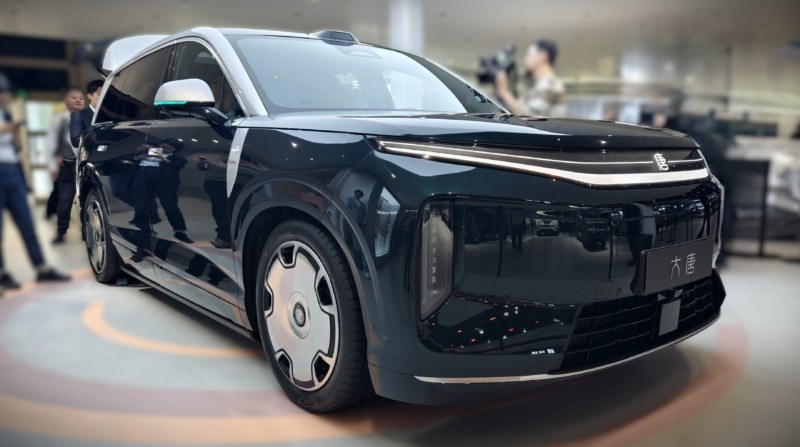 BYD confirmed more than 30,000 pre-orders for its Great Tang SUV within 24 hours, but dealer-level reporting suggests cumulative demand may have reached 60,000 units within 48 hours, according to Chinese media outlet Sina Finance. Divergence between official and dealer data The automaker has not updated its official figure beyond the initial 30,000-unit confirmation. Industry channel estimates circulating after launch reflect aggregated dealership intake rather than validated pre-orders, creating a visible gap between the two metrics. BYD counts only pre-orders backed by non-refundable deposits as confirmed orders, while dealer systems typically include a broader mix of pre-orders, including refundable deposits and preliminary reservations. Dealer network momentum Early demand was driven by rapid intake across BYD’s Dynasty sales network, which includes more than 1,800 outlets nationwide. Dealer feedback indicates strong launch-day traffic, with order intake varying significantly by region. In major cities such as Beijing and Shanghai, individual dealerships reported peak volumes of roughly 20–40 units. In high-demand locations like Zhengzhou, some outlets recorded several hundred bookings shortly afterpre-sales opened. Smaller markets, including Chongqing and Zhongshan, showed lower but steady daily intake. Separate online posters have also circulated claims of orders exceeding 100,000 units within 72 hours, although these figures have not been verified and are not supported by official or dealer-level reporting. Mixed booking structure complicates totals The difference between the 30,000 confirmed figure and the ~60,000 estimate is primarily attributed to booking classification. Early-stage demand includes both refundable and non-refundable deposits, depending on local sales practices. This mixed structure is typical during initial launch windows, when customer conversion rates remain uncertain, and dealership pipelines are still forming. Product positioning drives early demand The Great Tang is BYD’s flagship SUV in the Dynasty lineup, targeting the full-size seven-seat segment. It is offered in both battery-electric and plug-in hybrid variants. The BEV version delivers up to 950 km CLTC range, while the dual-motor configuration produces up to 585 kW and accelerates from 0–100 km/h in 3.9 seconds. The model sits above existing Tang variants and reflects a shift toward higher-end, technology-focused offerings. Market context The rapid pre-order intake highlights continued demand for large SUVs in China, particularly models that combine long range and fast charging. However, the discrepancy between official and dealer figures underscores ongoing inconsistencies in how early EV demand is measured across retail networks. Data context According to China EV DataTracker, BYD Tang L domestic sales totalled 2,039 units in 2026 Q1, down 75.6% quarter-on-quarter from 8,373 units in Q4 2025. Earlier volumes reached 11,698 units in Q3 2025 and 18,689 units in Q2 2025, indicating a declining trend ahead of the new model’s launch. BYD Tang L sales in China. Credit: China EV DataTracker
 -
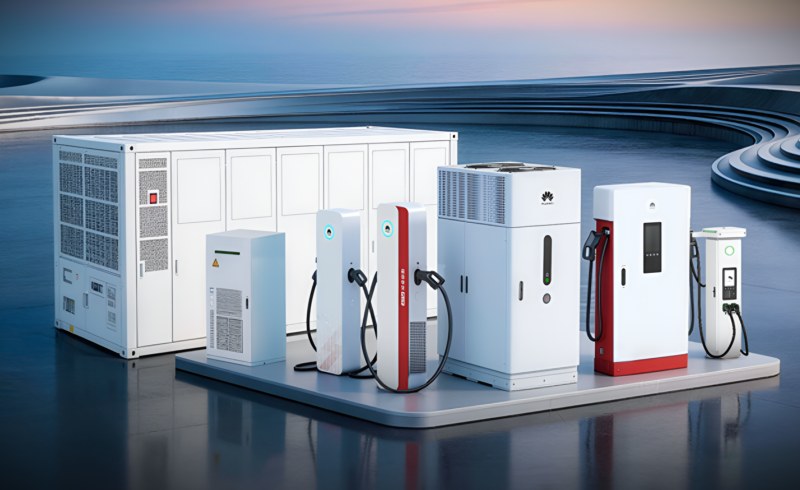 Huawei’s 1,500 kW megawatt charging system was first introduced in 2025 as a high-power solution for heavy-duty, high-utilisation electrification scenarios. The system supports up to 1,500 kW of peak output and 2,400 A of current, enabling a ~300 kWh battery charge in around 15 minutes under defined operating conditions, according to Bcar. In 2026, the system is no longer positioned as a new introduction, but as part of a broader rollout strategy focused on deployment scale and infrastructure integration. Beijing Auto Show: shift from product to system rollout At the 2026 Beijing Auto Show, Huawei Digital Energy positioned its charging system as a full-stack solution rather than a standalone product, highlighting compatibility with China’s “2015+” charging standards and a broader terminal portfolio that includes natural-cooled 400A systems, liquid-cooled 800A units, and higher-power configurations above 1,000A, alongside charging equipment rated up to 1,000 kW and 1,440 kW. The system also integrates solar-storage-charging coordination to improve grid utilisation and enable more flexible deployment under different infrastructure conditions. The architecture combines photovoltaic generation, energy storage, and charging infrastructure to reduce peak load pressure and support more stable station operation. For passenger EV applications, Huawei presented upgraded ultra-fast charging terminals that support up to 800A of output. For higher-load corridors and commercial use cases, 1,000 kW-class systems and above are well-suited for logistics hubs and high-throughput charging environments. An integrated solar-storage-charging system is shown as part of the Huawei energy network. System architecture and energy buffering The 1,500 kW charging system continues to rely on liquid cooling across charging guns, cables, and power electronics. A 215 kWh DC energy storage module delivers high power output even under constrained grid input conditions. This decouples charging demand from direct grid supply, enabling faster station deployment in regions with weaker electrical infrastructure. Passenger EV fast-charging competition Huawei’s infrastructure-centric approach contrasts with passenger EV fast-charging strategies from other Chinese players. BYD Flash Charging 2.0 integrates high-rate battery chemistry with peak charging power up to 1,500 kW, enabling 10% to 70% charging in around five minutes under defined conditions. CATL Shenxing focuses on battery-level innovation, with a system-level claim of achieving full charge in about 6 minutes when paired with compatible charging infrastructure. Huawei’s system instead prioritises infrastructure scalability, multi-vehicle compatibility, and grid buffering rather than battery-side integration. Industry direction Megawatt-level charging is increasingly being developed alongside improvements in battery chemistry. Passenger EV systems aim for sub-10-minute charging times, while infrastructure providers focus on grid stability, deployment speed, and multi-scenario applications. Huawei’s 2026 positioning reflects a transition from early demonstration to broader network deployment. Data context According to China EV DataTracker, China’s EV battery installations reached 124.8 GWh in Q1 2026, down 4.2% year-on-year. LFP accounted for 99.1 GWh (79.4% share), while ternary NMC accounted for 25.8 GWh (20.7% share), indicating continued dominance of LFP chemistry in fast charging and mass-market EV deployment. Battery installations in China. Credit: China EV DataTracker
 -
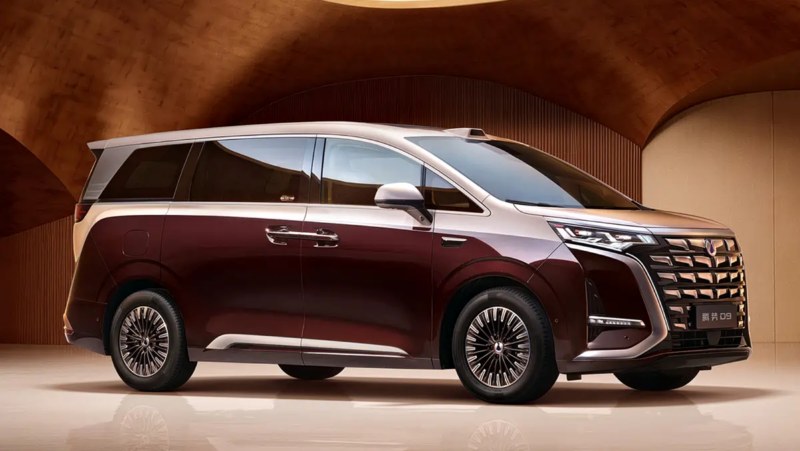 Denza, the premium brand under BYD, officially launched the 2026 Denza D9 MPV on April 27. The new model arrives with six variants priced between 359,800 and 469,800 yuan (52,100–68,100 USD), featuring upgrades across its platform, exterior, interior, and powertrain systems. It stared pre-sales on March. Pricing details VariantPrice (yuan)Price (USD)DM-i Flash Charging Premiun359,80052,100DM-i Flash Charging Prestige399,80057,900DM-i Flash Charging Flagship459,80066,600EV Flash Charging Premium369,80053,600EV Flash Charging Prestige409,80059,400EV Flash Charging Flagship469,80068,100Compiled by CarNewsChina BYD claims the 2026 D9 rides on an all-new hybrid-exclusive MPV platform. Key technological highlights include the second-generation Blade Battery with Flash Charging technology, the “God’s Eye 5.0” intelligent driving system, and a new-generation AI smart cockpit. Exterior and dimensions The exterior receives refined styling updates, including a redesigned chrome-accented grille. The model offers eight color options: five solid colors (Crystal Purple, Mutton Fat White, Ink Jade Black, Lapis Lazuli Blue, and Pearl Gray), two dual-tone combinations (Purple-Gold Dual Radiance and Blue-Silver Dual Shine), plus a limited “Dark Night Gilded Gold” edition featuring a genuine gold-plated front emblem. Dimensions: Length: 5,250mm Width: 1,960mm Height: 1,900mm Wheelbase: 3,110mm All variants ride on 18-inch wheels. Thanks to the dedicated hybrid platform’s architecture – which integrates the rear muffler into the front compartment – the trunk now features an additional 126L of hidden storage, expanding total cargo capacity to 882L. Interior: up to 10 screens The cabin has been substantially upgraded, offering up to 10 screens throughout the vehicle: Front row: 10.25-inch digital instrument cluster 21-inch HUD (head-up display) 15.6-inch central control screen Streaming rearview mirror 15.6-inch front passenger screen (an innovative opening/closing design that forms a small table capable of supporting 5kg) Rear row: 17.3-inch ceiling-mounted screen Dual magnetic headrest screens Dual second-row seat touch screens Four interior color options are available: Expansive Beige, Flowing Year Brown, Gentle Taupe, and Serene Red. The cabin features extensive authentic “Ink Cloud Fir” wood trim replacing piano black finishes, along with chrome accents. The central screen is now thinner with narrower bezels, running the latest DiLink system with improved UI and operational fluidity. The column-mounted shifter design frees up space for dual 50W wireless phone charging panels. The interior of Denza D9. Intelligent driving technology All variants come standard with the “God’s Eye 5.0” system, equipped with three LiDAR sensors and 12 cameras. The system supports highway and urban NOA (Navigation on Autopilot), full-scene automatic parking, and AEB emergency braking at speeds up to 120km/h. Seating and comfort The front seats offer electric adjustment, heating, ventilation, and massage functions. Second-row seats can be optioned with Zero Pressure Cloud Velvet seats featuring 16-point massage, ventilation, and heating. Third-row seats include ventilation, heating, and electric adjustment. Second-row seats also support NFC control. Additional features include rear folding tables, a 30-speaker Devialet audio system, and a 7.5L intelligent temperature-controlled storage box. Powertrain specifications Plug-in Hybrid (DM-i): 1.5T engine producing 115kW Front motor: 200kW (268 hp) Rear motor: 45kW (60 hp) 66.5 kWh second-generation Blade Battery CLTC pure electric range: exceeds 400 km Fuel consumption: 6.35L/100km Pure electric (EV): FWD version: 340kW (456 hp) motor AWD version: 340kW (456 hp) front + 70kW (94 hp) rear motors 115 kWh second-generation Blade Battery Range: 8000 km (FWD) / 750 km (AWD) BEV: 800 km CLTC range. PHEV: 401 km EV range. Chassis and safety All variants come equipped with dual-valve DiSus-C shock absorbers and an intelligent anti-motion sickness system. Additional safety features include high-speed blowout stability control and crosswind stability systems. Deliveries are scheduled to begin in late May. Denza D9 sales since its launching. Launched to the public in August 2022, the D9 is the top-selling new energy MPV in China, it sold 117,978 units in 2023, 102,810 units in 2024, and 92,988 units in 2025, it delivered its 300,000th vehicle last November.
 -
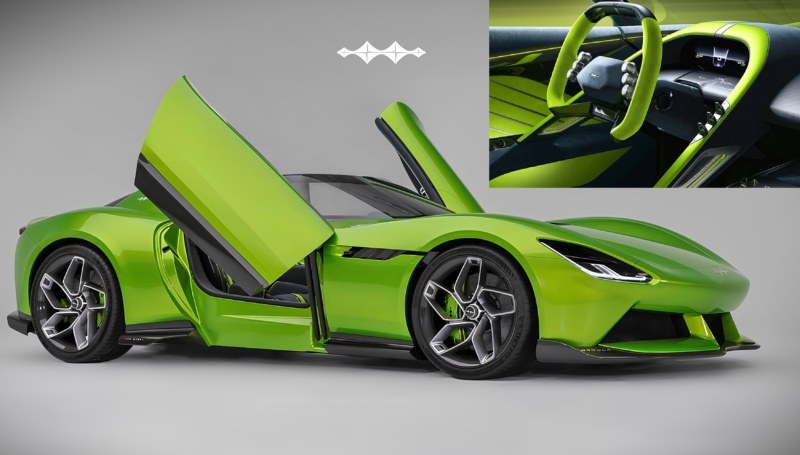 Fang Cheng Bao, the BYD sub-brand focused on design- and performance-focused models, has unveiled its Formula X supercar concept at the 2026 Beijing Auto Show, expanding the lineup beyond SUVs and sedans into the low-volume performance segment, according to IThome. The concept was shown alongside the brand’s new S-series sedans, forming part of a broader “FORM” architecture strategy, which includes both mainstream passenger models and experimental performance vehicles. The debut comes amid a wider wave of high-performance EV reveals at the same show, including BYD’s Denza Z convertible, which is targeting Europe first with a global debut at the Goodwood Festival of Speed in July. Biological-inspired design language Formula X follows Fang Cheng Bao’s “biological evolution” design direction. The front features “Fengbao Eye” headlights, while the rear uses an “Infinity Ring” lighting signature inspired by the brand logo. The body proportion is set at 1:2.5, giving the concept an elongated front section and sharply tapered cabin profile. Additional reported proportions include a 3x wheelbase-to-width ratio and a 1.6x wheel height-to-width ratio, reinforcing a forward-leaning stance. Carbon structure and aerodynamic layout The concept is built around a full carbon-fibre body. According to official display specifications, the exterior integrates six airflow channels and 19 vent openings distributed across the bodywork. An active rear electric wing and hollow diffuser are included to manage airflow at high speeds. The overall design prioritises aerodynamic function over traditional surface styling, with visible structural airflow channels integrated into the body panels. Interior and driver layout Inside, Formula X adopts a stripped performance-oriented cockpit layout. It features a folding steering wheel mechanism and a centrally mounted display system. The cabin structure also continues the carbon-fibre emphasis, with lightweight materials used across visible surfaces. No production drivetrain specifications have been confirmed at this stage. Production outlook and positioning The concept is reported to be close to production intent, with up to 80% design carryover expected in the final model. Market introduction is currently projected for around 2027, depending on development progress. As we reported earlier, Formula X forms part of Fang Cheng Bao’s expansion beyond its SUV base into higher-performance segments, alongside its sedan-based “FORM” lineup. Fang Cheng Bao FCB sales in China. Credit: China EV DataTracker Market context According to China EV DataTracker, Fang Cheng Bao has recorded strong but fluctuating growth in 2026. March sales reached 21,120 units, up 162.3% year-on-year, following a peak of 48,161 units in December 2025. Carbon-fibre body with 19 aerodynamic vents and functional airflow channels. Updated: 28/04/2026 22:05 China time
 -
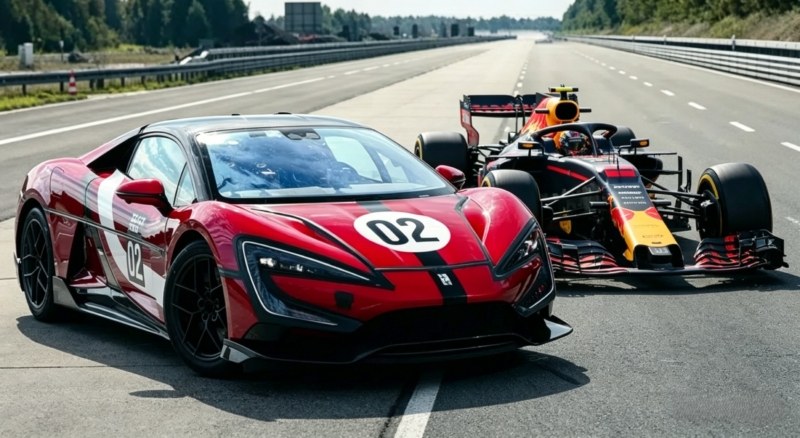 BYD has confirmed it is weighing a potential role in Formula 1, with executive vice president Li Ke stating that discussions are ongoing with Formula 1 leadership, IThome reports. Executive vice president Li Ke confirmed that the company has been in contact with Formula 1 leadership, including a meeting with CEO Stefano Domenicali in Shanghai. However, no formal decision or timeline has been announced. The situation has also been referenced in our earlier reporting, which noted BYD’s broader interest in F1 as a long-term technical development platform. Multiple roles under consideration Li Ke confirmed BYD is considering several possible positions within Formula 1. These include operating as a team entrant, supplying hybrid powertrain components, or participating through sponsorship. This flexible approach suggests the company is treating Formula 1 less as a branding exercise and more as a potential environment for engineering and systems validation. A separate CarNewsChina report in March 2026 previously highlighted that BYD’s early internal discussions focused on competitive positioning against established performance manufacturers such as Ferrari and McLaren, although that framing has not been formally confirmed by the company. 2026 regulation shift changes technical relevance Formula 1’s 2026 regulation cycle significantly increases the electric power contribution within hybrid power units, shifting performance balance further toward energy recovery and deployment systems. This places greater emphasis on electrified drivetrain architecture, a domain closely aligned with BYD’s core capabilities in battery systems and electric propulsion. However, the sport’s technical complexity extends beyond battery performance alone, encompassing integrated energy management across multiple subsystems. BYD Global EV Sales. Credit: China EV DataTracker Industry context and company scale Automakers have historically used Formula 1 as a high-cost testing and development environment for advanced propulsion technologies. The incoming rule changes are widely viewed as accelerating the relevance of electrification within the sport’s engineering framework. BYD remains one of the world’s largest EV manufacturers, with annual sales of approximately 4.6 million vehicles in 2025. The company has also experienced quarterly fluctuations, including 688,939 units delivered in Q1 2026, down 30.5% year-on-year, according to disclosed figures. Broader performance positioning Alongside its F1 considerations, BYD is expanding its performance-oriented portfolio. We recently reported on the Formula X (FCB) supercar interior, with production planned for 2027, positioning it as a technology showcase for the brand’s higher-performance engineering direction. Market positioning remains open-ended At present, BYD’s involvement in Formula 1 remains at the consideration stage, with no confirmed commitment to team entry or technical supply roles. The company’s assessment is centred on whether Formula 1’s 2026 hybrid framework aligns with its long-term electrification and performance engineering strategy. Updated: 28/04/2026 22:33 China time
 -
 BYD has increased the price of its “God’s Eye B” LiDAR-based advanced driver assistance system option from 9,900 yuan (1,400 USD) to 12,000 yuan (1,660 USD), citing rising global storage hardware costs as the main driver. The adjustment takes effect on May 1, 2026, while customers who place deposits before April 30 retain the original pricing, according to Sina. The change applies across selected models from BYD’s Dynasty, Ocean, and Fang Cheng Bao product lines, depending on configuration. Rising storage costs pressure ADAS systems BYD stated that the adjustment reflects “significant increases in global storage hardware costs.” The system relies heavily on high-speed memory to process LiDAR point clouds, run onboard models, and store driving data. Industry data shows automotive-grade DRAM and NAND prices have surged sharply since late 2025, driven by AI infrastructure demand and constrained semiconductor supply. A broader industry report noted that DRAM contract prices rose nearly 90% in Q1 2026 alone, with some segments seeing even larger spikes. Memory chip volatility now central to ADAS cost structure The pricing adjustment comes as memory chip volatility has become a structural issue for automotive software stacks. A recent CNC analysis noted that memory volatility has now surpassed battery cost fluctuations in its impact on autonomous driving rollout timelines. Another CNC report highlighted growing calls from industry executives for standardisation of chips and batteries to reduce cost pressure across EV platforms, including ADAS compute hardware. Scaling data load increases hardware demand BYD reported that its “God’s Eye” system is installed in over 2.85 million vehicles as of March 2026, generating approximately 180 million km of driving data per day. The scale improves algorithm training but also increases demand for onboard storage and processing hardware. Industry-wide cost pass-through begins to appear Analysts note this is one of the first visible cases in which rising semiconductor costs are reflected directly in optional ADAS pricing rather than absorbed by automakers. A recent semiconductor market report shows AI data centres now consume a dominant share of global memory output, tightening supply for automotive use cases. Industry context The memory chip cycle has become a key cost driver in the EV industry. Prices for DRAM and NAND have entered a multi-year upcycle driven largely by AI infrastructure demand, with analysts projecting elevated pricing conditions potentially lasting into 2027. As a result, automotive ADAS systems relying on LiDAR and high-bandwidth processing are increasingly exposed to semiconductor cost volatility.
 -
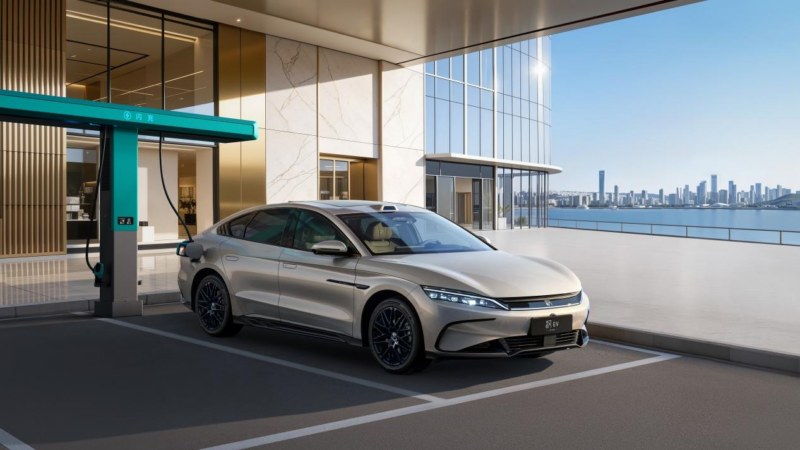 BYD has officially launched the Han EV Flash Charge Edition, introducing two variants with prices ranging from 179,800 yuan (26,000 USD) to 187,800 yuan (27,200 USD). The new model features upgrades in battery technology, charging capabilities, and intelligent systems. It was ready at the dealerships earlier this month. A major upgrade of the Han EV Flash Charge Edition is the second-generation Blade Battery combined with Flash Charging: under normal temperatures, charging from 10% to 70% SOC takes 5 minutes, while 10% to 97% SOC requires 9 minutes, in extreme cold at minus 30°C, the charging time increases by 3 minutes. Performance and efficiency The Han EV Flash Charge Edition is equipped with a 240kW (322hp) motor, achieving 0-100km/h acceleration in 6.5 seconds. The vehicle boasts a maximum range of 705 km with an energy consumption of 10.8 kWh/100km, which is lower than Tesla Model 3’s 11.2 kWh/100km, setting a global record for lowest energy consumption among C-class sedans, according to BYD. A comparision of the energy consumption against Tesla Model 3. Intelligent features The model comes standard with the DiLink 100 intelligent cockpit, featuring remote vehicle control via mobile app, exterior voice alerts, and a rest mode that automatically reclines seats while playing ambient sounds. The DiSus-C intelligent damping body control system can identify road conditions 15 meters ahead and adjust suspension damping. For autonomous driving, the “God’s Eye 5.0” driver assistance system utilises an end-to-end large model based on reinforcement learning, supporting highway autonomous lane changes, automatic overtaking, and ETC passage. Customers can optionally equip the advanced version with LiDAR, enabling city driving features including traffic light recognition, unprotected turns, and congested traffic following. Design and comfort The exterior continues BYD’s signature Dragon Face design language with five colour options, including Frost Gold and Pine Shadow Green. Interior comfort features include newly added ventilation and heating for rear seats. The front of BYD Han EV. Safety systems include the standard TBC high-speed tyre blowout stability system, providing millisecond-level response for lateral, longitudinal, and vertical stability control during highway tyre incidents. Infrastructure and ownership benefits BYD has established over 5,500 Flash Charge stations across 311 cities nationwide, with highway networks covering major arteries including the Beijing-Hong Kong-Macau and Shenyang-Haikou expressways. Purchase benefits include one year of free flash charging, trade-in support, flexible financing options with zero down payment or zero interest, three years of basic maintenance, and three years of complimentary pick-up and delivery service. BYD Han’s domestic sales performance. As BYD’s competitor to the Tesla Model 3, the BYD Han has sold well since its launch thanks to its more competitive pricing. In 2022, it sold 274,016 units in China, and sales in both 2023 and 2024 remained above 220,000 units. However, its sales in 2025 have nearly halved compared to the previous year. Let’s see if the launch of the Flash Charge Edition helps revitalize its sales. The cockpit of BYD Han EV.
 -
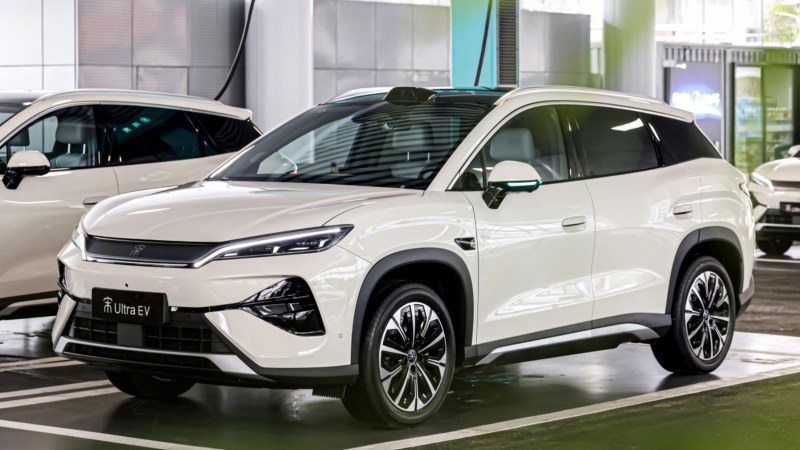 The BYD Song Ultra EV electric crossover with flash-charging technology sold 61,240 units in its first month on the market in China. It is a 4850 mm crossover with 710 km of range and a starting price of 151,900 yuan (22,215 USD). The BYD Song Ultra EV entered the domestic market on March 26. We previously reported that this model received 15 orders per store within 72 hours, resulting in a 40% increase in store inflow. The core customer group for the Song Ultra EV is people aged 35 to 45. Female clients made 30% of orders. It is worth noting that 45% of customers ordered the additional DiPilot 300 (“God’s Eye B”) LiDAR-based ADAS. BYD sales in China. Credit: China EV DataTracker According to BYD’s official report, this brand sold 61,240 units of the Song Ultra EV to clients in a month. It means the largest NEV maker handed over around 2,000 cars to customers across China daily. The successful market performance of the Song Ultra EV is important for BYD, as this brand has been recently underperforming domestically. According to China EV DataTracker, BYD delivered 303,150 units in Q1 2026, down 52.9% Year-Over-Year. The BYD Song Ultra EV could potentially become the brand’s bestseller. Moreover, the market performance of the Song Ultra series will soon be broadened by the DM-i plug-in hybrid version. Its specs were exposed by the Chinese Ministry of Industry and Information Technology (MIIT) during the domestic homologation process. More about the BYD Song Ultra EV The BYD Song Ultra EV is a mid-size SUV with dimensions of 4850/1910/1670 mm. The wheelbase reaches 2,840 mm. It adopts the brand’s distinguishing design language with sharp headlights and a chrome-trim element between them. Inside, the Song Ultra EV has a 15.6-inch floating rotating screen and a 10.25-inch LCD instrument panel. The gear shifter sits on the steering column. BYD Song Ultra EV at the dealer The BYD Song Ultra EV stands on the e-Platform 3.0 Evo 800V architecture. It adopts two optional electric motors in the rear axle with a peak power output ranging from 240 kW (322 hp) to 270 kW (362 hp). The car’s top speed reaches 210 km/h. Two battery LFP battery options are available: a 75.6 kWh pack for 620 km and an 82.7 kWh battery for 710 km. The Song Ultra EV adopts the second-gen Blade Battery that supports the flash charging technology. It can charge the battery from 10% to 97% in 8 minutes and 47 seconds. It can also charge from 10% to 70% in 5 minutes and 3 seconds. BYD reported that it has already installed 5,500 flash chargers in China.
 -
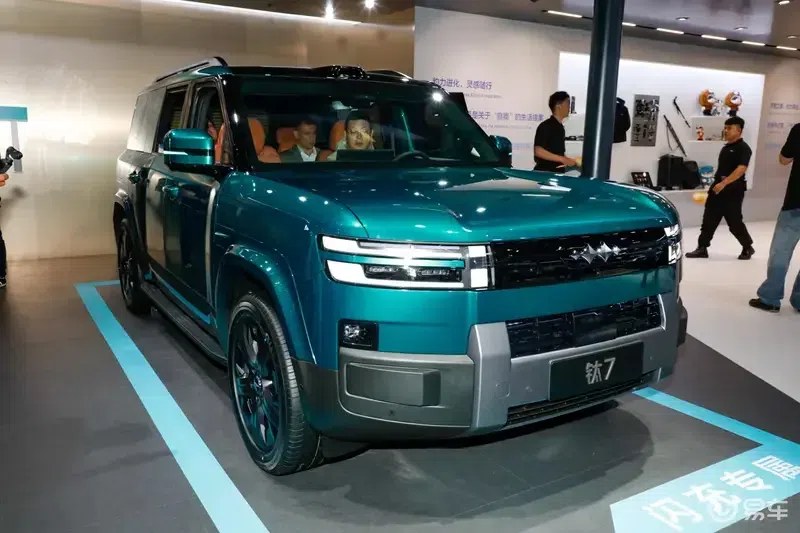 On April 29, BYD‘s Fang Cheng Bao Ti7 (Overseas name: BYD Ti7) EV Flash Charging Edition officially hit the market, with two variants available starting at 199,800 yuan (29,000 USD) and 209,800 yuan (30,400 USD). The new model retains the overall design of its plug-in hybrid counterpart, with its updated features being the second-generation Blade Battery and flash charging technology, offering a maximum range of 755 km. This car was previously revealed in March. Exterior design As a pure electric variant, the Ti7 EV maintains a largely consistent appearance with the plug-in hybrid version, continuing the rugged “box” design language. From the side profile, the new model features newly styled wheels, flared wheel arches, and conventional door handles. The Ti7 EV Flash Charging Edition is expected to be equipped with an oversized front trunk. Side and rear of Fang Cheng Bao Ti7 EV Flash Charging. Dimensions The vehicle measures 4,999 mm in length, 1,995 mm in width, and 1,865 mm in height, with a wheelbase of 2,920 mm. The approach and departure angles are 24 and 25 degrees, respectively. At the rear, there are dual L-shaped taillights, and the tailgate features the signature external storage compartment. Interior and technology The Ti7’s interior adopts the “Interstellar Ark” design language, blending “square” and “round” elements. The dual-layer floating design extends the sense of spaciousness within the cabin. Metal elements are combined with leather materials. The vehicle is equipped with a 15.6-inch central control screen, a 12.3-inch instrument cluster, a 26-inch W-HUD, an air conditioning knob screen, and a rear air conditioning control screen. Additionally, two 13-inch BYD Pads can be installed in the rear, achieving a seven-screen interconnected experience. For intelligent driving assistance, the model features the “God’s Eye B – Advanced Driver Assistance Laser Edition.” The cockpit of Fang Cheng Bao Ti7. Range and charging The Ti7 EV offers a maximum pure electric range of 755 km. Equipped with the second-generation Blade Battery and flash charging technology, charging from 10% to 70% takes 5 minutes, while 10% to 97% takes 9 minutes. At -30°C, charging from 20% to 97% takes 3 minutes longer than at normal temperatures. Fang Cheng Bao’s monthly sales performance. As BYD’s premium brand, Fang Cheng Bao’s sales reached a peak of 50,868 units last December. In March of this year, its sales were 25,926 units. The interior of Fang Cheng Bao Ti7.
 -
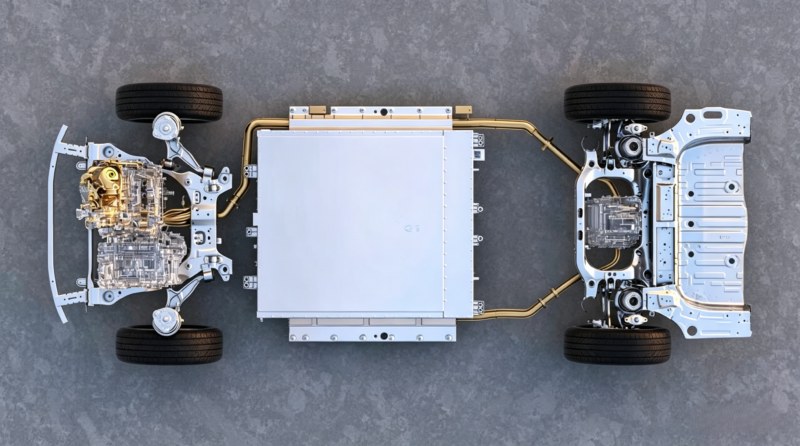 A newly disclosed integrated powertrain architecture from BYD has entered series production on the 2026 Denza D9, introducing a redesigned exhaust and chassis layout as part of the company’s next-stage plug-in hybrid development. BYD’s “Heyuan” platform centres on relocating the exhaust silencer from the rear of the vehicle to the front engine bay, integrating it with other powertrain components. This contrasts with conventional layouts, in which exhaust systems occupy the rear underbody space. The change enables a reconfiguration of the chassis structure. With the rear section freed from exhaust hardware, the battery pack can be positioned more centrally. This shifts weight distribution and increases available rear cabin and cargo volume. In the Denza D9, the layout supports larger battery installations than typical plug-in hybrid MPVs. The packaging change results in measurable space gains. In the Denza D9, the layout provides 126 litres of additional concealed storage in the rear, bringing total cargo capacity to 882 litres. The increase comes from integrating the rear muffler into the front engine bay, enabling more efficient use of underfloor and rear-compartment space. In MPVs, where passenger capacity and luggage space are key parameters, the revised layout directly increases usable storage volume without altering overall vehicle dimensions. Crossover toward next-generation hybrids The platform forms part of BYD’s continued evolution of its DM hybrid systems beyond DM 5.0. While no official confirmation of a “DM 6.0” release has been made, the architecture introduces combined hardware and software changes. These include integrated power-domain control, updated software algorithms, and compatibility with high-rate flash charging. The system moves away from a sole focus on thermal efficiency and fuel consumption, instead incorporating energy management through software-defined control. A front-mounted exhaust system enables larger battery packaging in the Denza D9. Platform vs system: Heyuan and DM 5.0 BYD’s DM 5.0 is primarily a plug-in hybrid powertrain system focused on engine efficiency, electric-drive integration, and reduced fuel consumption. It combines a high-efficiency combustion engine, electric motors, and battery management under a unified hybrid strategy. By contrast, the “Heyuan” platform focuses on physical architecture and packaging. Its key change is the relocation and integration of exhaust components into the front engine bay, which alters chassis layout, battery positioning, and available interior space. The two are not mutually exclusive. The “Heyuan” platform can be deployed alongside DM-series hybrid systems, including DM 5.0, as it addresses structural layout rather than the hybrid control logic or core powertrain calibration. Engineering constraints Integrating the exhaust system into the engine bay introduces new engineering requirements. According to industry sources, development focused heavily on managing exhaust backpressure, heat dissipation, and noise, vibration, and harshness. These factors typically become more complex when exhaust components are repositioned closer to the engine and other sensitive systems. The reported development timeline involved multiple years of engineering work and patent filings. Scaling up battery capacity The revised layout allows for expanded battery configurations. In the Denza D9, the platform supports a 66.48 kWh plug-in hybrid battery pack. The packaging concept also accommodates larger battery formats exceeding 100 kWh under certain configurations, enabled by the freed rear space. This approach aligns with a broader trend toward greater electric-only range in plug-in hybrids, particularly in larger vehicles such as MPVs Industry push and deployment The second-generation Denza D9 is the first production model to adopt the “Heyuan” platform, marking its transition from development to mass production. The model remains one of China’s best-selling new energy MPVs, according to recent launch coverage. Separately, BYD has outlined plans to deploy 6,000 flash charging stations overseas as part of Denza’s expansion into Europe, where the D9 and Z9 GT are expected to be introduced. Heyuan platform frees 126L hidden trunk space, boosting Denza D9 cargo to 882L. Data context According to China EV DataTracker, Denza reported domestic sales of 6,762 units in March 2026, up 26.4% month-on-month and down 46.4% year-on-year. February sales reached 5,351 units, while January recorded 5,449 units, both showing year-on-year declines exceeding 35%. Policy and technology backdrop The platform reflects ongoing development in plug-in hybrid systems as automakers continue to expand electrification strategies globally. While battery-electric vehicles represent a growing share of new-energy-vehicle sales, plug-in hybrids remain part of transitional powertrain portfolios across multiple markets. Denza sales in China. Credit: China EV DataTracker
 -
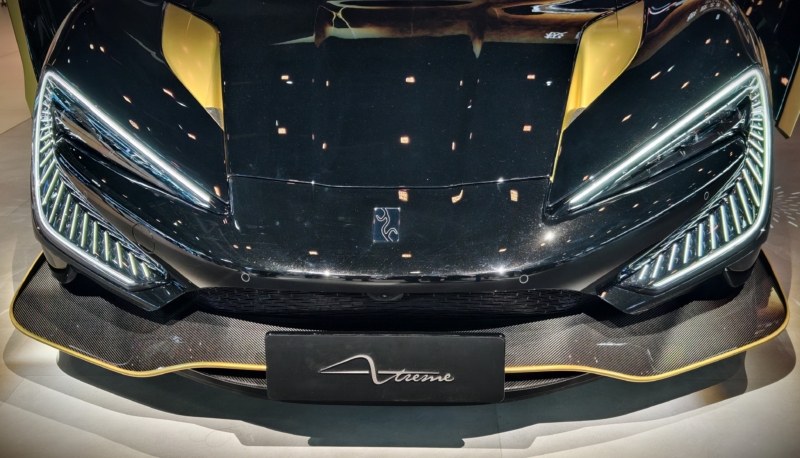 BYD has confirmed that its Yangwang U9 Xtreme electric supercar was sold for more than 20,000,000 yuan (2,760,000 USD) per unit at the 2026 Beijing Auto Show, making it the highest-priced transaction recorded at the event, according to company executive Li Yunfei. Based on the disclosed price, it is BYD’s most expensive production vehicle to date. Record-priced transaction Li Yunfei, General Manager of Branding and Public Relations at BYD Group, stated that the U9 Xtreme was the most expensive model sold during the show. The vehicle is limited to 30 units globally. At least one unit was delivered at the event, with BYD chairman Wang Chuanfu personally handing over the car. The U9 Xtreme represents the highest transaction price achieved by a BYD production model to date and sets a new benchmark for Chinese-branded supercar pricing. BYD Chairman Wang Chuanfu oversaw the handover himself. Performance credentials The model’s pricing is supported by a set of performance claims previously disclosed by BYD. The U9 Xtreme recorded a Nürburgring Nordschleife lap time of 6:59.157, placing it at the top of the production electric vehicle category. It also set lap records across multiple Chinese circuits, including Zhuzhou, Zhuhai, Chengdu Tianfu, and Shanghai. Technical specifications include a reported output exceeding 3,000 horsepower and a 1200V electrical architecture. The car is equipped with BYD’s DiSus-X fully active suspension system and uses reinforced braking components, including carbon-ceramic discs. Beijing Auto Show debut context At the 2026 Beijing Auto Show, BYD’s Yangwang brand presented both the U9 Xtreme and the U8L, a four-seat luxury SUV positioned in the ultra-high-end segment. The U8L is expected to compete with models such as the Mercedes-Maybach GLS 600, with earlier reports indicating a price point above 1,300,000 yuan (179,400 USD). This dual-model showcase reflects Yangwang’s positioning across both performance and luxury categories within BYD’s portfolio. Limited-run U9 Xtreme electric supercar during the Beijing Auto Show. Credit CarNewsChina Scaling high-end positioning Yangwang operates as BYD’s premium sub-brand, targeting low-volume, high-price segments. The U9 Xtreme’s limited production run of 30 units aligns with this strategy, prioritising exclusivity over scale. Yangwang’s sales in China. Credit: China EV DataTracker Data context According to China EV DataTracker, Yangwang reported domestic sales of 945 units in Q1 2026, up 80.3% year over year from 524 units in Q1 2025. Quarterly sales declined 58.0% from Q4 2025, when 2,248 units were recorded. Industry push Chinese automakers have increasingly entered ultra-luxury and high-performance segments traditionally dominated by established global brands. The U9 Xtreme’s pricing and specifications place it within a category that includes limited-production electric and hybrid hypercars.
 -
 BYD is in talks with Volkswagen to take over part of the German automaker’s Transparent Factory in Dresden, according to a source familiar with the matter. MG, Xpeng are among other Chinese EV makers interested in utilising VW’s European plants for manufacturing cars. The Chinese automaker would invest in the site and could use the second half of the factory to manufacture EVs, the source said. The other part of the Dresden plant is reportedly planned to become an innovation hub in cooperation with the state of Saxony and TU Dresden. A German production site could also help BYD with brand awareness, adding a “made in Germany” label as the company already invests heavily in building its image in Europe, the source said. BYD sold 3,438 cars in Germany in March, up 327% year over year. BYD had previously considered Spain as its preferred location for a second European plant. Spain was seen as attractive because of its relatively low manufacturing costs, industrial infrastructure, cheap electricity, and a clean energy network. BYD is already building factories in Hungary and Turkey. Germany also voted against the EU’s additional tariffs on China-made EVs, a stance viewed favourably in Beijing. China has been seen putting pressure on countries that supported the tariffs, while favouring those that opposed or abstained. Reuters reported in 2024 that Beijing had told Chinese automakers to pause major investments in EU countries that backed the tariffs. Poland, which voted in favour, later lost Leapmotor production at Stellantis’ Tychy plant, while Spain, which abstained, emerged as the site for Leapmotor B10 production at Stellantis’ Zaragoza plant. The EU has so far offered little visible counterweight to this strategy, leaving member states on their own. In January, it was reported that the EU is in talks with China to remove anti-subsidy EV tariffs on imports and replace them with a “minimum price”. BYD declined to comment when contacted by CarNewsChina. Volkswagen denied the report as incorrect. Xpeng and SAIC’s MG are also exploring opportunities to use Volkswagen plants in Europe, according to sources familiar with the matter who remain anonymous as they are not authorised to speak to the media. No decision has been made. MG was previously reported to be considering an EV factory in Spain, after Hungary had been seen as a possible location earlier. Xpeng already manufactures vehicles in Europe through Magna Steyr in Austria. Xpeng is a Volkswagen partner in China, providing co-developed E/E architecture and assisted-driving software for new China-only VW’s EVs. VW holds a 5% stake in the Chinese EV maker, while SAIC is VW’s joint-venture partner in China. Volkswagen ended vehicle production at the Dresden plant at the end of 2025. The facility, officially known as the Gläserne Manufaktur, opened in 2002 as a prestige factory for the VW Phaeton. It later produced Bentley vehicles, the e-Golf, and, most recently, the ID.3. In recent years, the plant produced about 6,000 ID.3 units annually, with around 205 employees. German media reported in December that Volkswagen Sachsen, Saxony, and TU Dresden had signed a letter of intent to use part of the site as an innovation hub from 2026. TU Dresden is expected to rent nearly half of the space, while conversion costs of around 50 million euros were still under discussion. Volkswagen CEO Oliver Blume said on April 30 that sharing unused European factory capacity with Chinese automakers could be a “clever solution” to reduce capacity and lower costs. VW has already reduced capacity by 1 million vehicles and wants to cut global production capacity from 12 million to 9 million cars. BYD currently imports all passenger cars it sells in Europe from China, where they are subject to a 10% standard import duty and a 17% EU anti-subsidy tariff. Reuters reported last year that BYD would slow the ramp-up of its Hungary plant and accelerate production in Turkey. BYD denied the report, saying its Hungary project remained on track. Turkey is not subject to additional EU countervailing tariffs on vehicle imports. BYD has also faced labour scrutiny overseas. CNBC reported that alleged abuses at its Hungary plant were raised in the European Parliament, while Brazilian authorities previously accused a contractor at BYD’s Brazil factory site of conditions “analogous to slavery.” If completed, a deal in Dresden would give BYD a symbolic foothold in Germany, the home market of Volkswagen and Europe’s largest auto industry.
 -
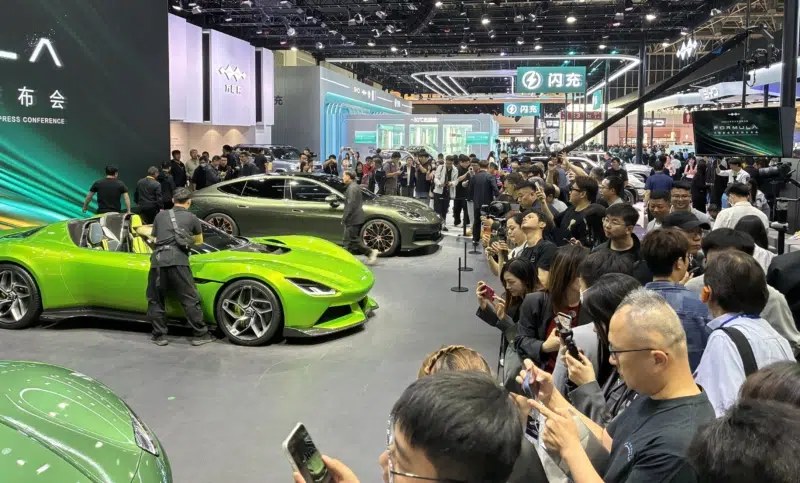 BYD sold 314,100 passenger vehicles in April, down 15.7% from a year earlier, marking the company’s eighth consecutive month of year-on-year decline. The figure was up 6.2% from March, when the Shenzhen-based automaker sold 295,639 passenger vehicles. The April result shows a sequential recovery after the Chinese New Year slowdown, but BYD’s year-on-year performance remains under pressure. The company’s sales have now declined every month since September 2025, after posting slight growth in July and August last year. This is despite BYD’s sales outside China reaching a record 134,542 passenger cars and pickups in April, up 70.9% year-on-year. Overseas sales accounted for 42.8% of BYD’s total April volume, showing how important exports have become as domestic demand weakens. From January to April, BYD sold 1,003,039 passenger vehicles, down 26.4% year-on-year. In the same period, the overseas sales hit 455,707 units, up 59.8% year over year. BYD has a 2026 target to sell 1.5 million vehicles overseas. BYD Global NEV Sales. Credit: China EV DataTracker In total, BYD sold 321,123 vehicles in April, which includes commercial vehicles and buses. BYD’s main brand, which includes the Dynasty and Ocean series, sold 273,448 cars, down 21.2% from last year. Fang Cheng Bao, an off-road brand that launched a sleek sedan lineup, grew 190.2% to 29,138 units sold in April. Premium brand Denza fell 26.9% to 11,250 units, while the Yangwang high-end brand grew 95.6% to 264 units. The April sales data also comes after BYD reported weaker profitability in the first quarter. The company’s net profit fell 55.4% year-on-year to 4.09 billion yuan, or 599.0 million USD, as China’s price war and higher hardware costs weighed on margins. Editor’s comment BYD has been under heavy pressure at home over the past months and is trying to defend its position with new models, ultra-fast charging technology, and a faster overseas rollout. But April’s figures show that while exports are growing quickly, they have not yet fully offset the slowdown. Folks in Shenzhen are likely hoping its Flash chargers and new generation of fast charging vehicles will arrive to the rescue like a cavalry charge, giving BYD a clear differentiator in China’s brutally competitive EV market. Will that be enough? We will keep an eye on it.
 -
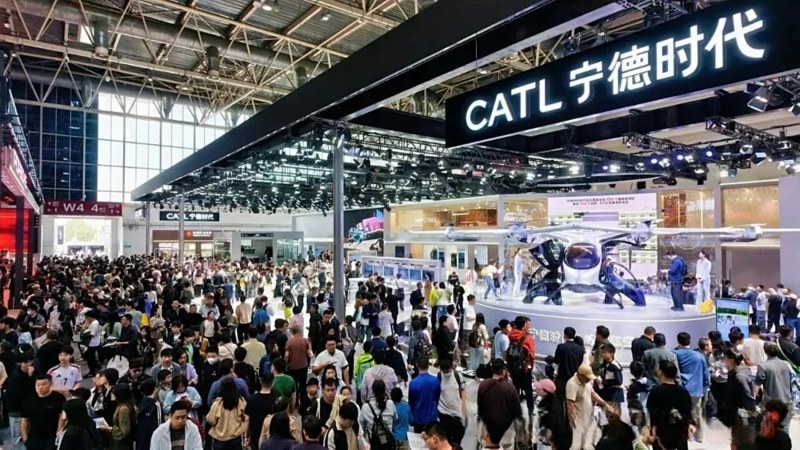 The 2026 Beijing Auto Show closed on May 3 after a 10-day run, attracting 1.28 million visitors and setting new global records for exhibition scale and attendance, according to official data. Held under the theme “Driving the Era, Smart Future,” the event was staged across the China International Exhibition Centre (Shunyi) and the Capital International Exhibition Centre. The dual-venue format covered 380,000 square meters and 17 halls, marking the largest footprint recorded for any auto show globally. A total of 1,451 vehicles were displayed, including 181 global debuts and 71 concept cars. International participation The show drew 65,000 overseas visitors and 32,000 media representatives, including 4,125 from international outlets. During the event, 219 press conferences were held, alongside more than 50 industry forums, summits, and matchmaking sessions. Participants included automakers, suppliers, and technology firms from 21 countries and regions, spanning vehicle development, core components, and intelligent systems. Technology direction Exhibits at the show focused on electrification and intelligent vehicle development. Battery technologies on display included next-generation systems with energy densities exceeding 400 Wh/kg and claimed ranges of over 1,500 km under test conditions. Fast-charging technologies, including sub-10-minute charging and low-temperature charging at minus 30 degrees Celsius, were also presented. In intelligent driving, multiple companies demonstrated central computing platforms, multimodal AI integration, and L3-level automated driving applications in controlled or designated environments. LiDAR systems and advanced driver-assistance hardware were widely featured in mid- to high-end models. Key product highlights The show featured a wide range of electric, hybrid, and performance-focused models. Among notable developments, BYD confirmed that its Yangwang U9 Xtreme electric supercar was sold for 20,000,000 yuan (2,760,000 USD), the highest price for a production passenger car under the BYD brand to date. Earlier previews indicated the event would serve as one of the year’s largest EV-focused industry gatherings, with multiple brands using the show for global or China debuts. Industry push The 2026 edition continued a trend of increasing scale and technical density at major Chinese auto shows. Compared with earlier previews, the final figures confirmed the Beijing event as the largest auto show globally by exhibition area and vehicle count. Automakers used the platform to present updates in electrification, autonomous driving, and performance engineering, with both established brands and newer entrants participating. China EV global sales by groups in April 2026. Credit: China EV DataTracker Data context According to China EV DataTracker, China’s EV market showed mixed trends in April 2026, with several major groups posting month-on-month growth alongside varied year-on-year performance. BYD remained the top seller, while Geely Auto, Chery NEV, Changan, and Leapmotor all recorded YoY increases. In contrast, Xpeng declined YoY, while Li Auto and Nio reported broadly stable to moderate growth. 1,451 vehicles were displayed at the world’s largest auto show in Beijing, 2026.
 -
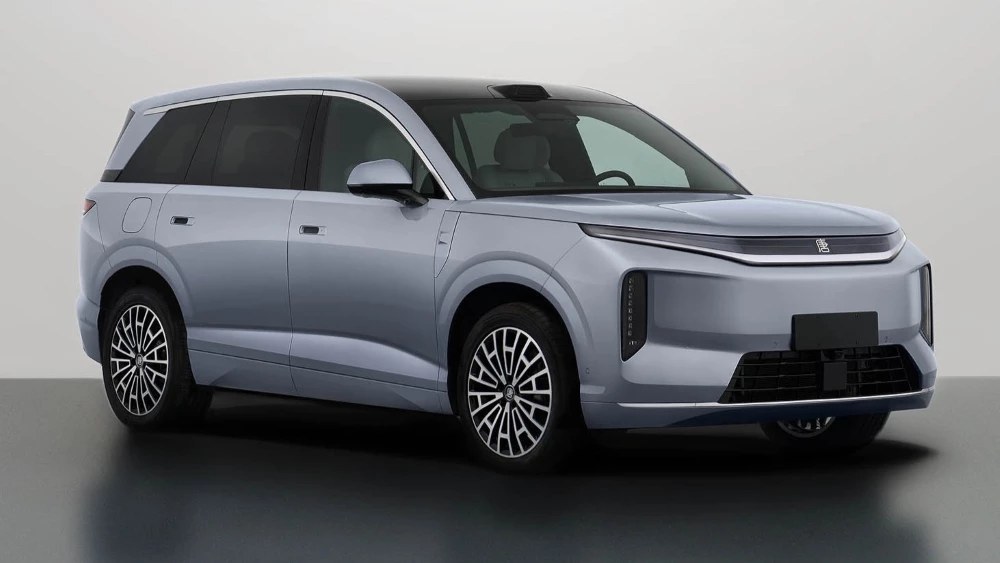 Китайский минпром рассекретил часть автомобилей, которые появятся на местном рынке в ближайшее время, и в том числе гибридную версию флагманского кроссовера BYD Datang, получившую приставку DM-P к названию. Что это за автомобиль?BYD Datang – это огромный флагманский кроссовер китайской марки. Его экстерьер выполнен в стилистике семейства Dynasty, но дизайнеры постарались переосмыслить ее философию, и внешне модель отличается от других представителей бренда. Отдельно упомянем ручки дверей. Они утоплены заподлицо, но, в соответствии с последними требованиями местного законодательства, их сделали такими, чтобы была возможность открыть дверь даже после отключения питания. Гибридный кроссовер BYD Datang DM-P / фото из базы минпрома КНР Добавим, что экстерьер Datang DM-P отличается от электрической версии исключительно оригинальными колесными дисками. Габариты модели: 5263–5302 мм в длину, 1999 мм в ширину и 1800-1810 мм в высоту. Колесная база – 3130 мм. Снаряженная масса – 2790–2875 кг. Изображений внутреннего убранства пока нет, но вряд ли салон радикально разнится с уже рассекреченным в электромобиле. Элементы дизайна экстерьера гибридного кроссовера BYD Datang DM-P / фото из базы минпрома КНР Про оснащение тоже пока ни слова. Впрочем, китайский автопром выделяется довольно серьезным подходом к формированию списка функционала своих автомобилей. В первую очередь, речь, разумеется, про разного рода интеллектуальные помощники водителя, автопилот и прочее. Техническая частьПод капотом у гибрида расположен 1,5-литровый турбомотор мощностью 156 л.с., что довольно мало для такого тяжелого автомобиля. Судя по информации китайского минпрома, BYD Datang DM-P имеет два электродвигателя. Мощность одного из силовых агрегатов составляет 272 л.с., а вот суммарная отдача не раскрывается. Максимальная скорость – 200 км/ч. Электрический кроссовер BYD Datang / фото из базы минпрома КНР Запас хода и емкость батареи также пока не известны. Однако учитывая, что электрический Datang имеет рекордную дальнобойность, его гибридный вариант тоже не разочарует. А что дальше?Салон электрического кроссовера BYD Datang Обратим внимание, что BYD Datang вышел на рынок в довольно кризисный для китайского автопрома момент. Продажи в феврале обвалились на треть, опустив китайский рынок впервые за долгие годы на второе место в мире после США. При этом трясет в первую очередь рынок машин на «новой энергии», которые лишились части государственных субсидий. Естественно, при таком раскладе рынка больше всех страдает именно BYD, который когда-то сделал ставку именно на электрифицированные автомобили и в последние годы буквально рвал кассу. Второй ряд сидений в электрическом кроссовере BYD Datang Каков же смысл в такой ситуации выводить в продажу большой Datang? Потенциально эта модель за счет высокой добавочной стоимости позволит компенсировать потери от спада продаж низкомаржинальных бюджетных автомобилей. Впрочем, для более глубоких выводов надо будет увидеть первые результаты продаж. Андрей ТРУБИН (@chinamashina)
 -
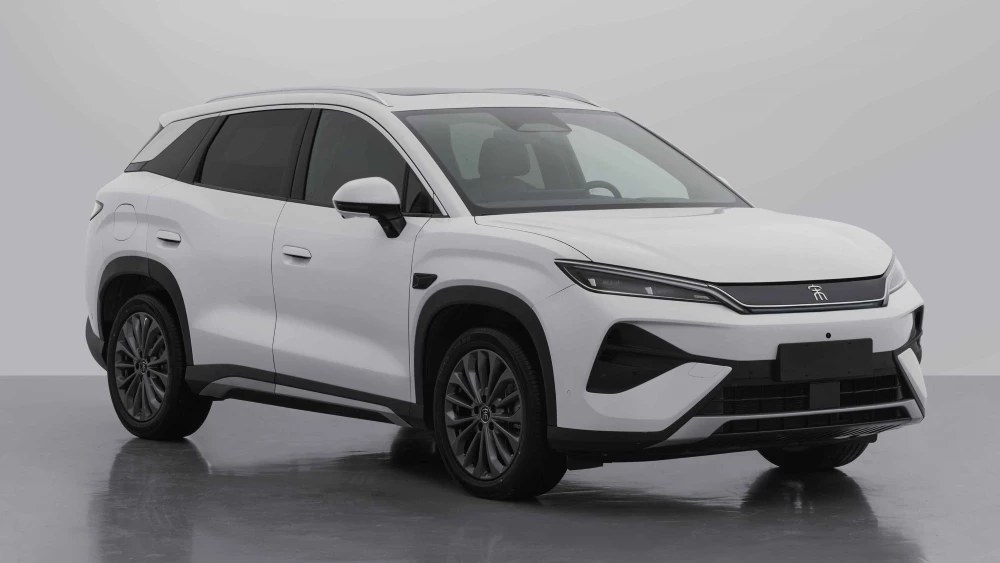 У кроссовера BYD Song Ultra появится гибридная версия DM-i. Это следует из свежей выкладки минпрома КНР. Напомним, что неделю назад китайская компания представила электрическое исполнение этого автомобиля. Подробности о новом исполненииВнешне электрический Song Ultra совершенно не отличается от Song Ultra DM-i. И это необычная практика, поскольку ранее BYD часто визуально отделял друг от друга одинаковые по названию модели с разными силовыми установками. Иногда дело доходило даже до полностью нового кузова. Гибридный кроссовер BYD Song Ultra DM-i / фото из базы минпрома КНР Габариты BYD Song Ultra DM-i точно такие же, как и у EV: 4850 мм в длину, 1910 мм в ширину и 1670 мм в высоту. Колесная база – 2840 мм. Снаряженная масса – от 1890 до 1960 кг. Техническая частьЭлементы экстерьера гибридного кроссовера BYD Song Ultra DM-i / фото из базы минпрома КНР Под капотом расположен 1,5-литровый атмосферный двигатель BYD472QC мощностью 101 л.с. Ему в движении помогает один электромотор, чья отдача составляет 238 л.с. Максимальная скорость ограничена на отметке в 180 км/ч. О запасе хода и емкости батареи информации нет. Для сравнения, электрический BYD Song Ultra EV имеет один двигатель, чья мощность составляет 326 или 367 л.с. Максимальная скорость тут выше – 210 км/ч. Запас хода варьируется от 620 до 710 км на одной зарядке. Элементы экстерьера гибридного кроссовера BYD Song Ultra DM-i / фото из базы минпрома КНР Сколько может стоить новинкаГибридная версия BYD Song Ultra выйдет на рынок заметно позже электрической, и это вызывает некоторые вопросы. Обычно производитель старался запускать продажи всех исполнений в одно время. Элементы экстерьера гибридного кроссовера BYD Song Ultra DM-i / фото из базы минпрома КНР Напомним, электрический Song Ultra доступен в четырех комплектациях стоимостью от 155 000 до 185 000 юаней (1,7–2 млн рублей). Гибридные модификации обычно заметно дешевле, но стоит учесть, что схожий BYD Song L DM-i находится в ценовом диапазоне от 135 800 до 175 800 юаней (примерно 1,5–2 млн рублей по актуальному курсу). То есть Song Ultra DM-i рискует попасть в тиски внутреннего каннибализма. Что не так с названиемКроссоверы BYD Song Pro и Song L DM-i 2026 модельного года BYD – это один из примеров беспощадного китайского маркетинга, когда под одним общим именем собирается целая вереница автомобилей, порой не имеющих ничего общего друг с другом. Так, под названием Song собралось целых четыре модели: Song L DM-i, Song L EV, Song Pro и новый Song Ultra. Такое явление, впрочем, типично для автопрома в целом и азиатского в частности. Достаточно вспомнить Toyota с ее легендарной Corolla. Под этим именем объединены не только городские седаны, но и разного рода минивэны (Corolla Verso, Corolla Spacio, Corolla Rumion), хэтчбеки (Corolla Matrix), кроссоверы (Corolla Cross) и даже спортивные купе (Levin, Trueno, Ceres). Так что китайцы в этом плане не одиноки. Андрей ТРУБИН (@chinamashina)
 -
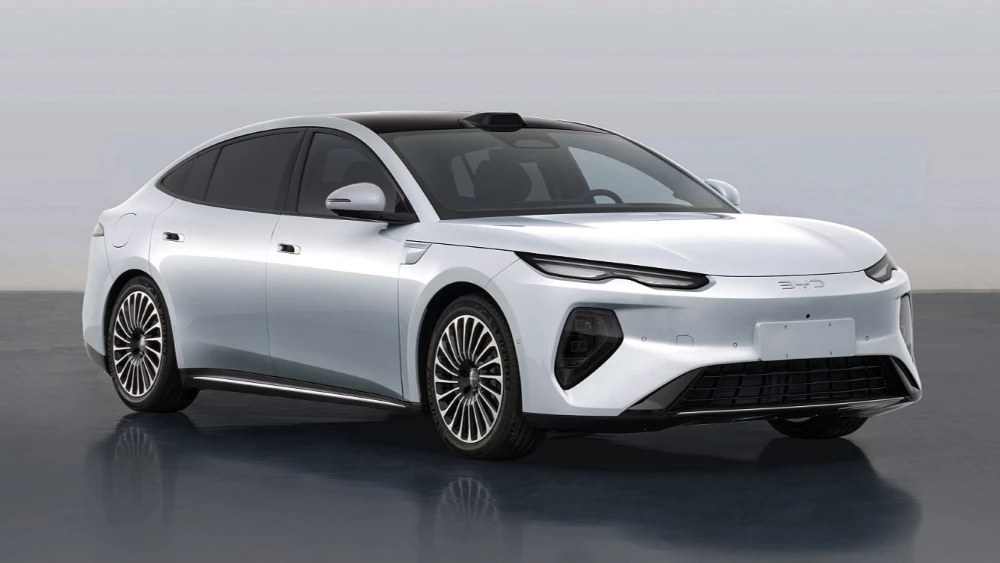 Китайский бренд BYD выведет на рынок гибридный седан Seal 08, причем в двух исполнениях: переднеприводном DM-i и полноприводном DM-p. Это следует из свежей выкладки минпрома КНР. Что интересно, гибридный вариант по своему экстерьеру не отличается от электрического. И здесь стоит отметить, что компания в целом несколько пересмотрела корпоративный дизайн своей «океанической» линейки автомобилей, сделав облик куда более стремительным и агрессивным. При этом прежняя «фишка» в лице плавных линий кузова сохранилась. Также стоит отметить и лидары, которые установлены не только спереди, но и сзади, это позволяет оснащать автомобиль продвинутым автопилотом. Что это за автомобиль?Гибридный седан BYD Seal 08 DM-i / фото из базы минпрома КНР Если следовать логике автопроизводителя, то Seal 08 должен занять место флагмана, но только в модельной линейке Ocean. Семейство Dynasty по-прежнему будет возглавлять Han L. Габариты Seal 08 DM-p/DM-i: 5150 мм в длину, 1999 мм в ширину и 1505 мм в высоту. Колесная база – 3030 мм. Снаряженная масса варьируется от 2145 до 2270 кг в зависимости от исполнения. Впрочем, пока информации о них нет. Гибридный седан BYD Seal 08 DM-p / фото из базы минпрома КНР Про салон тоже сказать что-то весьма сложно. Интерьер у Seal 08 в любом случае еще не демонстрировался – ни у электрокара, ни у гибрида. Техническая частьГибридный Seal 08 в обеих модификациях (DM-i и DM-p) имеет под капотом 1,5-литровый турбомотор BYD472ZQB мощностью 156 л.с. В движение седан приводит один или два электродвигателя. Их отдача составляет 272 или 544 л.с. То есть силовая установка полностью идентична той, что ставится на флагманский кроссовер Datang DM-p, который также рассекретил минпром Китая. Особенности дизайна экстерьера гибридного седана BYD Seal 08 / фото из базы минпрома КНР Для сравнения, электрический Seal 08 EV имеет тяговую батарею Blade второго поколения собственного производства. Обещано, что на чистой электротяге автомобиль сможет проехать в районе 1000 км, а функция сверхбыстрой зарядки позволит быстро пополнить 400 км запаса хода всего за пять минут. Ранее в рамках презентации появилась информация об отдаче полноприводной версии седана Seal 08, составляющей 653 л.с. Разгон до первых 100 км/ч в таком случае составит всего 5 секунд. А из главных особенностей электрокара называется подруливающая задняя ось. Электрический седан BYD Seal 08 Что дальше?Пока что никакого старта продаж электрического Seal 08 EV не объявлено, да и цены лишь предполагаемые — от 300 000 до 350 000 юаней (3,3–3,9 млн рублей). Гибридный Seal 08 может оказаться несколько дешевле за счет более дешевых аккумуляторных батарей. Электрический седан BYD Seal 08 Однако перспективы такого дорогого по китайским меркам седана пока что туманны. Дело в том, что рынок Китая переживает серьезный кризис в связи с изменением субсидирования продаж автомобилей на «новой энергии». Андрей ТРУБИН (@chinamashina)
 -
 По итогам февраля 2026 года розничные продажи пассажирских автомобилей в Китае сократились на 25% в сравнении с аналогичным периодом прошлого года. Мы выяснили, как автобренды переносят кризис в Поднебесной и какие компании чувствуют себя лучше других. В феврале 2026 года в Китае поставили на учёт 1,03 млн новых автомобилей. Из них 464 тысячи пришлись на электромобили и гибриды. Розничные продажи рухнули на 25% в сравнении с прошлым годом из-за ряда факторов. Ими стали сокращение государственного субсидирования сектора электрокаров, вызванный этим процессом опережающий спрос, а также празднование Нового года по Восточному календарю с длительными выходными. «Китайские автомобили» проанализировали статистику розничных продаж автомобилей конечным клиентам в Китае. Мы используем данные местной ассоциации дилеров (CADA) при поддержке Ассоциации по информации о рынке легковых автомобилей (CPCA). Самые популярные бренды в КитаеМы каждый месяц отслеживаем статистику продаж новых автомобилей в Китае. Напомним, что в прошлом месяце был зафиксирован серьёзный провал марки BYD. Она потеряла первую позицию, уступив Volkswagen, Toyota и Geely. В феврале крупнейшему производителю машин на новых источниках энергии удалось подняться на одну строчку, реализовав 68,6 тысячи автомобилей. Дилерский центр BYD формата 4S / фото из соцсети Ключевой проблемой для BYD стало снижение компенсации налога на покупку «зелёных» машин со стороны правительства Китая. Она сократилась на 50%. К слову, после 2027 года и эта льгота будет полностью ликвидирована. BYD, как производитель исключительно экологичного транспорта, оказался под ударом. BYD Song Pro DM-i Кроме того, в феврале ряд компаний оперативно отреагировал на вступление в силу правил ценообразования в автомобильной промышленности. Этот закон запретил продавать автомобили ниже себестоимости. После его принятия многие бренды подняли цены, но ввели беспроцентные рассрочки и кредиты с низкой процентной ставкой на 7 лет. BYD отреагировал не так оперативно, запустив аналогичную программу лишь 25 февраля. ***В результате китайскому гиганту не удалось обойти по продажам Volkswagen и Toyota. Да и от Geely компания оторвалась не сильно. Концерн Ли Шуфу реализовал 62 тысячи машин. При этом топ-5 замкнуло фокусирующееся на электрокарах и гибридах подразделение Geely под именем Geely Galaxy. Ему удалось реализовать 50,8 тысячи автомобилей. Кроссоверы Geely Atlas IV возле дилерского центра марки в городе Шанжао / фото из соцсети В топ-10 также вошли Changan, Chery, Tesla, Wuling и BMW. Здесь интересно отметить, что среди первых десяти марок положительную динамику продаж показали только Geely Galaxy, Chery и Tesla. Рост «зелёного» подразделения Geely можно объяснить низкой базой в феврале 2025-го. Фабрика Tesla в Шанхае в этом году отгрузила больше машин на внутренний рынок, чем делала это раньше. А вот Chery и правда показала качественный рост, составивший 8,2% в сравнении с февралём 2025 года. Дилерский центр Chery в Китае / фото из соцсети Ниже мы привели рейтинг 20 самых популярных автомобильных брендов на рынке Китая в феврале 2026 года. Ознакомиться с ним можно в сводной таблице. МестоБрендПродажи1Volkswagen100 3512Toyota71 8443BYD68 6234Geely62 0115Geely Galaxy50 8146Changan42 5777Chery39 5358Tesla38 2069Wuling33 00910BMW32 25311Audi28 94012Honda28 72513HIMA28 21214Li Auto26 42115Xiaomi20 41416Nissan20 20417Hongqi19 00318Mercedes-Benz18 64919Leapmotor18 29220Buick18 047Самые популярные автомобили в КитаеЭлектрический хэтчбек Geely Xingyuan знают за пределами Китая под именем EX2 На первом месте в модельном зачёте оказался абсолютный бестселлер прошлого года – электрический хэтчбек Geely EX2 (Xingyuan). Его выбрали 27,4 тысячи клиентов. Популярность объясняется тем, что Geely Galaxy одной из первых ввела программу кредитования с низкой процентной ставкой, сохранила привлекательную стоимость, а также заранее предлагала покупателям собственную программу компенсации налога на покупку. Актуальный диапазон цен EX2 в Поднебесной составляет 68,8–98,8 тысячи юаней (0,8–1,15 млн рублей). Электрический кроссовер Tesla Model Y На втором месте с результатом 25,3 тысячи штук разместился кроссовер Tesla Model Y. Мы уже отметили, что в этом месяце гигафабрика Tesla в Шанхае поставляла машины на внутренний рынок. Этот производственный комплекс чередует отгрузки на экспорт с внутренними продажами. Из-за этого возникают своеобразные «качели». Так, в январе Model Y была лишь на 20-м месте в общем зачёте. Напомним, что американский SUV стоит 263,5–313,5 тысячи юаней (3,05–3,65 млн рублей) в Китае. Tesla Model Y (слева) и Xiaomi YU7 ожесточённо конкурируют в Китае / фото из соцсети Третье место занял маркетинговый феномен Китая – электрический кроссовер Xiaomi YU7. Местные автомобилисты выбирают его из-за силы бренда и репутации основателя IT-гиганта – Лэй Цзюня. Общий объём продаж составил 20,2 тысячи автомобилей. Цена YU7 на местном рынке лежит в диапазоне 253,5–329,9 тысячи юаней (2,95–3,8 млн рублей). ***Кроссовер Geely Atlas четвёртого поколения Закрыли «пятёрку» самых популярных автомобилей по итогам февраля 2026 года два бензиновых автомобиля. Четвёртое место занял Geely Atlas IV поколения, который ждут в России под именем Volga K40. А на пятой позиции оказался седан Volkswagen Lavida. В шаге от топ-5 остановился электрический кроссовер Li Auto i6. Другие позиции в топ-10 распределились между Changan CS75 Plus, Volkswagen Passat, Volkswagen Magotan и Chery Tiggo 8. Ниже мы привели рейтинг самых продаваемых автомобилей в Китае по итогам февраля 2026 года. С топ-50 моделей можно ознакомиться в сводной таблице ниже. МестоМодельПродажи1Geely EX227 3622Tesla Model Y25 2863Xiaomi YU720 1964Geely Atlas19 3635Volkswagen Lavida16 1116Li Auto i616 0077Changan CS75 Plus14 2198Volkswagen Passat13 9889Volkswagen Sagitar13 80310Chery Tiggo 813 48811Tesla Model 312 92012Volkswagen Tiguan L12 47713Geely Preface12 41114Chery Arrizo 812 13015Toyota Frontlander12 04316Fang Cheng Bao Ti711 69317Nio ES811 26018Volkswagen Magotan11 23219Toyota Camry11 17220Changan Eado11 11821Volkswagen Tayron11 08422Geely Emgrand10 50523Geely Monjaro10 14424Aito M710 09325Honda CR-V10 08926BMW 3 Series9 35927BYD Song Pro9 29528Nissan Sylphy8 99829Mercedes-Benz E-Class8 58330Hongqi H57 97331Toyota Rav47 78932Audi A6L7 74933Audi Q5L7 74534Volkswagen Tharu7 40335Toyota Corolla Cross7 39536BMW 5 Series7 24737Changan CS35 Max6 96438BYD Seal 066 85639Geely Coolray6 83440Buick Envision Plus6 50641Mercedes-Benz GLC6 43042BYD Sealion 066 28743Haval Dargo6 28144BYD Qin Plus6 09845BYD Dolphin6 08146Deepal S055 93247BYD Seagull5 85648BMW X35 58349BYD Qin L5 45050Wuling Bingo S5 448Денис БОБЫЛЕВ (YouTube)
 -
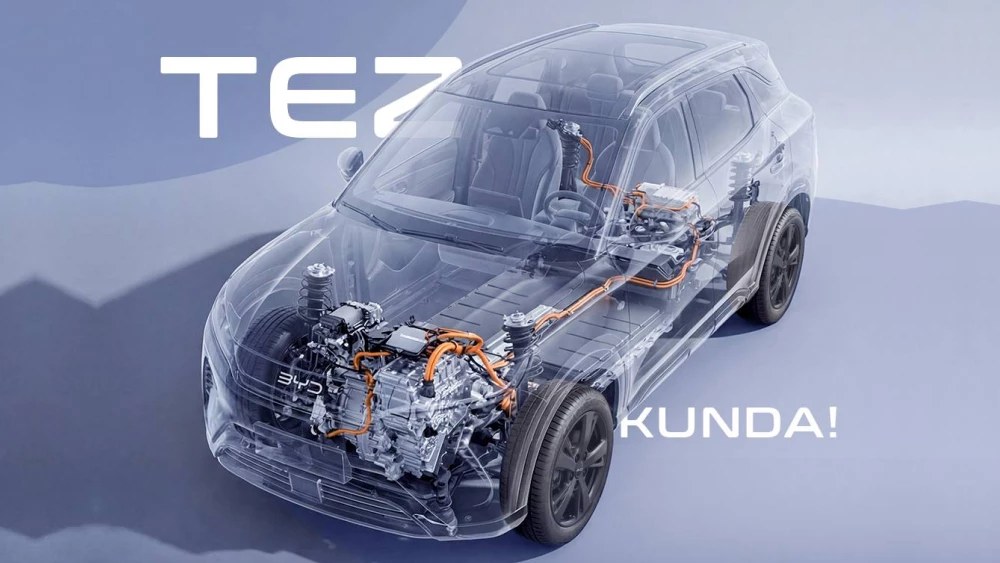 Новый гибридный кроссовер BYD появится в Узбекистане. О скором старте продаж представители марки рассказали в соцсетях. «Китайские автомобили» выяснили, о какой модели идёт речь. Напомним, что на данный момент Узбекистан является одним из ключевых внешних рынков для BYD. Здесь действует производственный комплекс компании с плановой мощностью до 500 тысяч машин в год. Модельный ряд BYD в стране включает девять моделей. С января по февраль 2026 года на местном рынке было реализовано 4,6 тысячи гибридов и электромобилей китайского бренда. Автомобили BYD в Узбекистане продаются и в ТРК / фото Дениса Бобылева А в скором времени на рынок BYD выйдет ещё одна перспективная новинка. Её показали на тизерном изображении. Речь идёт о компактном кроссовере с параллельной гибридной силовой установкой. Китайские автомобили в Узбекистане: главные новостиНовый гибридный кроссовер BYD в УзбекистанеИзучив тизерное изображение, «Китайские автомобили» пришли к выводу, что следующей моделью BYD в Узбекистане станет гибридное исполнение уже доступного к покупке на местном рынке электрического кроссовера Yuan Up. Ранее этот SUV стал доступен к покупке в странах Европы под именем Atto 2 DM-i. Впрочем, его название для Узбекистана пока не раскрывается. Гибридный кроссовер BYD Atto 2 DM-i Гибридный BYD Atto 2 DM-i получил крупный воздуховод в переднем бампере, полускрытые дверные ручки и монофонарь. Точные габариты кроссовера составляют 4310 х 1830 х 1675 мм. Колёсная база – 2620 мм. Для наглядности, он на 40 мм длиннее, чем Chevrolet Tracker. Новый BYD выделяется внешне за счёт характерной передней оптики и пластикового обвеса кузова. Салон гибридного кроссовера BYD Atto 2 DM-i В салоне кроссовера разместили 12,8-дюймовый экран парящего типа с портретной ориентацией. Селектор коробки передач перенесли на рулевую колонку. Из-за этого на центральном тоннеле нашлось место для блока физических кнопок, пары площадок под смартфон и подстаканников. Багажный отсек Atto 2 DM-i предлагает объём в 425 литров. Сложив задние сиденья, этот показатель можно увеличить до 1335 литров. Силовая установка и цены BYD Atto 2 DM-iВ движение BYD Atto 2 DM-i приводит параллельный гибрид с 1,5-литровым атмосферным мотором на 98 л.с. под капотом. Ему ассистирует электромотор мощностью 197 л.с. В Европе общая отдача силовой системы зависит от комплектации. Начальная версия Active генерирует 166 л.с., а максимальное исполнение Boost – 212 л.с. Крутящий момент в любом случае составляет 300 Нм. BYD Atto 2 DM-i позиционируется как семейный автомобиль Похоже, что разница в мощности вызвана в первую очередь различием в тяговой батарее. Начальная версия Atto 2 DM-i оснащается железо-фосфатным аккумулятором ёмкостью всего 7,8 кВт·ч. Его заряда хватает на 50 км пробега без включения бензинового двигателя. «Старшая» батарея предлагает ёмкость 18 кВт·ч и позволяет проехать до 150 км. Общий запас хода Atto 2 DM-i достигает 1000 км, благодаря топливному баку на 45 литров. Гибридный кроссовер BYD Atto 2 DM-i Разумеется, цены BYD Atto 2 DM-i для рынка Узбекистана неизвестны. Но мы можем предсказать примерную стоимость новинки на основе сравнения с электрическим Yuan Up. В Европе гибридный Atto 2 оказался примерно на 6% дешевле своего электрического «собрата». Это значит, что цена гибридного SUV в Узбекистане может составить 255,7 млн сумов (1,75 млн российских рублей). Денис БОБЫЛЕВ (YouTube)
 -
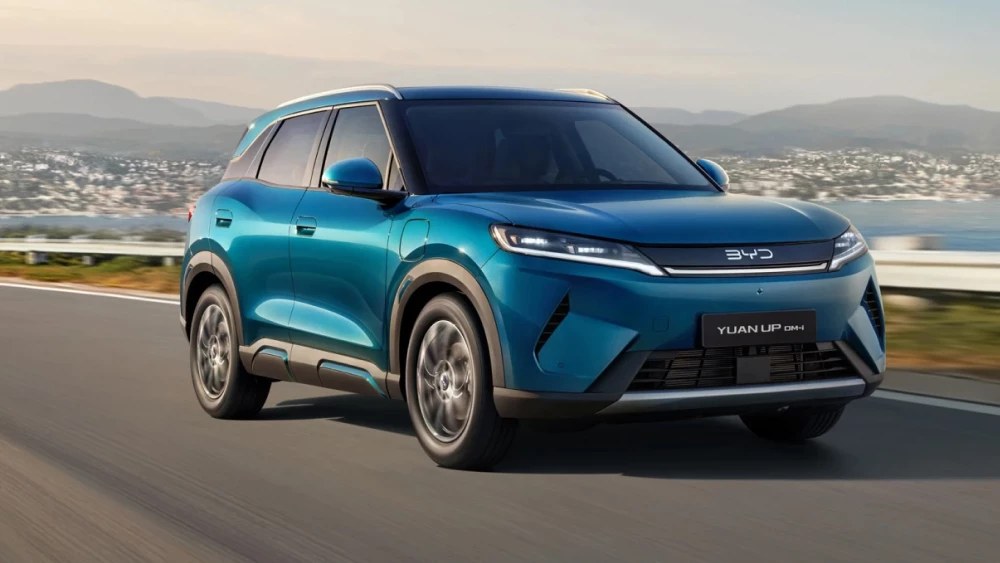 Цена гибридного кроссовера BYD Yuan Up DM-i стала известна в Узбекистане. На доступный в ряде стран под именем Atto 2 DM-i автомобиль стали принимать заказы. Изучаем характеристики и оснащение новой модели. 17 марта представители компании BYD в Узбекистане анонсировали новую модель для местного рынка. «Китайские автомобили» узнали на тизерном изображении гибридную версию кроссовера Yuan Up, также известного под именем Atto 2. Теперь эта информация подтвердилась – BYD Yuan Up DM-i официально стал доступен к заказу. Китайские автомобили в Узбекистане: главные новостиЦена и оснащение BYD Yuan Up DM-iПредставители BYD сообщили, что гибридный кроссовер Yuan Up DM-i стал доступен к заказу в Узбекистане в единственной комплектации Flagship. Её стоимость составила 266,7 млн сумов (1,8 млн рублей). Отметим, что цена гибридной версии полностью совпала с электрическим Yuan Up. При этом в ряде стран Европы «смешанное» исполнение стоит немного меньше электрокара. Кроссовер BYD Yuan Up DM-i Кроссовер BYD Yuan Up DM-i доступен к заказу в четырёх цветах кузова: синем, чёрном, белом и сером. Он оснащается 16-дюймовыми колёсными дисками, панорамной крышей и светодиодной оптикой. В салоне разместили 12,8-дюймовый сенсорный экран, цифровую приборную панель и беспроводную зарядку для смартфона. Управлять основными функциями можно при помощи голоса. Салон кроссовера BYD Yuan Up DM-i В BYD подумали и о зимней эксплуатации. Yuan Up DM-i оснастили обогревами рулевого колеса, передних кресел, заднего стекла и наружных зеркал. Сиденье водителя предлагает возможность регулировки в 6 направлениях при помощи электропривода. Акустическая система включает 6 динамиков. А ещё машина оснащается шестью подушками безопасности, парковочными датчиками спереди и сзади, системой кругового обзора и комплексом активных ассистентов водителя с адаптивным круиз-контролем. Характеристики BYD Yuan Up DM-iBYD Yuan Up DM-i – это компактный городской кроссовер с точными размерами 4330 х 1830 х 1675 мм. Его колёсная база составляет 2620 мм. Багажник вмещает 425 литров. Сложив задние сиденья, этот показатель можно увеличить до 1335 литров. Кроссовер BYD Yuan Up DM-i Машину приводит в движение параллельная гибридная система в основе с 1,5-литровым атмосферным ДВС на 98 л.с. Он сочетается с электромотором мощностью 197 л.с. и гибридной трансмиссией E-CVT. Привод – исключительно передний. До 100 км/ч автомобиль разгоняется за 7,5 секунды. Максимальная скорость – 180 км/ч. Салон кроссовера BYD Yuan Up DM-i Полного заряда батареи 18 кВт·ч хватает на 110 км электрического запаса хода по циклу NEDC. А благодаря топливному баку объёмом 45 литров Yuan Up DM-i может проехать до 1100 км. Расход топлива автомобиля в гибридном режиме составляет 3,1 литра на 100 км. Денис БОБЫЛЕВ (YouTube)
