




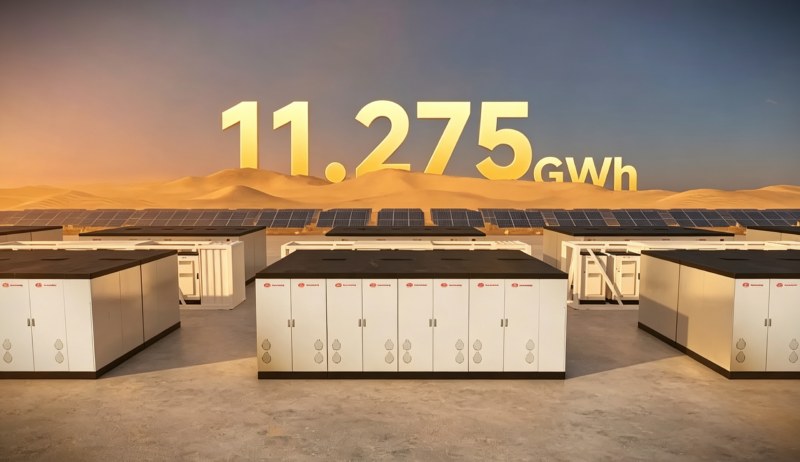

BYD is taking its electric vehicle battery technology from the road straight to the power grid. The automaker has signed a massive agreement with the UAE energy firm Masdar to supply 11.275 GWh of energy storage systems, according to a Sina report. The historic deal covers enough battery capacity to build more than 186,000 passenger electric vehicles.
The hardware will be deployed at the “Round The Clock” project in Abu Dhabi to support a 5.2 GW solar array. The facility combines solar generation with large-scale batteries to deliver a continuous, 24-hour supply of clean electricity, utilising specialised containment systems designed to handle high energy demands.
Global scale comparisons
This 11.275 GWh order is among the largest single-station battery purchases ever, highlighting a clear trend of Chinese manufacturers winning major utility contracts worldwide. In total, the Abu Dhabi project requires 19 GWh of storage capacity to manage its massive 5.2 GW solar setup.
BYD is locked in the remaining 11.275 GWh chunk after another Chinese supplier, Sungrow, won a 7.5 GWh contract for the first phase. Together, the two companies swept the entire 19 GWh clean energy initiative, shutting out global rivals and demonstrating the Middle East’s growing reliance on Chinese hardware to stabilise its power grids.
Blade battery hardware
The installation will use BYD’s new Haohan energy storage system, which features a giant 2,710 Ah version of the Blade Battery technology found in its passenger cars. This high-capacity cell design boosts single-cell power by over 300% compared to older setups, completely changing how the storage facility is wired and built.
Because the cells are so large, the system requires far fewer physical connections. This structural optimisation allows engineers to reduce the complexity of the battery management system by 70% to 80%. The design packs 10 MWh of storage capacity into a standard 20-foot container, drastically cutting down the physical space needed for the station floor.
Market strategic rivalry
This massive grid project runs parallel to BYD’s broader strategy to scale up its stationary energy storage business, aiming to push manufacturing costs down to 0.3 yuan (0.04 USD) per watt-hour. By sharing raw-material supply chains with its automotive division, the company can slash production costs across the board, passing the high-volume efficiencies of passenger EV battery production directly to its grid-scale infrastructure.
This project puts BYD in direct competition with global energy storage rivals, targeting the exact same utility market where CATL recently launched its Tener storage system. The massive contract proves that automotive battery giants are successfully using their massive manufacturing scale to take over international infrastructure projects, reshaping the competitive landscape of the utility market.
Create an account or sign in to leave a review
There are no reviews to display.